
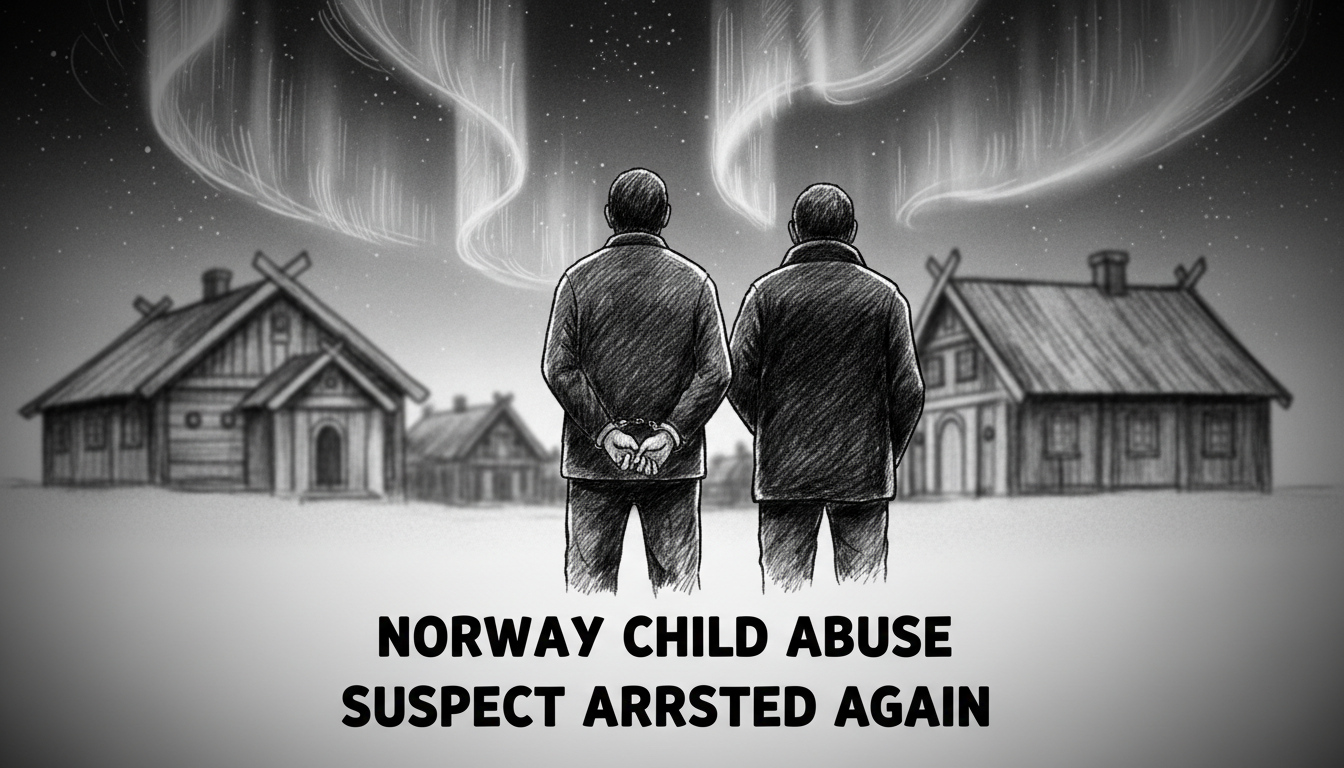
Norway's legal system faces scrutiny after a man previously charged with 17 counts of child rape was arrested a second time. The suspect, in his thirties, was taken into custody this week following allegations he shared sexualized content of minors on Snapchat. His re-arrest comes just months after a higher court ordered his release from pre-trial detention, overriding initial court and police assessments that he posed a continuing danger.
A Release and a Rapid Re-Arrest
The man was first arrested in 2023. Police and the district court both argued he should remain in custody, citing concrete fears he would commit new crimes if released. However, the Court of Appeal decided to release him. This week, those initial fears were realized. Police arrested him again after receiving reports about his online activity. "He is charged with having obtained and shared sexualized videos of children under 18 years of age," said police prosecutor Jeanette Svendsen. The suspect has admitted guilt to the new charges. His defense attorney stated he also largely admits guilt regarding the initial 17 rape charges.
On Friday, the court ordered him placed in pre-trial detention for four weeks. This will keep him incarcerated until his original case goes to trial. The sequence of events has ignited a debate about judicial decision-making and the protection of potential victims. It highlights the tension between the legal principle of presumption of innocence and proactive measures to prevent harm.
The Weight of Statistics and National Commitment
Child protection is a cornerstone of Norwegian society. The country allocates significant resources to investigating and prosecuting crimes against children. Laws are strict, reflecting a deep-seated commitment to safeguarding young people. According to the latest data from Statistics Norway (SSB), police recorded 1,661 sexual offence cases against children under 14 in 2022 alone. Each case represents a profound trauma and a complex investigation.
This case involves particularly grave charges. Seventeen counts of rape against minors indicate a pattern of predatory behavior. The subsequent charge of sharing abusive material adds a digital dimension to the crimes. It shows how offenders can use platforms like Snapchat, known for ephemeral content, to further exploit victims and spread harmful material. The suspect's reported admissions are rare in such cases, which often involve lengthy legal battles where victims must testify.
Expert Analysis: Balancing Rights and Protection
Legal experts note this case presents a classic, difficult conflict. On one side is an individual's right to liberty while awaiting trial. On the other is the state's duty to protect children from imminent harm. "The decision to release a suspect pre-trial is never taken lightly, especially in severe cases," said a legal scholar specializing in criminal procedure, who asked not to be named due to the ongoing case. "However, when police and the first-level court present a unified concern about re-offending, it demands the highest level of scrutiny from the appeal court."
The expert emphasized the particular challenges with digital crimes. Monitoring a suspect's online activity after release is exceptionally difficult. Offenders can use encrypted apps and temporary accounts. "This case may prompt a review of how conditions for release are monitored in the digital age," the expert added. "Traditional methods may not be sufficient when the risk involves instantaneous online sharing of material."
Child advocacy groups stress the vulnerability of victims. A case with multiple young victims suggests a systematic approach by the accused. The sharing of sexualized content compounds the abuse, creating a permanent digital record of the crime. This can severely hamper a victim's recovery and sense of safety.
The Digital Dimension of Abuse
The new Snapchat-related charge underscores a modern reality. Child exploitation increasingly has an online component. Perpetrators use social media and messaging apps to groom, coerce, and share material. Snapchat's feature of making messages disappear can be weaponized, creating a false sense of security for offenders. However, digital forensics teams have become adept at recovering such data, which often forms critical evidence.
Police forces in Norway have specialized units for digital crime. Their work is crucial in piecing together evidence chains from smartphones and apps. This technical evidence can be vital, especially when victim testimony is difficult to provide. The suspect's admission regarding the digital charges significantly strengthens the prosecution's position on the new case.
A Look at the Legal Process Ahead
The man now faces two parallel legal processes. The original trial for 17 counts of rape will proceed. The new charges for sharing child sexual abuse material will follow a separate investigation and likely a subsequent trial. His admissions could lead to a streamlined process, potentially involving a consolidated sentencing hearing if he is found or pleads guilty.
Norwegian courts impose severe penalties for such crimes. Sentences for multiple severe child rapes can extend to the maximum penalty of 21 years in prison, with the possibility of preventive detention thereafter. Charges related to the distribution of abusive material also carry substantial prison terms. The courts will consider the totality of his actions, the vulnerability of the victims, and the breach of trust involved.
The four-week detention order gives authorities time to secure evidence and prepare for the upcoming trial. It also ensures the suspect cannot contact victims or potential witnesses. This period is critical for the prosecution to finalize what is undoubtedly a complex and extensive case file.
Broader Implications for Norway's System
This incident raises uncomfortable questions. Could the second arrest have been prevented? Did the appeal court underestimate the risk, or did new, unforeseen circumstances arise after his release? The case will likely be studied in legal circles as an example of risk assessment in pre-trial decisions.
It also reinforces the importance of vigilant reporting. The new arrest resulted from alerts to the police about online activity. Public awareness campaigns encourage reporting suspicious behavior, and this case shows that such reports can lead to swift action. Protecting children is seen as a communal responsibility in Norway, extending beyond law enforcement to educators, health workers, and ordinary citizens.
The ultimate test will be the court's verdict and sentence. It will send a message about how Norway adjudicates crimes of such magnitude. For the victims and their families, the prolonged process is an added burden. Their pursuit of justice continues, now shadowed by the knowledge that the accused was, for a time, free to potentially re-offend. This case reminds us that legal systems, however well-intentioned, must constantly evolve to address both old crimes and new digital threats.