
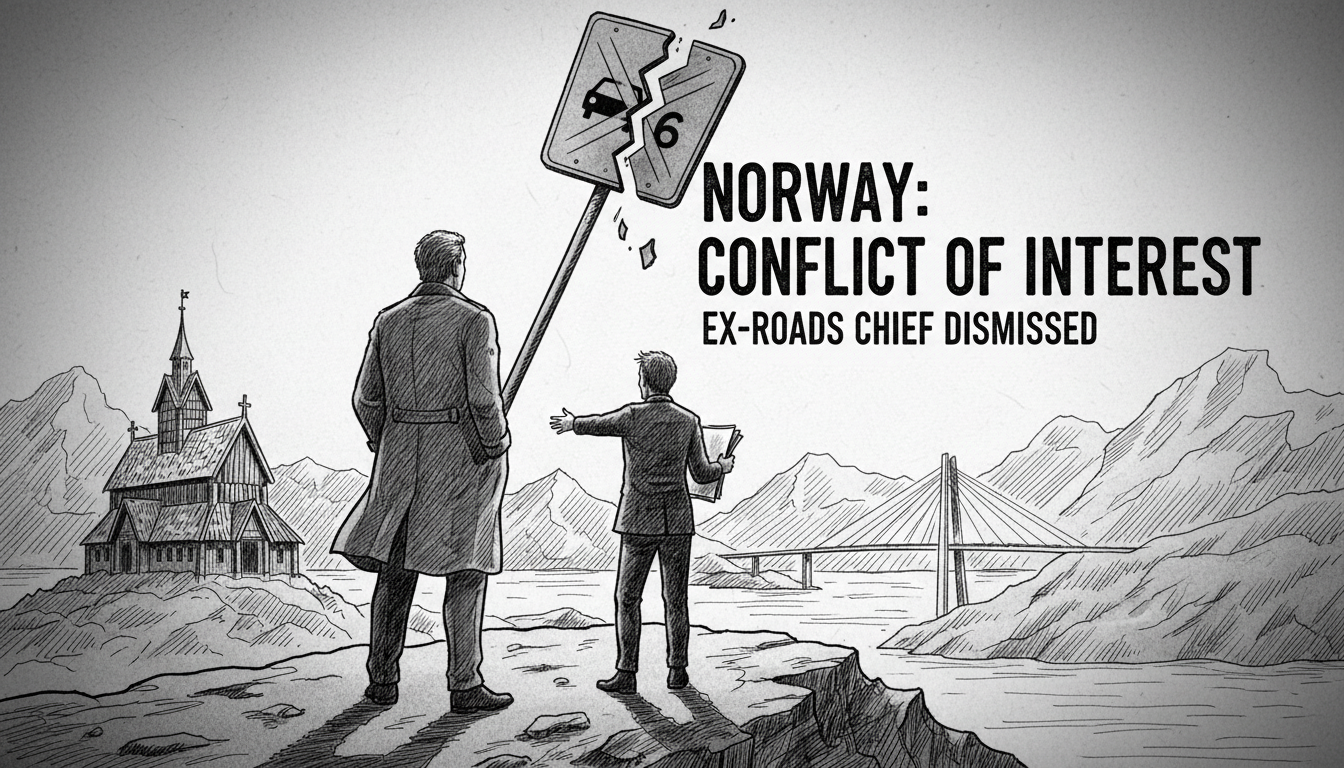
Norway's public ethics rules face a major test after a county official's dismissal. A new report states former Agder county roads chief Ola Olsbu was in a conflict of interest for years. The external legal review found he should have recused himself from a major road project much earlier. Olsbu's lawyer strongly disputes the report's conclusions.
A Report That Led to Dismissal
Agder county commissioned the report from law firm Tofte Hald AS. The review followed media reports about Olsbu's private land sales in Arendal. These sales were connected to the planned 'industrivegen' or industrial road project. The report's findings were severe. It concluded Olsbu's involvement was "likely to have weakened trust in his impartiality." The county director has stated she will not comment before a control committee meeting.
County leader Tine Sundtoft, who was involved in dismissing Olsbu last week, also declined immediate comment. The report became the final catalyst for action. It stated the case was so serious it warranted dismissal without severance pay. Public trust had been damaged, the reviewers found.
The Core of the Conflict
The central issue involves timing and awareness. The Tofte Hald report asserts Olsbu was likely in a conflict of interest from the very start. This was when it became known that the company Morrow would establish itself in Heftingsdalen, the area the road would serve. Olsbu owned land in the same area. His private financial interests became entangled with his public role in planning the access road.
Norwegian 'inhabilitet' rules are strict. They require officials to step aside when personal interests could influence, or appear to influence, their duties. The report states Olsbu should have declared himself ineligible months before he finally did in September 2021. More critically, it alleges he involved himself in the matter on at least six occasions after that formal declaration.
Admission and Dispute
Ola Olsbu has made some admissions to the press. He acknowledged he could have declared himself ineligible sooner. "I probably could have done that. Therefore, I regret that I did not see the consequences and ripple effects so quickly," he said. He also apologized for using his official county email address for communications about his private property. "I see in hindsight that I should have reported it earlier. It was a mistake on my part," Olsbu stated.
However, his legal representative firmly rejects the report's overall assessment. Lawyer Kain Knudsen told media they would issue a fuller statement later. "What I can say generally is that we dispute the assessments that have been made. They have been made both by the law firm Tofte Hald and by Agder county," Knudsen said. He confirmed he had spoken with Olsbu after receiving the report, indicating a potential legal challenge to its findings.
The Importance of Public Trust
This case highlights the fundamental Norwegian principle of transparency in public administration. Conflict of interest rules are not mere formalities. They are essential safeguards for democratic legitimacy. When citizens believe officials are making decisions for personal gain, the entire system suffers. The report explicitly notes the affair has "weakened the population's trust."
Legal experts consistently stress that adherence to these rules is non-negotiable for senior officials. The appearance of a conflict can be as damaging as an actual one. For a roads chief, whose decisions on infrastructure can dramatically affect property values, the obligation to avoid even the perception of bias is particularly high.
A System Under Scrutiny
The Olsbu case raises questions beyond one individual's actions. It tests the responsiveness of the system designed to catch such conflicts. The report was only commissioned after media revelations, not through internal county controls. This suggests oversight mechanisms may have failed initially. The delay in action allowed the situation to develop over years, amplifying the eventual scandal.
Agder county now faces the task of restoring public confidence. The upcoming control committee meeting will be a crucial step. How the county administration explains its own handling of the matter, and what systemic changes it proposes, will be closely watched. The dismissal is a start, but it is often seen as the end point of accountability, not the beginning.
The Road Ahead
The immediate consequence for Ola Olsbu is clear: he is out of his job. The notation "FERDIG" (FINISHED) on a photo caption from his marathon five-hour meeting with county officials says it all. The long-term consequences, however, are still unfolding. The dispute over the report's conclusions suggests the factual narrative is contested. Olsbu's legal team may seek to challenge the basis of his dismissal.
For Norwegian public administration, the case serves as a stark reminder. Ethical guidelines must be actively and continuously monitored. Officials must err on the side of caution and declare conflicts at the earliest possible moment. The use of public resources, like an official email, for private gain is a clear red line that can turn a poor judgment call into a fireable offense.
This story is ultimately about more than a road. It is about the trust that paves the way for all public projects. When that trust erodes, the cost is borne by every citizen. The Agder county administration's next moves will determine how long it takes to repair the damage.