
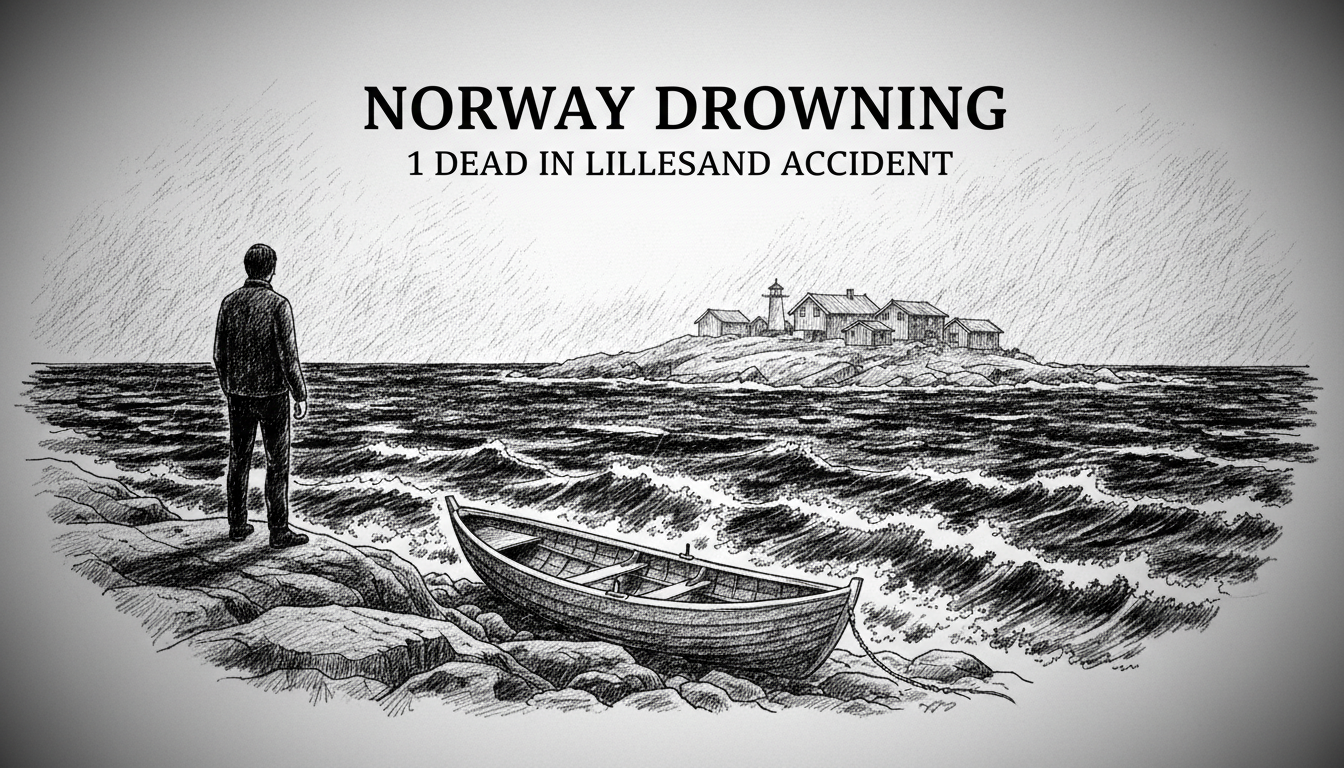
Norway's coastal waters claimed another life Friday evening in a tragic drowning accident in Lillesand. Police in Agder confirmed one person died after being pulled from the water, despite immediate resuscitation attempts. The incident occurred shortly after 5:30 PM, marking a somber start to the weekend in the popular southern coastal municipality.
Emergency services received the initial alert from the Acute Medical Communication Center (AMK). Operations leader Terje Vang described the scene. "The report stated a person had been retrieved from a body of water and that cardiopulmonary resuscitation was in progress," Vang said in a statement. Both AMK teams and police officers responded to the location. Authorities have notified the victim's next of kin but have not released the individual's gender, confirming only that the deceased was an adult.
A Recurring Summer Tragedy
This incident in Lillesand fits a grim and predictable seasonal pattern. Drowning accidents spike across Norway during the warmer months, as residents and tourists flock to the country's extensive coastline, countless lakes, and rivers. The Norwegian Life Saving Society (Norsk Livredningsselskap) recorded 91 drowning deaths nationwide in 2022. Historical data consistently shows a significant gender disparity in these fatalities, with men accounting for a substantial majority of cases.
Lillesand, with its idyllic archipelago and busy harbor, is emblematic of the Norwegian coastal communities where maritime activity is central to life. The very attractions that draw people to the water—serene fjords, inviting coves, and scenic boating routes—also conceal inherent risks. Cold water temperatures, even in summer, can lead to cold shock and rapid exhaustion. Unexpected currents, sudden weather changes, and simple misjudgment compound the dangers.
The Critical Minutes After the Alert
The sequence of events following the 5:30 PM alert highlights the frantic race against time that defines water rescue. Bystanders or companions initiated lifesaving efforts before professional help arrived. The presence of both AMK and police units at the scene indicates a full-scale emergency response, with AMK focusing on medical intervention and police securing the area and beginning preliminary investigations.
The fact that resuscitation was attempted on-site is standard but crucial procedure. It underscores the principle of immediate, continuous CPR to maintain blood flow to the brain and heart after oxygen deprivation. Despite these efforts, the outcome was fatal. The police's decision to withhold the victim's gender is a standard protocol to ensure proper and dignified notification of all family members before any public details are released.
Expert Analysis on Prevention and Risk
Water safety experts point to a multi-layered approach for preventing such tragedies. "The cornerstone of drowning prevention is education, coupled with respect for the water," says Lars Boe, a veteran coastal safety instructor based in Kristiansand. "It's about more than just knowing how to swim. It's understanding local conditions, recognizing the signs of fatigue, and never overestimating your own ability."
Boe and other professionals emphasize several non-negotiable safety measures. Wearing a life jacket is the single most effective action for anyone on a boat, kayak, or paddleboard. The buddy system, where people never enter the water alone, ensures someone can call for help or assist. Public awareness campaigns repeatedly stress checking weather forecasts and being aware that water temperatures in Norwegian seas rarely exceed 18°C (64°F) even in peak summer, a temperature that can incapacitate an unprepared swimmer within minutes.
Analysis of drowning incidents often reveals common risk factors: alcohol consumption, which impairs judgment and physical response; venturing out alone; and a lack of proper safety equipment. Young adult men are statistically the most vulnerable group, a trend attributed to risk-taking behavior and overconfidence in aquatic abilities.
A Community's Silent Question
For the tight-knit community of Lillesand, the accident prompts quiet reflection. Was the victim a local resident familiar with these specific waters, or a visitor enchanted by the area's beauty? Did the accident occur during a recreational swim, a boating trip, or a work-related activity? These unanswered questions linger as police continue their work. The tragedy serves as a stark, localized reminder of a national public health issue.
Norway's geography, with its 63,000 miles of coastline and over 450,000 lakes, means water is an ever-present part of the landscape. This makes universal water competence a critical societal goal. Schools across the country integrate swimming and water safety into their curricula, and organizations like the Norwegian Life Saving Society run extensive certification and awareness programs.
The Path Forward from Grief
The immediate aftermath focuses on supporting the bereaved family, a process handled with characteristic Norwegian discretion and care by local authorities and community networks. In the longer term, the incident will be logged into national statistics, contributing to the data that shapes future safety campaigns. Each drowning death represents a catastrophic personal loss, but collectively, they inform efforts to prevent the next one.
Safety advocates argue for continued investment in public education, clearer signage at popular swimming spots regarding hazards and currents, and promoting the widespread availability and use of life-saving equipment. Technological solutions, such as more prominent emergency call point markers along shores, are also part of the discussion.
As summer approaches, the message from rescue services remains consistent. Enjoy Norway's magnificent waterways, but do so with preparation and profound caution. The death in Lillesand is a heartbreaking testament to what happens when that balance fails. It leaves a community in mourning and reinforces a sobering truth: the peaceful Norwegian waters demand unwavering respect. How many more summers must pass before the statistical trend of drowning deaths is decisively reversed?