
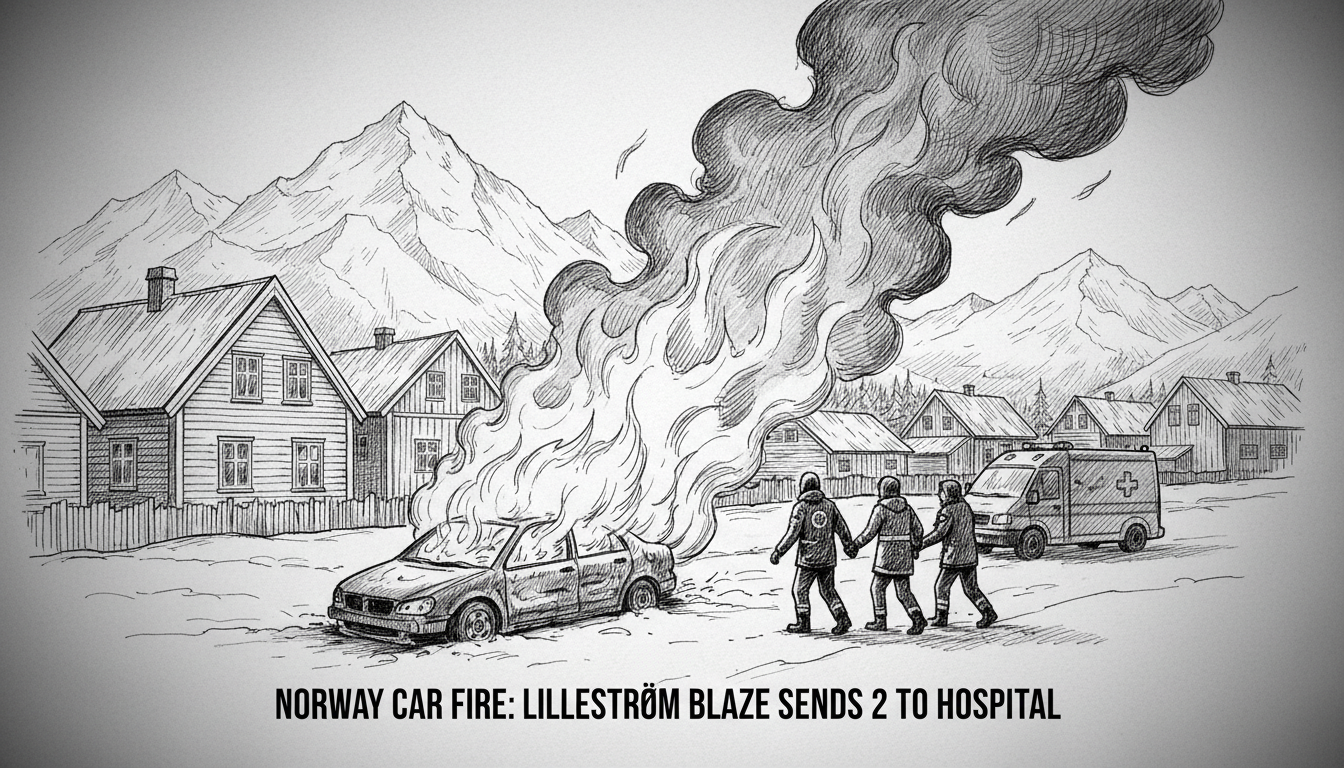
Norway car fire in Lillestrøm sent two people to hospital Thursday afternoon after their vehicle erupted in flames. The incident, reported to police at 3:40 PM, saw the car's engine compartment become fully engulfed. Emergency services closed a road in the busy Oslo-region town for nearly an hour as they extinguished the blaze. The two occupants, who escaped the burning vehicle, were transported to the local emergency medical clinic for evaluation of possible smoke inhalation. Police operations leader Ronny Hellerud Samuelsen confirmed the car was completely destroyed. This single event highlights the sudden and disruptive nature of vehicle fires, even in a country with stringent safety standards.
A Sudden Emergency on a Thursday Afternoon
The call came into the police operations center just before the evening rush. A car was on fire in Lillestrøm, a key commuter town northeast of Oslo known for its large railway station and road networks. Initial reports specified the fire had started in the motor compartment. Fire and rescue services responded immediately. Their primary tasks were to secure the area, prevent the fire from spreading, and ensure the safety of the vehicle's occupants and the public. The decision to close the road was a standard precaution, preventing other drivers from encountering hazardous conditions or interfering with emergency operations. The road reopened at 4:22 PM, a testament to the efficient response that contained the incident's disruption.
The Human Element and Medical Response
While the car was a total loss, the focus quickly shifted to the two people who had been inside. They managed to exit the vehicle before the fire took full hold. Exposure to smoke from burning plastics, upholstery, and fluids in a modern car can pose significant health risks. Symptoms of smoke inhalation may not be immediately apparent. As a precaution, the individuals were sent to the Legevakt, the local emergency medical clinic, for assessment. "They may have inhaled some smoke," operations leader Samuelsen noted in the police press log. This step is a routine but critical part of incident management, prioritizing human health over property.
Investigating the Ashes: What Causes a Car to Ignite?
With the fire out, the next phase begins for investigators. A completely burned-out vehicle presents a challenge. Common causes for engine compartment fires include electrical short circuits, often from damaged wiring or faulty components. Mechanical failures, such as a ruptured fuel line spraying gasoline onto a hot engine block, are another potential source. Less frequently, such fires can be the result of intentional acts. Forensic investigators will examine the remains, looking for tell-tale signs like the point of origin or the presence of accelerants. The extreme heat of a car fire, however, can destroy much of the evidence needed for a definitive conclusion. Statistics from the Norwegian Directorate for Civil Protection show that while vehicle fires occur periodically, they represent a small fraction of all fire service call-outs nationally.
Safety in the Norwegian Context
Norway's cold climate and long distances make private vehicles essential for many. The country also has some of the world's oldest cars still on the road, due to favorable tax policies for classic vehicles. Modern cars are equipped with numerous safety features, but the risk of fire, though low, never disappears. The Norwegian Public Roads Administration advises drivers to be aware of warning signs: the smell of burning plastic or rubber, oily stains under the car, or a blown fuse that keeps recurring. In the event of a fire, the protocol is clear: stop immediately, switch off the ignition, get all passengers out, move to a safe distance, and call the emergency services on 110 for the fire department. The rapid response in Lillestrøm followed this exact pattern, preventing injury.
The Ripple Effect of a Local Incident
An event like this is more than a local traffic note. It temporarily strains municipal emergency resources. It creates a tangible economic loss for the vehicle owner, who must now navigate insurance claims. For the witnesses and first responders, it is a reminder of how quickly routine travel can turn dangerous. In a broader sense, each fire provides data points for safety agencies and car manufacturers. While Norway leads in electric vehicle adoption, the fire risks associated with internal combustion engine vehicles remain a present reality. This incident serves as an unplanned drill, testing the readiness of police, fire, and medical services in Viken county.
A Contained Blaze with Lasting Questions
The Lillestrøm car fire was resolved within an hour. The road reopened, traffic resumed its flow, and the scorched vehicle was towed away. For the two individuals involved, the experience will likely be unforgettable, a story of a routine trip interrupted by sudden danger. Their visit to the emergency clinic is a prudent conclusion, ensuring no hidden harm was done. The cause of the fire may remain uncertain, lost in the intensity of the flames that consumed the engine compartment. This single event underscores a universal truth of modern life: our complex machines, which we rely on daily, carry inherent risks. The efficiency of Norway's response system ensured that this time, the risk was managed, contained, and left only a damaged vehicle and a closed road as evidence of its passing. How prepared are we, as individual drivers, to react if our own vehicle warns us of such a danger before it's too late?