
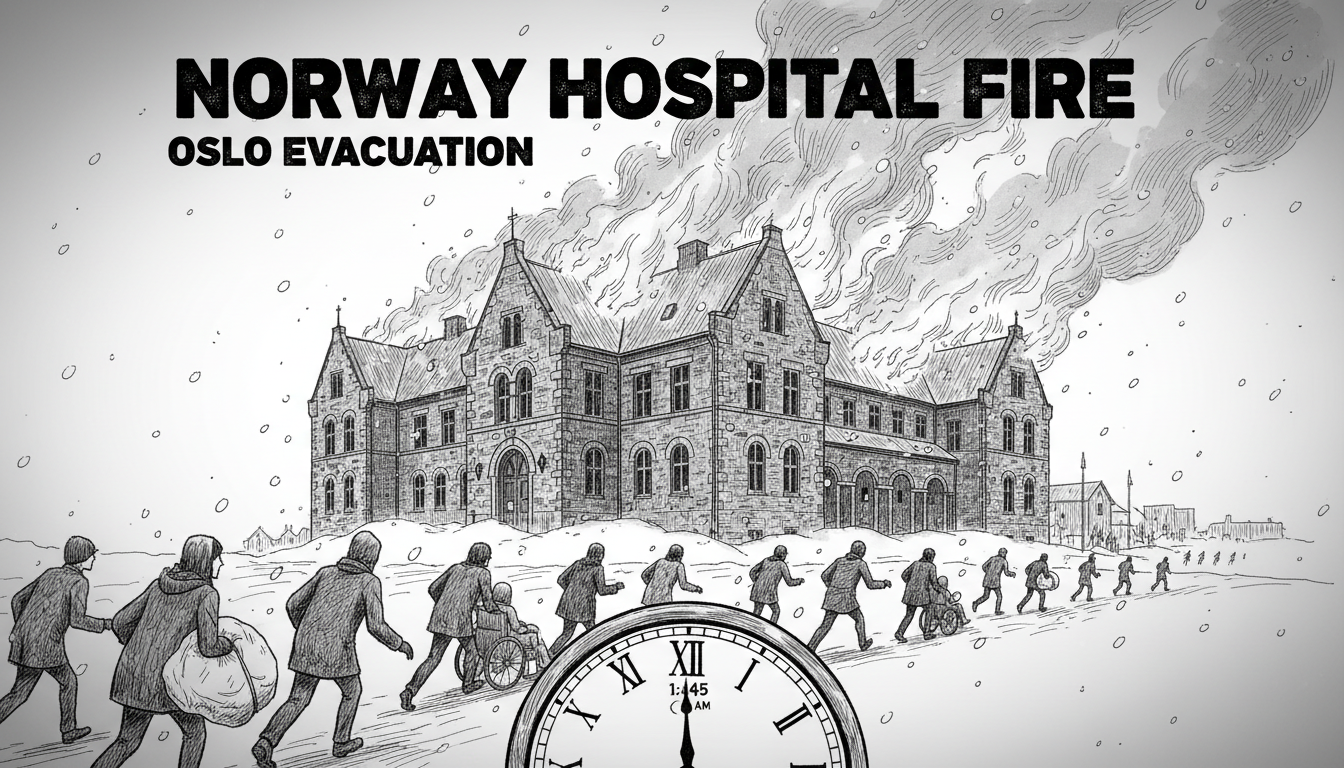
Norway's capital faced a critical test of its emergency protocols when a fire broke out in an Oslo hospital ward at 1:45 AM on Sunday. The swift evacuation of patients and staff from the affected department, with all individuals successfully accounted for, highlights both the effectiveness of existing safety systems and the ever-present risks within complex healthcare facilities. This incident, while causing no reported injuries, triggers a mandatory review of procedures and places Norway's stringent hospital safety regulations under the microscope.
A Midnight Alarm and Swift Response
The Oslo police received the emergency call in the early hours of Sunday morning. The precise location within the hospital has not been publicly disclosed to protect patient privacy, but authorities confirmed it was a specific ward. Operational commander Gabriel Langfeldt stated the immediate priority was evacuation. "The relevant ward was cleared of employees and patients, and all persons have been accounted for," Langfeldt said in a statement. This confirmation is the most crucial piece of information in any hospital emergency, signaling that the primary objective of preserving life was achieved.
Fire and rescue services responded rapidly to the scene. Their actions likely involved confirming the fire's location, ensuring full evacuation, and deploying suppression systems. The fact that the incident was contained to a single ward suggests effective compartmentalization—a key principle in modern hospital fire safety design that prevents the spread of smoke and flames. The overnight timing, while challenging due to reduced staffing levels outside of peak hours, may have also simplified evacuation logistics in the specific affected area.
The Uncompromising World of Hospital Fire Safety
In Norway, hospital fire safety is governed by some of the world's most rigorous regulations. The Norwegian Directorate for Civil Protection (DSB) and the Norwegian Building Authority set strict standards for construction materials, alarm systems, sprinkler installations, and evacuation plans. Healthcare facilities are subject to regular and unannounced inspections. These rules recognize the profound vulnerability of hospital populations. Patients may be immobile, sedated, reliant on electrical life-support equipment, or unable to comprehend evacuation instructions.
"A hospital fire is a worst-case scenario for any rescue service," explains Lars Holen, a former chief fire officer and now a safety consultant for public infrastructure. "You are dealing with a densely occupied building full of ignition sources—from medical equipment to oxygen supplies—and many occupants who cannot self-evacuate. The protocols cannot have a single point of failure." Holen notes that Norwegian standards emphasize a 'defend in place' strategy where possible, using fire-resistant compartments to protect patients while the fire is extinguished, rather than attempting a full-building evacuation which itself carries high risks.
Evacuation Protocols: Theory Meets Reality
The successful accounting of all individuals points to a well-executed evacuation. Hospital staff undergo mandatory fire training at regular intervals, practicing the movement of patients using specialized equipment like evacuation sheets and mats. Each ward has designated roles during an alarm, with staff assigned to check rooms, guide ambulatory patients, and assist those who need help.
Dr. Anette Fischer, a hospital administrator in the Eastern Norway health region, says drills are taken extremely seriously. "We train for the reality that our patients are not hotel guests. They are connected to IVs, monitors, and oxygen. The drill is not just about getting out; it's about how to maintain critical care during the movement and how to communicate clearly under extreme stress," Fischer said. The silent alarm is often used initially, alerting staff without causing panic among patients, before a full evacuation order is given if necessary.
This incident will trigger a formal review. Hospital management, in conjunction with the fire service, will dissect the timeline: from alarm activation to first responder arrival, to full ward clearance. They will examine whether communication systems functioned perfectly, if exit routes were unobstructed, and if any equipment or procedures presented unforeseen challenges.
Beyond the Immediate Response: Systemic Implications
While the outcome was positive, any fire in such a setting raises broader questions. Norway's hospitals, like many in Europe, are a mix of historic wings and modern additions. Older sections, though upgraded, can present unique challenges for fire containment. National health infrastructure reports frequently cite the need for ongoing investment in safety upgrades across the estate.
Furthermore, the pressure on the healthcare system post-pandemic, with high bed occupancy and staff shortages, could theoretically impact safety margins. A tired workforce operating at capacity must remain vigilant to routine risks, like the proper storage of flammable materials or the reporting of faulty electrical outlets. This fire serves as a stark reminder to all hospital trusts to prioritize safety resources and training, even amidst budgetary and operational pressures.
The psychological impact should not be overlooked. For patients, especially the elderly or those with trauma histories, a nighttime evacuation can be a terrifying experience. The hospital will likely offer follow-up support to those affected. Staff, too, may experience stress after responding to a real emergency, differing significantly from a controlled drill.
A Model Response with Lessons to Heed
The Oslo hospital fire appears to be a case study in a system working as designed. The alarm was raised, responders reacted with speed and precision, and protocols designed to protect the most vulnerable held firm. The absence of injury is a testament to the value of relentless preparation and investment in safety infrastructure.
However, complacency is the enemy of safety. The investigation's findings will be crucial. Was the fire caused by a preventable electrical fault, a human error, or an equipment malfunction? Sharing these lessons across Norway's health regions is vital to prevent recurrence. Sometimes, the most valuable lessons come from the incidents where nothing truly bad happens, because they reveal the system's strengths and potential weaknesses without the obscuring veil of tragedy.
As the sun rose over Oslo on Sunday morning, the hospital resumed its normal rhythms. But in administration offices and fire station briefing rooms, the analysis was just beginning. The quiet efficiency of the response proves a national commitment to protecting its citizens in their most vulnerable moments. Yet, it also asks a silent question of every institution: are we as prepared as we need to be for the next alarm, whenever it may sound?