
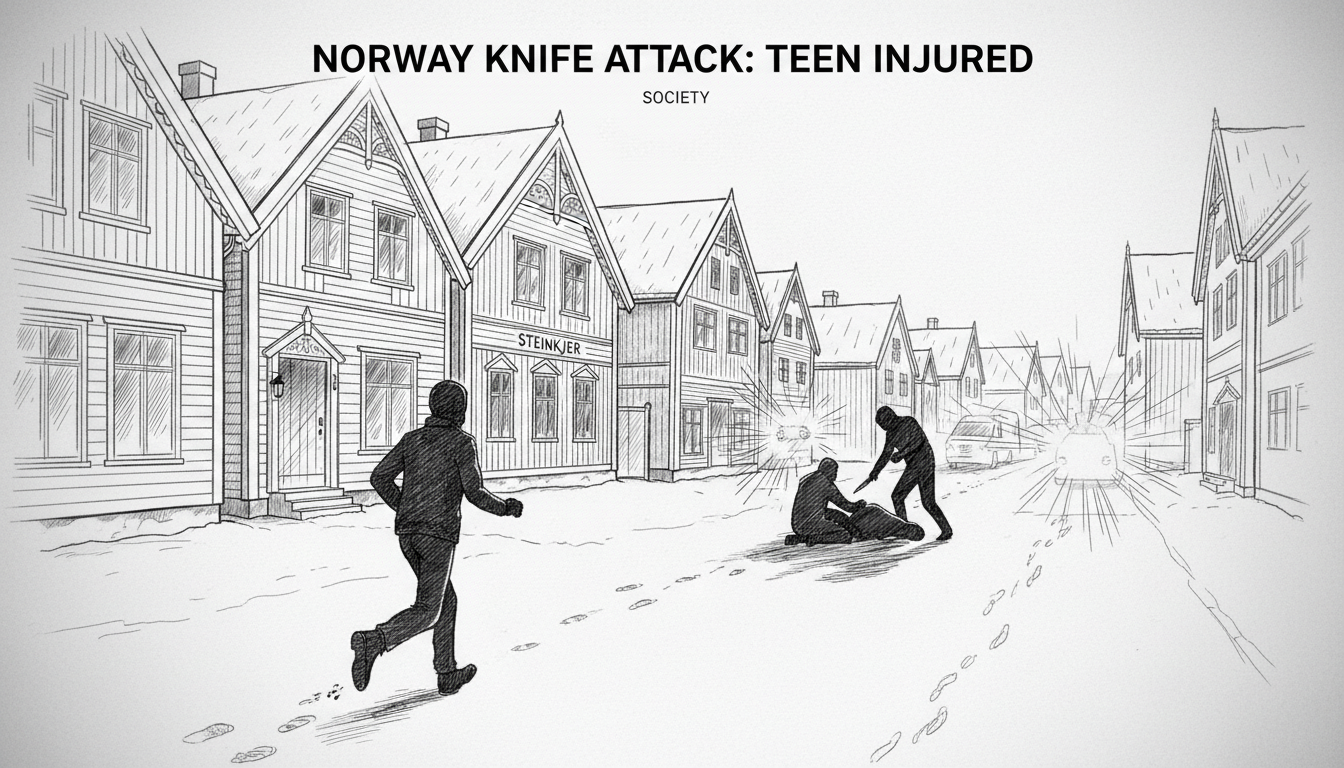
Norway's typically low crime rate was disrupted by a stabbing incident in the northern town of Steinkjer, leaving a teenager injured. Police responded with multiple patrols to a report of a knife attack on Tuesday evening. Authorities confirmed they have made contact with the victim and have control of a suspect, but have not released further details on the motive or circumstances.
A Community in Shock
The incident has sent ripples through Steinkjer, a quiet municipality of 24,000 people situated at the inner end of the Trondheimsfjord. As the administrative center of Trøndelag county, the town is better known as a transportation hub for the E6 highway and Nordland railway than for violent crime. Residents expressed surprise and concern, noting that such events are rare in a community where violent crime statistics are consistently below national averages. The fact that a young person was involved has heightened local anxiety.
Police Operations Leader Wenche Johnsen stated that the injured teen sustained light injuries. The suspect is in police custody. The swift containment of the situation prevented further escalation, but the investigation into the root cause is ongoing. Norwegian police procedures for violent incidents involve securing the scene, providing immediate aid, and initiating a thorough forensic and witness-based inquiry.
Context of Crime in a Low-Violence Society
This stabbing stands out precisely because of Norway's overall safety record. The country consistently ranks among the safest in the world in global peace indexes. Homicide rates are low, with firearms rarely used in criminal acts. Most violent crimes that do occur are statistically more likely to happen in larger urban centers like Oslo, Bergen, or Trondheim, not in regional hubs like Steinkjer.
"Any violent incident involving youth in a smaller community is treated with the utmost seriousness," said a criminology expert from the University of Oslo, who spoke on background due to the ongoing police investigation. "It disrupts the social fabric in a more profound way than it might in a city. The focus will be on whether this was a personal conflict, a random act, or something indicative of a broader, troubling trend among young people."
Norwegian authorities and social services pay close attention to youth violence, viewing isolated incidents as potential indicators of underlying social problems. Intervention programs aimed at mediation, mental health support, and integration are common national strategies.
The Steinkjer Response and National Patterns
Local police have not indicated any increased threat to public safety following the arrest. The response—deploying several patrols—reflects standard protocol for a reported weapon-involved assault. The operational goal is always to secure the area, protect the public, and apprehend the suspect as quickly as possible, which appears to have been achieved.
Analyzing national crime data reveals that while rare, knife-related assaults do occur across Norway. They often, though not exclusively, stem from conflicts within social circles or are linked to other criminal activity. The use of knives, as opposed to guns, is more common, reflecting strict national firearm regulations. Police statistics show that the clear majority of such incidents do not result in fatal injuries, thanks in part to rapid emergency medical response systems.
For Steinkjer, the event is an unwelcome anomaly. The town's identity is tied to its role in regional governance, its historical significance, and its natural setting along the fjord. Community leaders are likely to call for calm and trust in the police investigation while internally examining what support systems exist for local youth.
Looking Beyond the Immediate Incident
The long-term impact of a single violent event in a small community can be significant. It can alter residents' perception of safety and prompt municipal debates on policing resources, youth center funding, or after-school activities. In Norway, there is often a public discussion following such events about whether the social welfare state is failing to reach certain individuals.
However, experts caution against drawing sweeping conclusions from one case. "Norway's model is prevention and rehabilitation," the criminology expert noted. "A single incident, while tragic, is not evidence of systemic failure. The true test is how the community and the support apparatus rally around those affected to prevent recurrence."
The police investigation will seek to establish a definitive motive. Was it a dispute that escalated? An act of aggression with no prior relationship? The answers will shape the judicial response and any related community initiatives. Norwegian law treats violent crimes seriously, with penalties that can include imprisonment, particularly if intent is proven.
A Return to Calm?
As the police continue their work, life in Steinkjer will gradually return to its normal rhythm. The trains will continue to run along the Nordland Line, and the E6 highway will carry traffic north and south. But for the families involved and the community at large, the memory of the incident will linger. It serves as a stark reminder that no society, regardless of its statistics or reputation, is completely immune to moments of violence.
The challenge for peaceful nations like Norway is to maintain their successful, broad strategies for social cohesion while addressing the specific, individual circumstances that can lead to a knife being drawn on a street in Steinkjer. The coming days will reveal more about this specific case, but the broader question of how to safeguard youth and maintain community trust remains a constant, quiet priority across the Nordic region.