
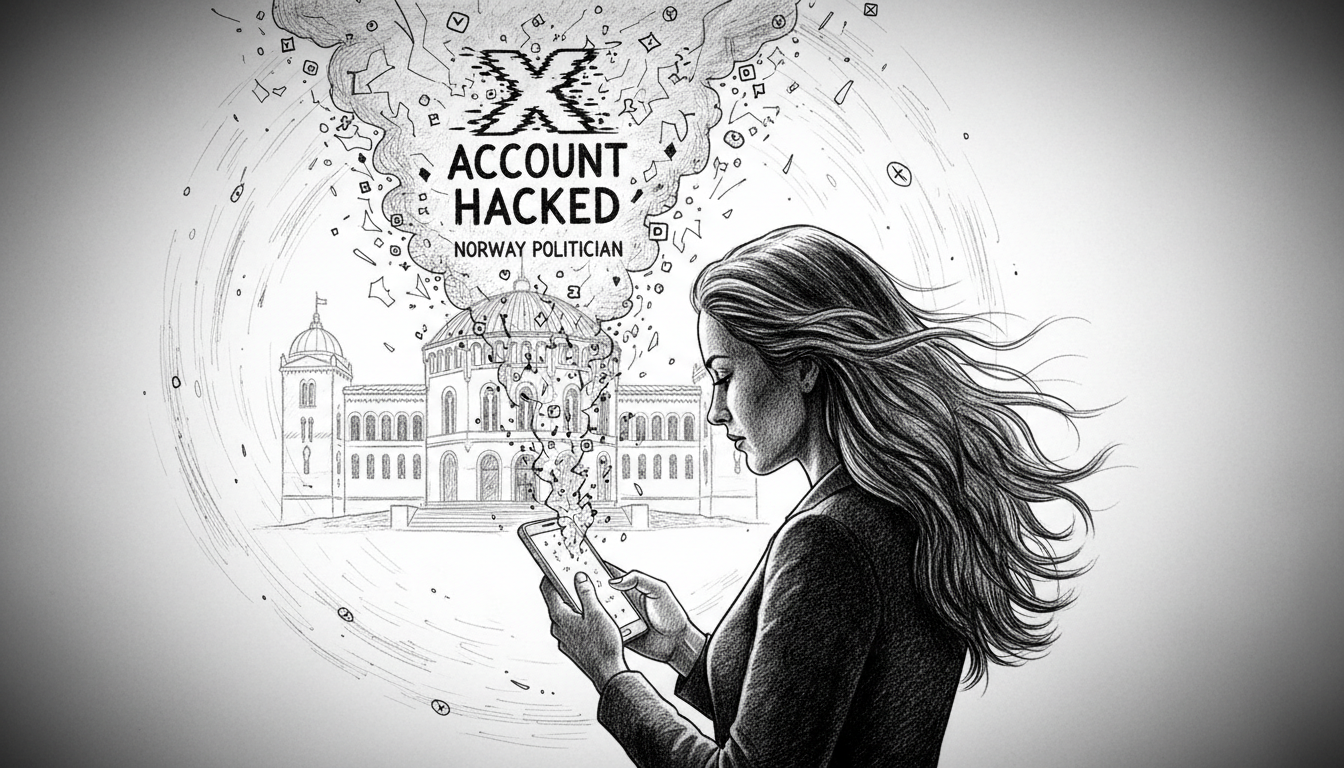
Norway's political establishment faces a digital security breach after the X account of Liberal Party leader Guri Melby was compromised. The hack, which saw the profile display the logo of blockchain firm Flare Network, has triggered a response from the Norwegian National Security Authority (NSM). This incident highlights growing vulnerabilities in the digital defenses of the country's elected officials.
Melby, who leads the centrist Venstre party, discovered her account had been taken over in recent days. Unauthorized posts promoting Flare Network appeared on the timeline. The profile picture was also changed to the company's logo. Venstre's press team confirmed the breach and said they are working with platform owner X to regain control.
"We have been notified and are in contact with X to help reset the account," NSM press officer Mari Lerdal said in a statement. The involvement of Norway's premier cybersecurity agency underscores the seriousness with which authorities are treating the incident. NSM typically handles threats against critical national infrastructure and high-profile political figures.
A Pattern of Political Targeting
This is not an isolated event in the Nordic region. Swedish and Finnish politicians have reported similar account takeovers in the past year. The method often involves sophisticated phishing attempts or exploiting weak password protocols. Cybersecurity analysts note that political leaders are high-value targets for both hacktivists and state-sponsored actors seeking to spread disinformation or damage reputations.
"When a party leader's account is compromised, it's not just an individual problem," said Lars Ingebrigtsen, a senior researcher at the Norwegian Institute of International Affairs. "It becomes a channel for potentially manipulating public discourse. An attacker could post fabricated statements, cause political turmoil, or erode trust in the institution itself." He points out that Norway's upcoming local elections make such accounts particularly attractive targets.
Venstre, founded in 1884, is a social-liberal party that has been part of several coalition governments. While currently in opposition, it holds influence on issues like education, climate policy, and European relations. Melby has been its leader since 2020 and is a recognizable figure in Norwegian media.
The NSM's Growing Cyber Mandate
The Norwegian National Security Authority's quick involvement reflects its expanded role in recent years. Originally focused on physical security for government buildings, NSM now dedicates significant resources to cyber threats. The agency publishes annual risk assessments and provides guidance to both the public and private sectors. Its advisory on securing social media accounts for public figures is clear: use strong, unique passwords and enable two-factor authentication (2FA).
Yet implementation remains inconsistent. A 2023 survey by Norway's Data Protection Authority found that only about 60% of municipal politicians used 2FA on their professional accounts. At the national level, the figure was higher but not universal. The breach of Melby's account will likely prompt NSM to renew its calls for stricter compliance with basic digital hygiene practices.
"This incident serves as a live demonstration of the threats we outline in our reports," an NSM analyst, who spoke on condition of anonymity, told Nordics Today. "The goal is often access, not just disruption. From a compromised social media account, an attacker can launch further phishing campaigns against the politician's contacts, including other MPs, journalists, or foreign diplomats."
The Flare Network Connection
The appearance of the Flare Network logo raises questions about the hacker's motive. Flare is a blockchain platform that describes itself as "the data blockchain." It is not associated with any known malicious activity. Cybersecurity experts suggest the hackers likely used its logo and content opportunistically, either to promote the company without its consent or to simply demonstrate control of the account.
"It's common for hackers to use a compromised account to promote a cryptocurrency or a particular project, sometimes for financial gain," explained Kari Anne Nøstvold, a partner at Oslo-based cybersecurity firm Watchcom. "They may have been paid to post it, or they may be trying to create artificial buzz. The key takeaway is that the account was vulnerable enough to become a billboard for someone else's message."
This commercial angle differs from more overtly political hacks, which often feature provocative statements designed to cause immediate scandal. The relatively benign content may have limited immediate reputational damage to Melby, but the breach itself is the real story.
Broader Implications for Norwegian Democracy
Norway prides itself on transparency and trust in its public institutions. Digital communication is central to how politicians engage with constituents. A loss of control over these channels strikes at the heart of modern democratic dialogue. If citizens cannot trust that a post from @GuriMelby is genuinely from her, the foundation of public communication is weakened.
The Storting, Norway's parliament, has its own IT security team, but members' personal or party-political accounts often fall outside its direct protection. This creates a patchwork of security postures. Some parties have implemented mandatory security training for MPs and staff; others have not. Venstre stated that it follows NSM guidelines but is now reviewing all its digital security protocols in light of the hack.
"We are treating this with the utmost seriousness," a Venstre spokesperson said. "Our immediate priority is securing the account and investigating how this happened. Following that, we will conduct a full review to prevent any recurrence." The party did not specify whether private messages were accessed during the breach, a concern for any politician discussing sensitive matters.
A Wake-Up Call for Digital Campaigning
With election seasons increasingly fought online, the security of digital assets is paramount. Campaign strategies rely on social media for fundraising, voter outreach, and rapid response. A hacked account can derail a carefully planned message cycle and force a campaign onto the defensive. It also consumes valuable time and resources that should be focused on policy and engagement.
Other party leaders in Norway are likely checking their own security settings today. The incident provides a stark reminder that public figures are under constant scrutiny from adversaries they may never see. It also raises questions about the responsibility of platforms like X, which have reduced their trust and safety teams in recent years, making account recovery more difficult.
As NSM works with X's support team, the resolution may take time. The process often requires proving ownership through multiple verification steps. For now, Melby's official communications have shifted to other verified channels. The hack, while resolved without major political fallout, leaves a lingering question: In an era of hybrid threats, how can Norway's open democracy protect its digital front lines without retreating from the online spaces where democracy now lives? The answer will require more than just stronger passwords—it demands a systemic commitment to cybersecurity as a core component of political integrity.