
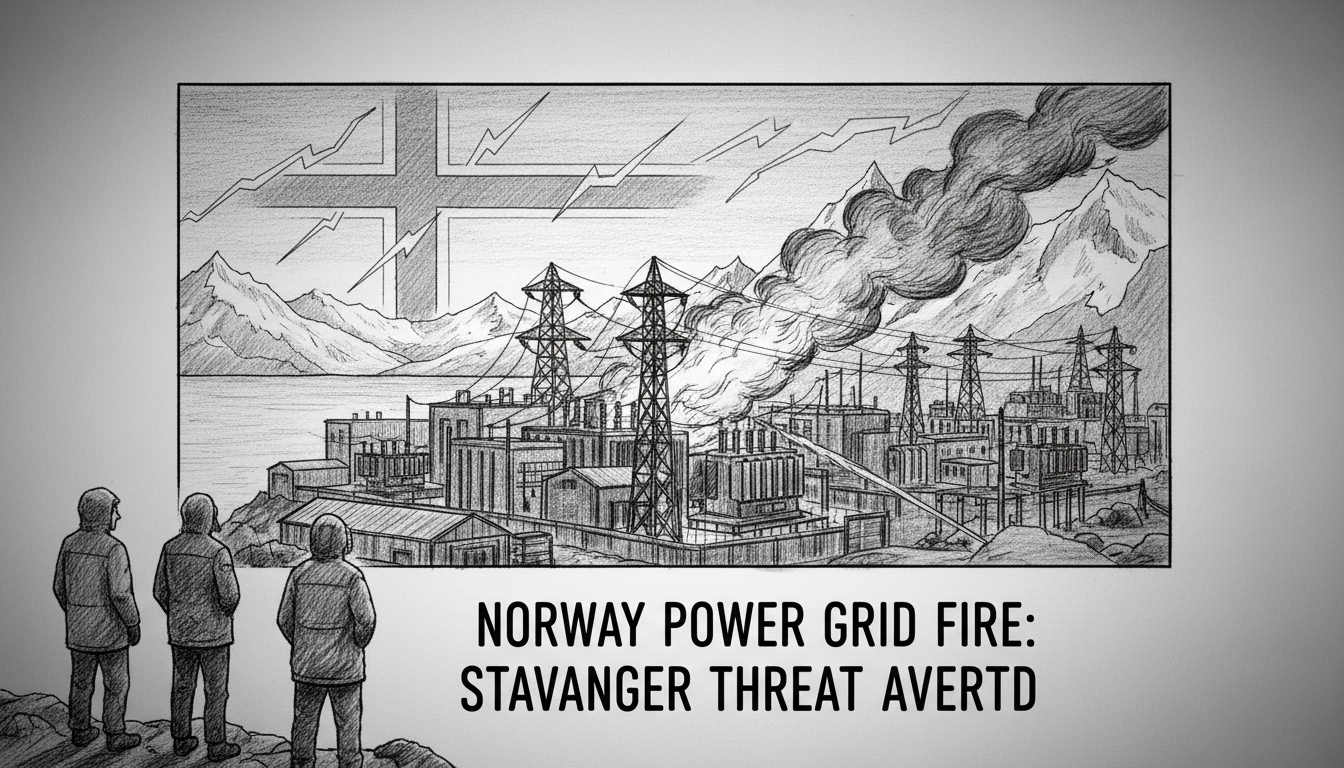
Norway's critical power infrastructure faced a direct threat Saturday morning when a fire erupted in temporary site buildings adjacent to a live transformer station in Stavanger. Emergency services rushed to Ullandhaug after receiving the alarm just after 7 a.m., finding heavy smoke enveloping the area near the Lnett-owned substation. The blaze, which consumed modular buildings used as break rooms and storage for a construction crew, was brought under control by 8:43 a.m., averting a potential blackout for the oil capital's residents and industries.
No employees were present when the fire started, preventing potential injuries. The immediate concern for grid operator Lnett was the proximity of the flames to the operational transformer station, a key node in southwestern Norway's electricity network. "Our concern is today's facility when you have a fire so close," said Lnett Communications Manager Ragnhild Ween. "But so far, there is no danger to the power supply."
A Close Call for the Oil Capital's Grid
The incident highlights the vulnerability of essential energy infrastructure, even in a nation renowned for its engineering and safety standards. Stavanger, home to major oil companies like Equinor and a hub for offshore operations in the North Sea, depends on a stable and resilient power supply. A prolonged outage at the Ullandhaug station could have disrupted not only households but also sensitive industrial processes and operational centers for the offshore sector.
Lnett had two technicians on site monitoring the situation throughout the response. Their presence underscores the high-stakes nature of the incident. The company is constructing a new transformer station in the same area to bolster grid capacity and reliability. The burning temporary buildings, known as a 'brakkerigg', were part of that construction project, situated perilously close to the existing, live equipment.
Fire Safety and Critical Infrastructure
Experts point to this fire as a case study in risk management for construction projects near operational utilities. "When working adjacent to critical infrastructure like a substation, fire safety protocols must be paramount and meticulously planned," said Lars Holm, a former safety director for the Norwegian Water Resources and Energy Directorate (NVE). "The risk isn't just to the construction site itself, but to the essential service it neighbors. A transformer station fire could have regional consequences."
Holm explained that while the fire department's rapid containment was crucial, prevention is the first line of defense. This includes strict controls on hot work, proper storage of flammable materials, and clear emergency access for fire crews. The fact that the fire started outside of working hours may have limited its cause to electrical faults or external factors, which investigators will now seek to determine.
Lnett's Response and Regional Reliability
Lnett's swift deployment of monitoring staff and clear communication during the event reflects the procedural rigor expected of Nordic grid operators. The company manages the distribution network in the Stavanger region, a task that grows more complex with the region's energy transition and increasing electrification. The new transformer station at Ullandhaug is part of ongoing investments to modernize the grid.
Ween's statement that power supply was never in immediate danger suggests robust physical separation and safety measures between the construction zone and the live equipment. However, the event will likely trigger an internal review. "Any near-miss event of this nature leads to a reevaluation of site safety plans and barriers," Holm added. "The question will be: were the temporary buildings placed at a safe enough distance, and were all potential ignition sources accounted for?"
The Broader Context for Norwegian Energy Security
This localized incident occurs against a backdrop of heightened focus on Norway's energy security. As a major oil, gas, and hydropower exporter, the nation's domestic grid reliability is a foundation of its economy and its role in European energy markets. The government and entities like Statnett, the national grid operator, continuously stress the importance of protecting physical infrastructure.
Transformer stations are particularly vulnerable points. They are difficult to replace quickly, and an outage can affect thousands of customers. For Stavanger, a city where the offshore industry requires uninterrupted power for everything from control rooms to port facilities, the margin for error is slim. The successful mitigation of this fire demonstrates the effectiveness of local emergency coordination but also serves as a stark reminder of ever-present risks.
Looking Ahead: Investigation and Implications
The police and fire authorities will now work to establish the fire's cause. The investigation will examine the construction site's electrical installations, any equipment stored in the buildings, and potential external causes. The findings will inform future safety regulations for construction projects near critical national infrastructure.
For Lnett, the incident is a test passed but a warning received. The continuation of the new transformer station's construction will now proceed under even more scrutinized safety conditions. The company's priority remains ensuring the existing station's security until the new one is fully operational and integrated into the grid.
This Saturday morning fire in Stavanger, though quickly extinguished, burns a lesson into the minds of infrastructure planners and safety officials: resilience is not just about building robust systems, but about protecting them at their most vulnerable moments, even from a seemingly mundane blaze in a temporary shack. As Norway continues to electrify its economy and supply its neighbors, will the physical fortification of its grid keep pace with the growing stakes?