
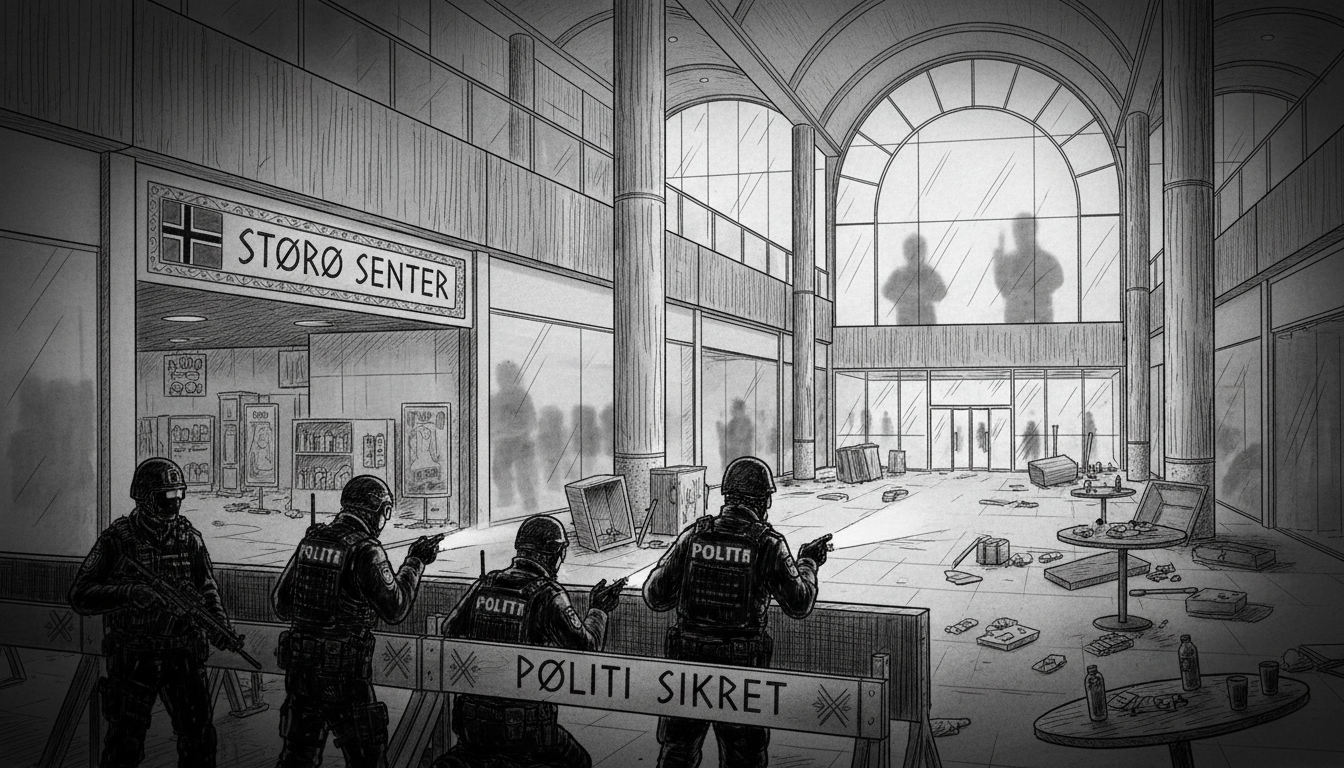
Norway's capital Oslo was shaken by a shooting at the Storo Storsenter shopping mall Monday morning, an exceptionally rare event in a nation with strict gun control and low violent crime rates. Police were notified of shots fired inside the center at 10:56 local time and quickly secured the scene, controlling the shooter and evacuating the premises. The incident at one of Oslo's largest and busiest retail hubs has sent shockwaves through a city unaccustomed to such public violence.
Operations leader Eirik Sannes of the Oslo Police District confirmed the situation in a statement. He said police had control of the shooter and were searching the center for additional injured or involved parties. Authorities urged the public to stay away from the area to improve working conditions for emergency responders. "We will report when the situation is normalized," Sannes wrote.
A Sudden Lockdown in a Bustling Hub
Storo Storsenter, located in the Nordre Aker district, is the largest shopping center in Oslo by turnover. It houses approximately 130 stores and restaurants and generates annual revenue of 1.65 billion Norwegian kroner. On a typical Monday morning, it would be filled with shoppers, workers, and families. Center manager Unni Merethe Aasgard confirmed the complete evacuation following the police alert. The swift lockdown transformed a center of commerce into a sealed crime scene within minutes.
The visual contrast was stark. One moment, the glass-and-steel structure was a symbol of mundane urban life. The next, it was surrounded by police vehicles, their lights flashing against the grey Oslo morning. Officers in tactical gear moved with purpose, while evacuated crowds gathered at a distance, their routines violently interrupted. This scene is far more familiar in other parts of the world than in Norway, where firearm homicides are among the lowest globally.
The Norwegian Context of Gun Violence
This incident stands out precisely because of its rarity. Norway maintains some of the world's most comprehensive gun control laws. Ownership requires a valid reason, such as hunting or sport shooting, and mandates background checks, safety training, and secure storage. The country's social democratic model, with its strong social safety net and high levels of trust, also contributes to low levels of violent crime. A shooting in a crowded public space, therefore, represents a profound breach of the social contract.
Experts point to this context when analyzing the impact. "When such events occur in Norway, the societal shock is immense," said a professor of criminology at the University of Oslo, who asked not to be named as the investigation is ongoing. "It challenges core perceptions of safety and order. The public and authorities are not conditioned to expect this kind of violence in everyday spaces like a shopping mall."
The nation's history with mass violence, notably the 2011 Utøya island and government quarter attacks, looms large in the collective memory. Those tragedies led to a national reckoning and further tightening of gun laws. Any public shooting inevitably triggers a painful comparison, raising immediate questions about motive, prevention, and whether it signals a troubling new trend.
Immediate Response and Lingering Questions
Oslo police's response followed established protocols for critical incidents. Securing the shooter was the first priority, followed by a methodical search of the vast center to ensure no further threats existed and to locate any potential victims. The evacuation, managed by center staff and security under police direction, appears to have been executed efficiently. The focus now shifts to the forensic investigation and understanding the chain of events.
Key questions remain unanswered. What was the shooter's motive? Was the target specific or random? How many people were injured, and what is their condition? Police have not released details on the number of casualties or the identity of the shooter, citing the active investigation. The weapon used has also not been disclosed. These details will be crucial for understanding the nature of the threat.
Beyond the immediate crime scene, the incident raises broader issues for Norwegian society. Will it lead to increased security measures at other major public venues, like the nearby Sandvika Storsenter or Oslo City shopping mall? Could it influence the ongoing political debate about police resources and community safety? The attack on a soft target—a place designed for leisure and consumption—strikes at a sense of normalcy that many Norwegians take for granted.
A City Forced to Confront an Unwelcome Reality
For Oslo residents, the news likely provoked a dual reaction: shock at the event itself, and a disorienting sense that this belongs to a different reality. Norwegians are more accustomed to headlines about oil prices, Arctic sovereignty, or parliamentary debates in the Storting. Violent crime, while it exists, rarely manifests so brazenly in a family-oriented space.
The location itself adds a layer of unease. Storo is not a peripheral area; it's a major transport node and commercial anchor for the city's north side. Its normality is its defining feature. The violation of that space will resonate deeply. Parents who shopped there with children, students who gathered there after school, and employees who worked there daily will now associate it with a traumatic event.
In the coming days, the focus will turn from the urgent police log updates to the human stories. Testimonies from witnesses and staff will emerge, painting a clearer picture of the fear and confusion inside the center. The community will seek explanations and, ultimately, reassurance. The police press conferences will be scrutinized not just for facts, but for a tone that can restore public confidence.
The Path Forward for a Shaken Community
Norway's response to tragedy has historically been characterized by a commitment to transparency, thorough investigation, and a collective emphasis on democratic values. The judicial process will be methodical. The debate around public safety will be measured. There will be calls for calm and unity, rather than alarm or division.
However, the psychological impact is immediate and personal. The unthinkable has happened in a place dedicated to the thinkable—shopping for groceries, buying new clothes, meeting for coffee. This dissonance is what makes such attacks so effective at generating fear. The challenge for Oslo now is to manage that fear without surrendering to it, to investigate thoroughly without presuming conclusions, and to support those affected while maintaining the open society that defines Norway.
As the police work to normalize the situation at Storo Storsenter, a larger process of normalization begins for the city. The center will eventually reopen. Shoppers will return. But the memory of a Monday morning in March, when a shopping trip was interrupted by the sound of gunfire, will linger. In a country where such events are statistical anomalies, they become cultural landmarks. How Norway integrates this landmark into its story of safety and community will be watched closely, both at home and abroad.
The final word, for now, belongs to the police and their ongoing work. As Operations Leader Sannes stated, they will report when the situation is normalized. For a shaken Oslo, normalcy suddenly feels like a more complex and precious state than it did just hours ago.