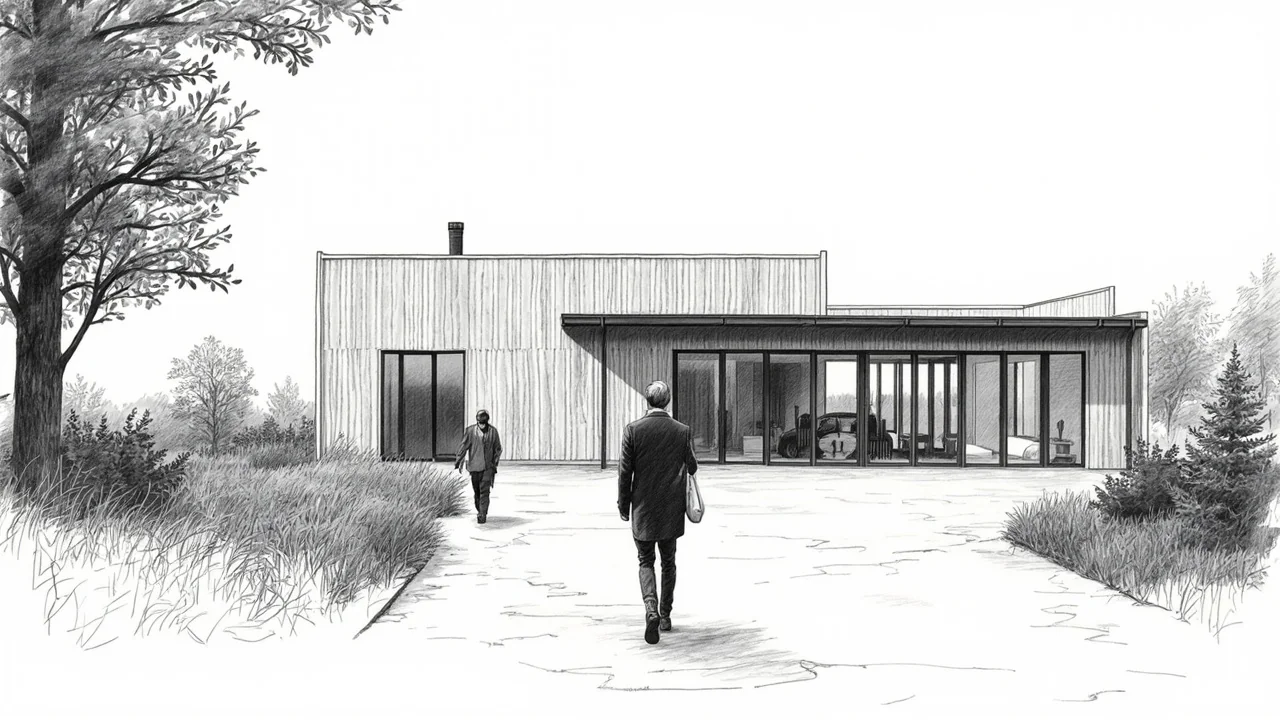
Private practitioner Søren Madsen opens a consultation room at the warming centre run by Kirkens Korshær in Odense every other Tuesday. The clinic sits side by side with the drug consumption room: "Stofindtagelsen" on the door to the left, "sundhedsrum" on the door to the right.
Peder Pedersen, 69, is one of the centre's regular users. He had what he describes as a normal life for many years, with family, steady work and his own firm. At 40 he began taking drugs.
"People aren't much for going to the doctor up in town. They don't get it done. They're best off when they're here, where they come daily," he said.
"People almost half-rot before they get to a doctor. They feel bad about going, and once they've taken drugs they forget everything. But when Søren is here, it means things get taken earlier."
Madsen has ten patients on his list this day. After an hour and a half he has seen three or four of them, because the consultations are complex. "I've had several who had to go to hospital. They didn't want to contact their own doctor or the out-of-hours service. It's difficult infections, some are really unwell, and overall they're considerably sicker here than those I normally see in my clinic. These are people living on the edge of society," he said.
The clinic is sparsely equipped: a grey chair that can become a bed, scales, cleaning wipes, a device that measures infection counts and one that measures blood count. Many arrive with wounds, infections and low blood count. The arrangement is a regional project that tries to address inequality in health by bringing help closer to the weakest in society, and the Odense warming centre is the first place in Region Syddanmark to launch it.
Centre leader Heinz Wolf hopes the project becomes permanent. "There's a queue for Søren, and when you're not in so much pain you can better cope with other things in your everyday life," he said. Peder Pedersen wants more: "Søren should come every week. Things can really develop a lot in 14 days."
Based on reporting by DR.