
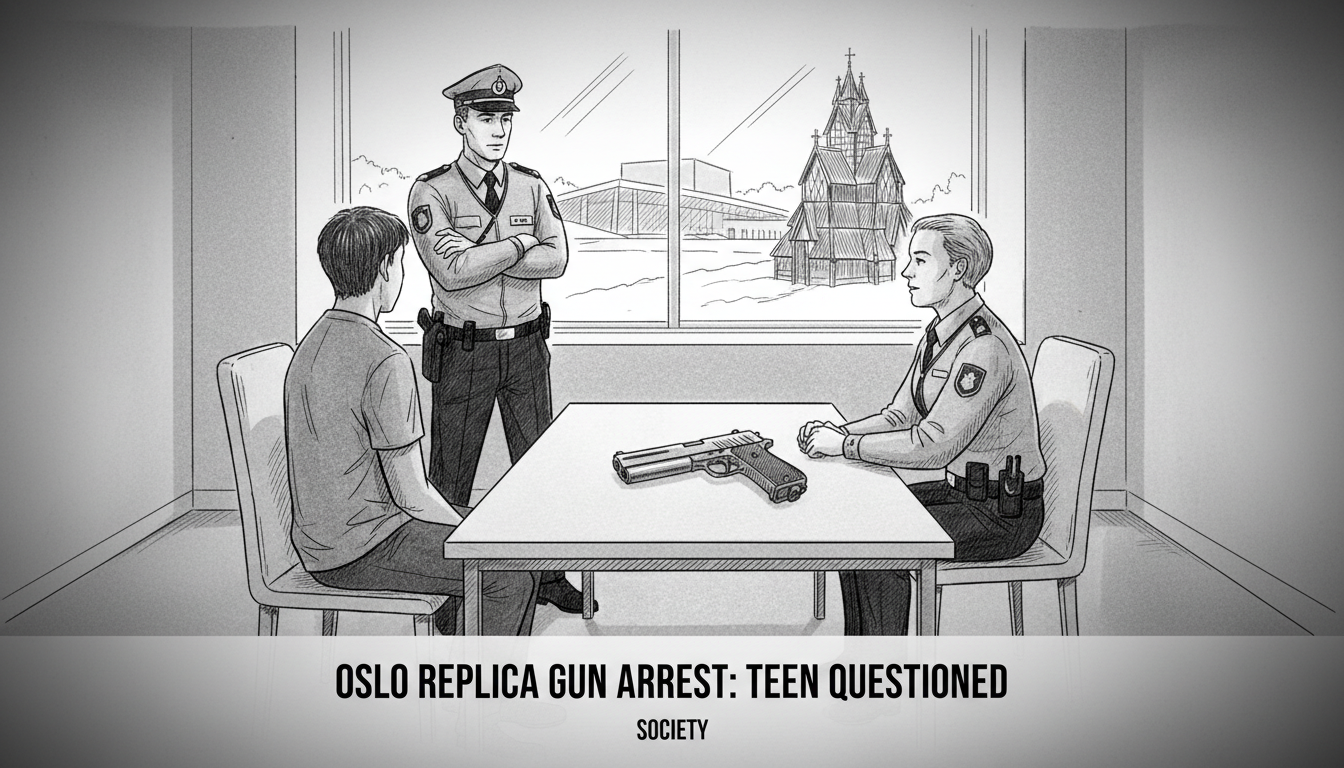
Norway's capital saw a significant police mobilization Tuesday night after reports of a person armed at a central traffic hub. Approximately 20 officers and nine patrol vehicles descended on Carl Berner after a witness reported seeing a weapon. The incident, which caused public alarm and disrupted bus services, culminated in the arrest of a 15-year-old boy found in possession of a replica pistol.
A Swift and Substantial Police Response
Police operations leader Bjarne Pedersen confirmed the arrest in a log statement. "The suspect was apprehended inside a bus," Pedersen wrote. The call came in around 9:15 PM, triggering a major response protocol reserved for potential armed threats. Carl Berner, a major roundabout connecting several city boroughs with tram and bus lines, was the scene of the operation. Authorities moved quickly to secure the area, diverting public transport and establishing a perimeter while they located the individual. The scale of the response underscores the zero-tolerance approach Norwegian police take to any reported firearm incident, even before the nature of the weapon is confirmed.
The Legal Gray Zone of Replica Weapons
The discovery of a replica pistol, not a functioning firearm, shifts the legal context. Norwegian law draws a clear distinction between real firearms and imitation weapons under the Firearms Act. However, possessing or displaying a replica in public is not automatically legal. "Carrying a replica weapon in a public space can be considered a violation of the General Civil Penal Code, specifically section 192 on creating alarm or disturbance," explains Professor Johs. Andenæs, a legal scholar specializing in criminal law. "The decisive factor is the intent of the carrier and the realistic appearance of the object. If the replica is used to intimidate or causes reasonable fear, it becomes a criminal matter." The police assessment on scene focuses on whether the replica could be perceived as real by a reasonable person and what the carrier's purpose was.
Norwegian law prohibits the import, sale, and purchase of replica firearms that are not clearly marked with an orange tip or other permanent coloration. Even marked replicas can lead to charges if used to threaten or cause public distress. The penalty for creating gross public alarm can be a fine or imprisonment for up to one year. In this case, the young age of the suspect introduces considerations from the Child Welfare Act, meaning social services will be involved alongside any potential juvenile justice proceedings.
Police Protocols for Reported Firearms
This event highlights established police procedures for weapon reports. "Our protocol is to treat every call about a visible weapon as an imminent threat until we can verify otherwise," says a senior Oslo police officer, speaking on background about operational guidelines. "This means an immediate and coordinated response to secure public safety first. We cannot wait to determine if a gun is real or a replica when a witness reports it." The response typically involves armed units, containment of the area, and control of ingress and egress points. Once the situation is contained and the individual secured, investigators work to determine the weapon's functionality and the suspect's motives.
The officer noted that such call-outs are resource-intensive. They divert patrols from other duties and can cause significant disruption, as seen at Carl Berner. The decision to deploy substantial force is weighed against the catastrophic potential of a real active shooter situation. Norway's memory of the 2011 terrorist attacks, while an extreme case, inevitably influences a precautionary approach to any potential armed threat in public spaces.
A Broader Look at Youth and Imitation Weapons
This incident raises questions about adolescent possession of imitation firearms. While comprehensive national statistics on replica-related incidents are not centrally compiled, Oslo police note occasional similar reports, particularly among younger teens. Child psychology experts point to a range of possible motivations, from misguided bravado and peer influence to deeper psychosocial issues. "It can be a cry for attention, an attempt to project power, or a failure to understand the severe consequences of such actions," says Dr. Elise Nilsen, a clinical psychologist working with adolescents. "The developmental stage of a 15-year-old involves testing boundaries, but this represents a severe miscalculation with serious legal and social repercussions."
Parents in Norway are generally advised to be vigilant about what their children possess and to educate them on the severe implications of carrying any object resembling a weapon in public. Schools also run programs on digital citizenship and real-world consequences, which sometimes cover the dangers of realistic-looking toys or replicas. The Norwegian Consumer Authority actively monitors the sale of toy guns to ensure they meet visual distinctiveness standards, but replicas can still be acquired through other channels.
Public Safety Versus Proportional Response
The event sparks a debate on the balance between public safety and proportional resource use. While citizens largely expect and appreciate a strong police response to potential threats, some question whether nine patrol cars were necessary for a single teen with a replica. Police authorities defend the protocol. "We plan for the worst-case scenario," the operations leader stated. "The cost of overreacting is measured in kroner and overtime. The cost of underreacting could be measured in lives." The incident ended without injury, which police view as a successful outcome of their procedures.
For residents and commuters at Carl Berner, the event was a jarring disruption. "You hear about these things elsewhere, not at your local bus stop," said one witness who declined to be named. The visible police presence and the vague nature of initial information inevitably fueled anxiety until the situation was resolved. The case now moves from the operational unit to investigators and likely child welfare services. The teenager faces questioning to determine his intentions and any potential charges. His age means the focus will be on corrective measures rather than punitive action, following Norway's principles of restorative justice for young offenders. The replica pistol will be examined and likely destroyed. This Tuesday night incident serves as a stark reminder that in today's climate, the appearance of a weapon, real or not, triggers a formidable and immediate chain of events.