
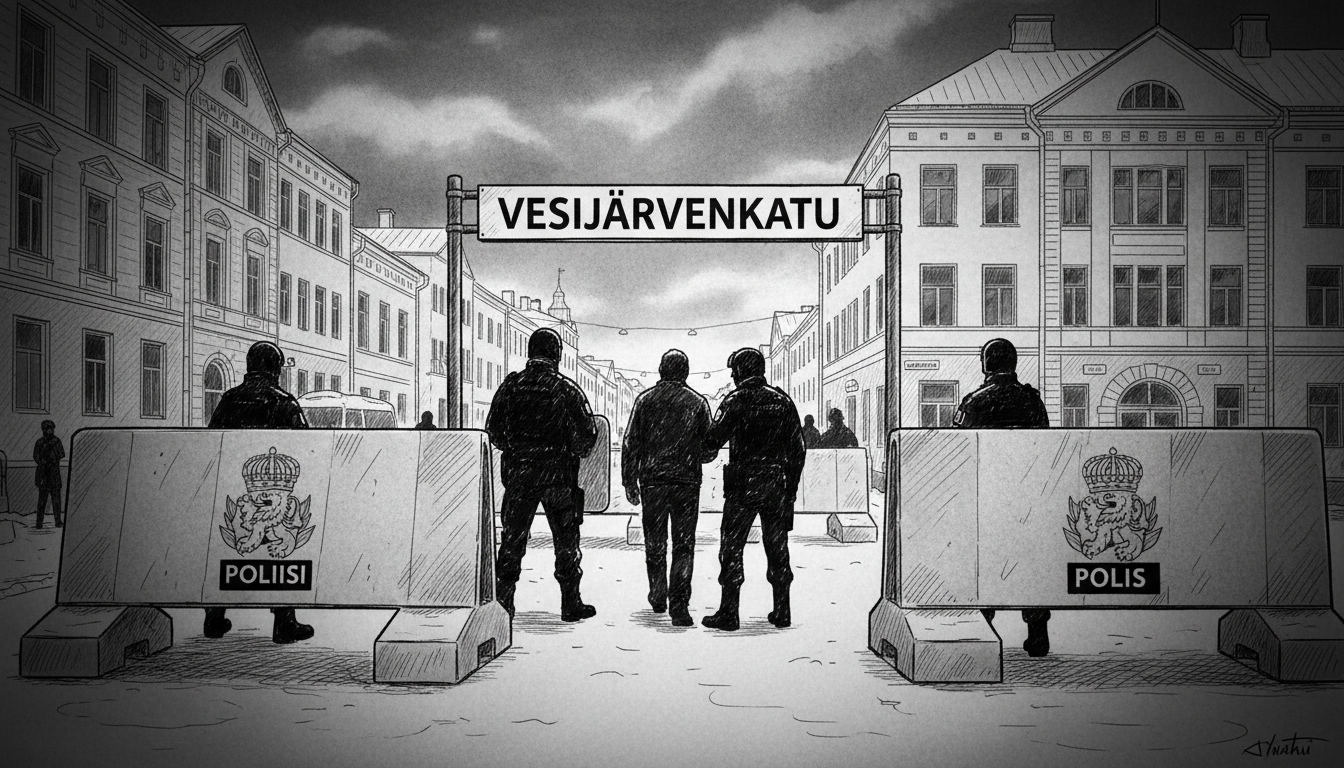
Police in the Finnish city of Lahti closed a street and detained a man during an operation on Thursday evening. Authorities from the Häme Police Department confirmed the incident, stating that officers had apprehended a dangerous male individual. The man was taken into custody outdoors on Kalliokatu street. Police have so far declined to comment on whether the operation was linked to an emergency call or an ongoing investigation of their own. They have also not disclosed if the detained man is suspected of any crimes. Officers were on the scene for approximately one hour, with the arrest made earlier in the evening. Police indicated that certain procedures were still being carried out at the location.
This incident highlights the operational protocols of Finnish law enforcement, which prioritize public safety and a methodical investigative approach. Finnish police are typically reserved in releasing details during the initial stages of an operation to protect the integrity of any potential legal proceedings. The city of Lahti, a major urban center in the Päijät-Häme region, has a generally low crime rate by international standards, making such visible police actions notable for local residents. The response reflects standard procedure for situations deemed to involve potential danger, where securing the area and the individual is the immediate priority.
From a broader perspective, this event connects to ongoing national discussions in Finland about public order, police resources, and community safety. The Finnish model of policing emphasizes de-escalation and proportionality, with officers receiving extensive training. While details are sparse, operations of this nature often involve coordinated efforts between patrol units and possibly specialized teams, depending on the initial assessment of the threat. The closure of a public street indicates authorities judged a clear perimeter to be necessary, a decision not taken lightly in a country known for minimizing public disruption.
For international observers and residents in Finland, this serves as a reminder of the balance between transparent governance and operational security. The police's initial silence on specifics is standard, with more information typically released through official channels if charges are filed. The incident will likely be logged in official statistics, which are publicly available and contribute to the annual reporting on crime and police activities in the Helsinki government district and beyond. The next steps involve processing the detained individual, where Finnish law guarantees specific rights and access to legal counsel, underscoring the nation's strong rule of law framework.