
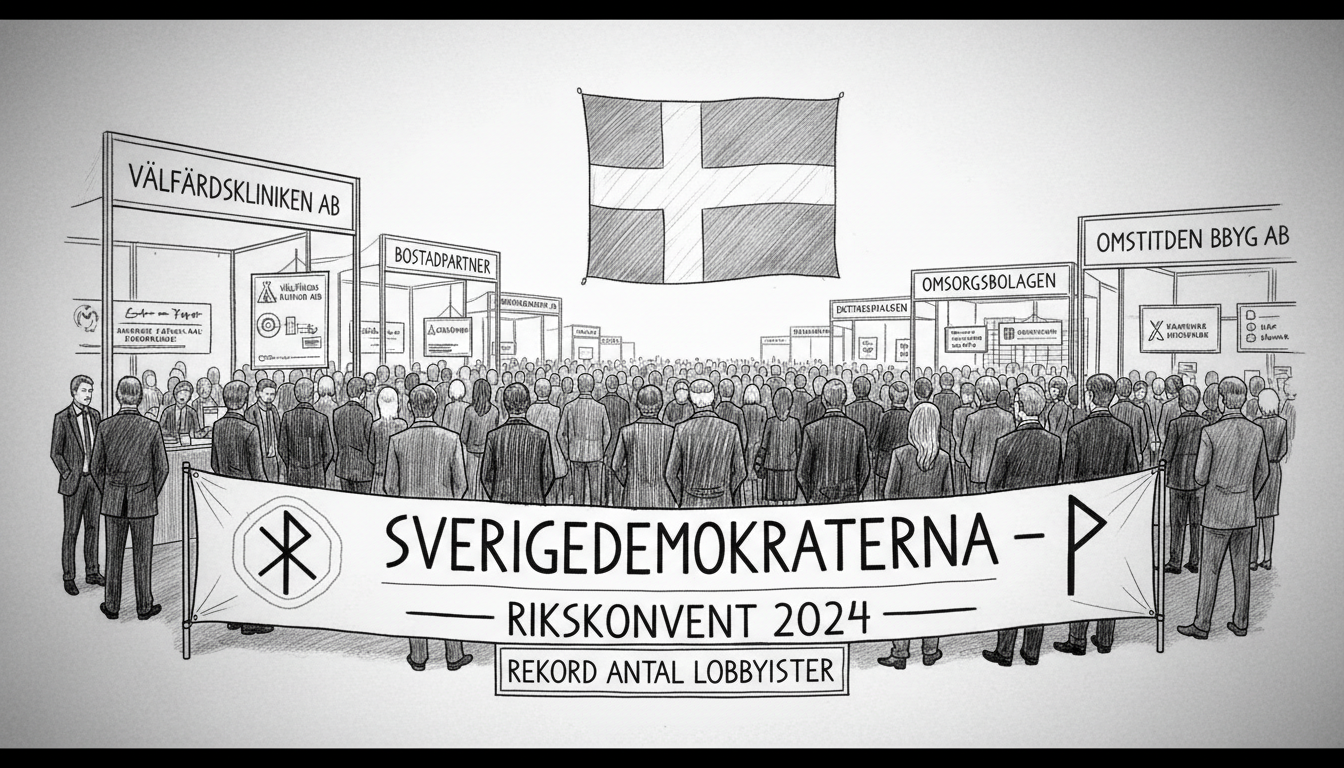
Sweden Democrats face unprecedented interest from lobbyists at their national convention. Welfare companies and tenant associations now crowd the exhibition hall in Örebro. Political analysts point to the party's growing influence as the main attraction.
The Sweden Democrats gather members from across the country this weekend. Their national convention occurs every two years. The 2019 meeting in Karlstad featured no external exhibitors. Two years later in Västerås, five or six organizations attended. This year, 34 exhibitors compete for attention. Party officials turned away several groups due to space limitations.
Political observers note this surge reflects the party's transformed position. The Sweden Democrats now hold substantial parliamentary power. Their support often proves crucial for government proposals. This reality draws interest from various sectors seeking policy influence.
Welfare companies and housing organizations dominate the exhibitor list. These groups represent industries directly affected by government policy. The Swedish Tenants' Association maintains a prominent presence. Several private welfare providers also seek connections with party representatives.
Political scientists describe this development as predictable. Parties gaining power naturally attract more attention from interest groups. The Sweden Democrats' journey from political isolation to central influence explains the exhibitor explosion. Their role in shaping Swedish immigration and law enforcement policy particularly interests lobbyists.
International readers should understand Sweden's proportional representation system. No single party typically achieves majority control. This makes smaller parties like the Sweden Democrats powerful kingmakers. Their support often determines which policies pass through parliament.
The convention occurs as Sweden faces several pressing political debates. Immigration policy remains deeply divisive. Energy costs concern many households. Crime reduction strategies dominate political discussions. These issues explain why so many groups seek access to the party's decision-makers.
What does this mean for Swedish politics? The Sweden Democrats clearly transition from protest movement to establishment player. Their policies now influence national direction. This convention demonstrates their acceptance as legitimate political actors. The party's ability to attract diverse interest groups signals their continued political relevance.
The exhibition surge also raises questions about political influence in Sweden. Some critics worry about corporate access to powerful parties. Others see normal democratic engagement. This development mirrors patterns seen when other protest parties entered mainstream politics across Europe.
Sweden Democrats convention exhibitors reflect broader Nordic political trends. Populist parties gain influence throughout the region. Finland's Finns Party and Denmark's Danish People's Party experienced similar trajectories. Their growing power reshapes political landscapes and interest group behavior.
The Örebro convention marks another milestone in the party's political normalization. From no exhibitors to turning groups away shows remarkable transformation. This development signals the Sweden Democrats' continued impact on Swedish society and policy.