
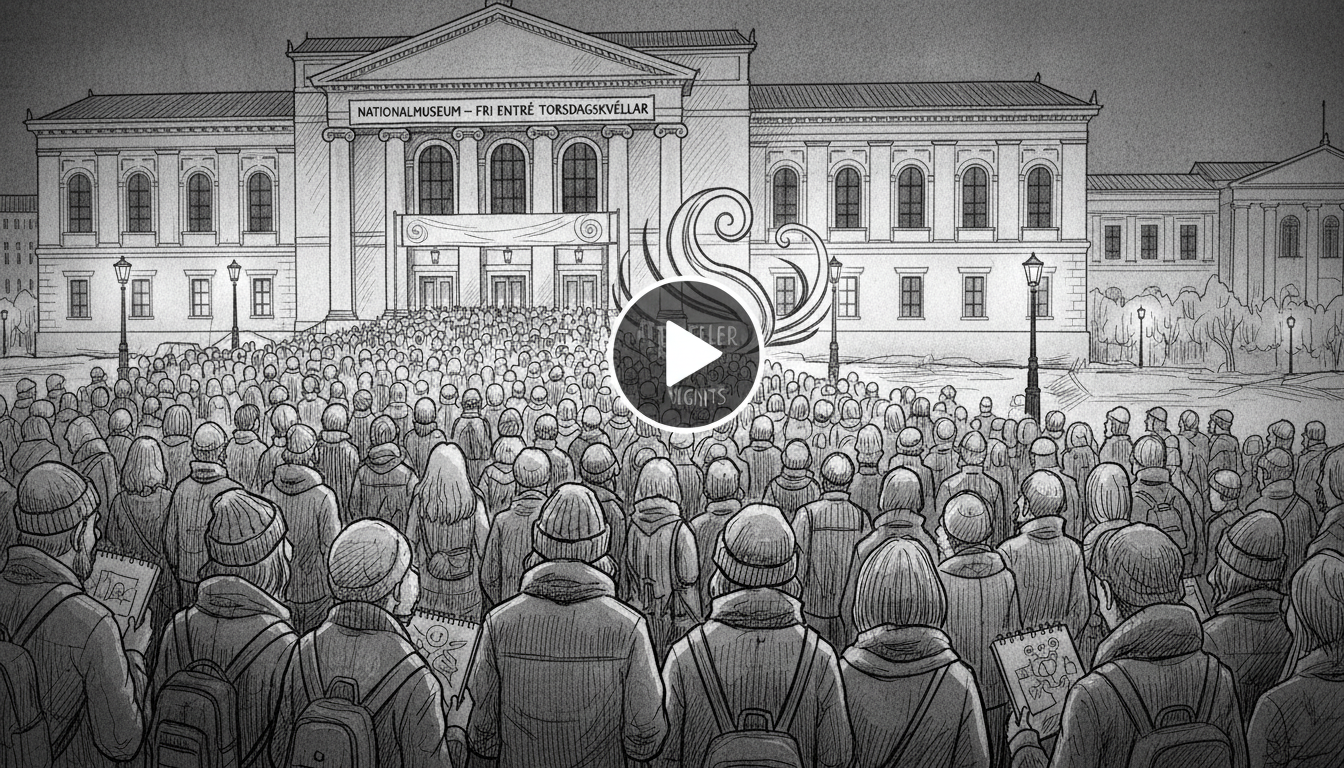
Hundreds of people have been queuing up on recent Thursday evenings at Stockholm's Nationalmuseum. The lines stretch unusually long, all for a chance to experience the museum's own ateliers. Museum staff point to a viral Instagram video as the likely cause of this sudden surge in popularity.
Since February, the Nationalmuseum has offered free admission to its exhibitions and activities on Thursday nights. This initiative aimed to make art more accessible. But in recent weeks, an inexplicably large number of visitors have arrived with one specific goal. They want to visit the museum's creative studios, a space where visitors can engage with art hands-on.
Johannes Meyer, the museum's program manager, confirmed the trend. He said the museum is reaching maximum capacity for what the building can safely hold on these nights. The ateliers, which offer materials and space for drawing and creative exploration, have become the unexpected star attraction.
This story reveals a fascinating trend in Swedish society and cultural consumption. The power of social media to drive real-world behavior is on full display. A single viral post can transform a quiet cultural offering into a must-see event overnight. It speaks to a desire for interactive, shareable experiences over passive observation, especially among younger Stockholmers.
For international readers, this highlights a key aspect of Swedish culture news. Sweden heavily subsidizes its cultural institutions. The free Thursday night entry is a direct result of this policy, designed to remove economic barriers. The ateliers represent a modern shift in museology, moving from temples of art to participatory workshops. This aligns with broader Swedish society trends valuing creativity, accessibility, and communal activity.
The location itself is iconic. The Nationalmuseum sits on the Blasieholmen peninsula, overlooking the water towards the Royal Palace and Gamla Stan. Its recent renovation made it a premier Stockholm event destination. The crowd's composition likely reflects the city's diverse demographics, from students in Södermalm to families from Vasastan.
What does this mean for the future? Museums may need to prepare for the 'viral effect' on specific parts of their programming. It also raises questions about sustainable popularity. Is this a fleeting trend or a lasting shift in how people engage with museums? For now, the scene is a positive sign of vibrant public interest in culture, a core part of the Swedish lifestyle. It shows that when you remove cost and add a creative, hands-on element, people will literally line up around the block to participate.