
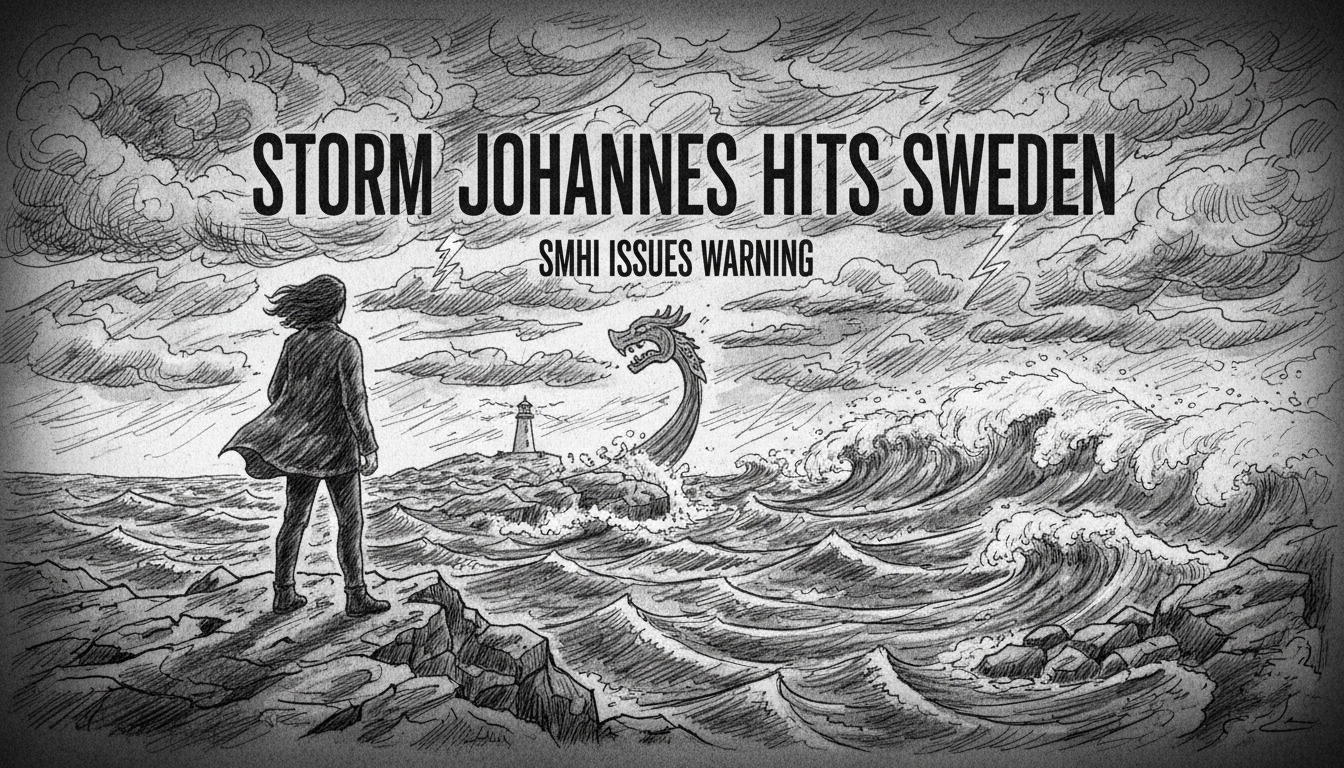
Storm Johannes is sweeping across Sweden, bringing high winds and heavy rain. Near Aspåsnäset in Krokoms kommun, a large spruce tree fell directly across Road 745. Several cars were forced to turn back. But Martin Nordin had a small saw in his trunk. 'A little handsaw like this is excellent to always have with you. It gets the job done,' he said, clearing the path himself. This small act of self-reliance underscores a larger story of a nation bracing for a powerful autumn storm. The Swedish Meteorological and Hydrological Institute (SMHI) has issued warnings for much of the country, urging caution as Johannes moves in from the southwest.
The Unpredictable Power of a Swedish Storm
Sweden's landscape, dominated by forests covering more than half its land area, creates a unique vulnerability during autumn gales. The storm, named Johannes by Swedish meteorologists, is a classic example. High winds gusting through dense woodlands turn trees into projectiles and roadblocks. With a road network spanning approximately 140,000 kilometers, much of it lined with trees, disruptions are almost guaranteed. Incidents like the one on Road 745 near Aspåsnäset are repeated across the country. They block vital arteries, strand drivers, and challenge the response teams from the Swedish Transport Administration. For locals like Martin, a prepared mindset is part of living in the Swedish countryside.
SMHI's Warning System in Action
The Swedish Meteorological and Hydrological Institute operates a crucial public warning system. For Storm Johannes, they issued Class 1 and Class 2 warnings, indicating the potential for significant impact. A Class 2 warning, the middle of three levels, means dangerous weather is expected that could pose a risk to the public and cause damage to property. SMHI's forecasts are the backbone of Sweden's storm preparedness. They enable municipalities, emergency services, and power companies to pre-position resources. Meteorologists consistently emphasize the importance of heeding these warnings. Their advice is clear: avoid unnecessary travel, secure loose outdoor items, and prepare for possible power outages. In Jämtland County, where Krokoms kommun is located, the warnings take on extra weight. This region in northern Sweden is no stranger to harsh weather, but each storm demands respect.
Beyond the Fallen Tree: A Nation Adapts
The image of a single citizen clearing a road with a handsaw is powerfully Swedish. It speaks to a cultural concept often discussed here: 'dig är din egen hjälte' (you are your own hero). It reflects an expectation of personal responsibility and practical problem-solving. However, the systemic response is just as important. Behind the scenes, emergency services coordinate clearing operations. Power companies brace for thousands of potential outages as lines are downed by branches. Public transport faces delays and cancellations. The storm tests infrastructure and resilience. In cities like Stockholm, the impact differs. High winds whip between buildings, turning unsecured café furniture into hazards. Ferries on Lake Mälaren may face delays. The cultural rhythm adjusts; plans are changed, and people stay indoors. It’s a shared experience that momentarily unites the country.
The Human Stories Within the Gale
While statistics about road networks and forest cover are essential, the real story of Storm Johannes is written in everyday moments. It's about the family whose trip to a weekend stuga (cottage) is postponed. It's about the farmer securing loose roofing on his ladugård (barn). It's about the commuter in Gothenburg checking the SJ train app for cancellations. In coastal towns, residents watch the churning sea, knowing to keep a safe distance from piers. The storm also highlights a quiet social contract. Neighbors check on elderly residents. Community social media groups light up with reports of blocked roads and fallen branches, creating a grassroots information network. This community response complements the official work of emergency services, creating a layered defense against the weather's chaos.
A Recurring Autumn Narrative
Storms like Johannes are not anomalies; they are part of Sweden's seasonal cycle. Every autumn and winter, several such systems roll in from the Atlantic. They shape traditions and routines. The concept of 'mys' (coziness) becomes a national coping mechanism. As the wind howls outside, the conscious act of lighting candles, making hot chocolate, and staying in becomes a cultural practice. This contrast between external fury and internal calm is very Swedish. The storms also drive innovation in forestry management near roads and in the robustness of the national power grid. Each event provides data, leading to better predictive models and more resilient planning. Yet, nature's power always retains an element of unpredictability, as anyone who has heard a tree crack in a strong gust can attest.
Looking Ahead: Preparedness and Perspective
As Storm Johannes moves across the country, its full impact will be assessed. Clean-up crews will work for days. Insurance companies will process claims for damaged roofs and cars. The Swedish society news cycle will briefly focus on storm damage before moving on. But the lessons linger. The event reinforces the value of SMHI's public service role. It highlights the importance of individual preparedness, from having a handsaw in the trunk to stocking emergency supplies at home. For international observers, it's a window into how a modern, forested nation contends with powerful natural forces. The Swedish approach blends advanced meteorological science with a deep-seated cultural emphasis on practical readiness and communal responsibility. As the skies eventually clear, one question remains for every Swede: Is your emergency kit ready for the next one?