
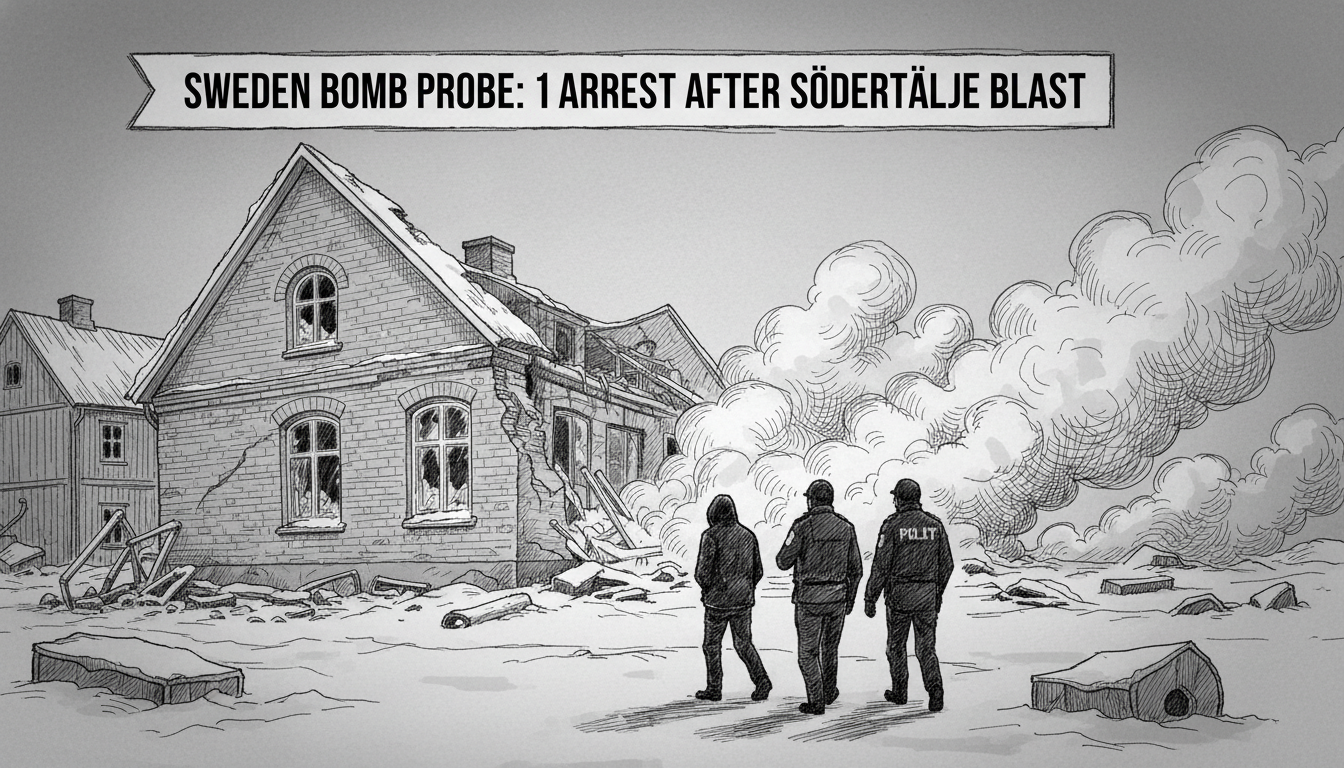
Sweden crime news is again focused on Södertälje after a powerful explosion shattered the night. The blast, described by witnesses as a "huge bang," occurred just before 00:30 on Saturday morning, damaging a vehicle and a nearby building. Police have arrested one person suspected of public endangerment, a serious charge in the Swedish legal system.
"This witness also reported seeing someone running from the scene," said police press spokesperson Rebecca Landberg. The National Bomb Protection unit is now investigating the nature of the explosive device. For residents in the affected neighborhood, the sound was a terrifying echo of a growing national problem. This incident is not an isolated event but part of a troubling pattern that has community leaders and police deeply concerned.
A Shattered Night in a City Under Strain
The explosion left clear marks. One vehicle sustained extensive damage. A window in a neighboring building was blown out, and the facade suffered minor damage. While no injuries were immediately reported, the psychological impact on a community weary of violence is significant. Södertälje, a vibrant city south of Stockholm known for its large Assyrian/Syriac community and industrial heritage, has faced persistent challenges with organized crime. The city frequently appears in Swedish media reports on gang violence, a label locals feel unfairly overshadows their community's rich cultural life and strong social fabric.
Walking through areas like Hovsjö or Ronna, you see the duality. There are bustling family-owned restaurants, churches, and community centers. Yet, there is also an underlying tension. Police presence has been heightened in recent years. The municipality has invested millions of Swedish kronor in prevention programs, focusing on youth outreach and social initiatives. Despite these efforts, statistics paint a difficult picture. In 2020, Södertälje was among the Swedish municipalities with the highest number of reported crimes per capita, at around 140 crimes per 1,000 residents.
The Escalating Threat of Explosives
This case is particularly alarming due to the method. The involvement of Sweden's National Bomb Protection unit indicates the severity. The use of explosives represents a dangerous escalation in criminal tactics. In 2023, the Swedish Police Authority reported a national increase in explosive-related crimes. These are not just loud noises; they are acts of extreme violence that endanger entire neighborhoods.
"When criminals turn to explosives, the risk calculus changes completely," says a security analyst familiar with Swedish gang dynamics, who spoke on condition of anonymity. "It shows a brazen disregard for public safety and suggests conflicts are intensifying." The charge of allmänfarlig ödeläggelse (public endangerment) reflects this gravity. In Sweden, this crime can carry a prison sentence of 2 to 8 years, depending on the damage caused and the perpetrator's intent.
For locals, every explosion is a trauma. "You jump at every backfire from a car," says Elias, a shopkeeper in Södertälje who did not want to give his full name. "We just want to live in peace. Our kids should play outside without fear. This isn't the Sweden we built." His sentiment is common in conversations across the city, where the social contract feels strained.
Beyond Policing: Seeking Root Causes
Experts consistently argue that policing alone cannot solve this crisis. They point to a complex web of socio-economic factors. Segregation, unemployment gaps, and challenges with integration are often cited as underlying conditions that criminal networks exploit. Areas with high population density and economic disparity can become fertile ground for recruitment. Gangs offer money, status, and a sense of belonging that mainstream society sometimes fails to provide for disaffected youth.
"We need to look at the foundations," says Mira, a social worker involved in a local youth project in Södertälje. "More police might create a temporary calm, but we need long-term solutions. That means better schools, more job opportunities, and real investment in our communities. It means showing young people they have a future here." Her project is one of many trying to offer alternatives, but workers say they are often underfunded and overwhelmed.
Community leaders emphasize that the vast majority of residents are law-abiding citizens frustrated by the violence. The cultural life in Södertälje—from its famous Assyrian New Year (Akitu) celebrations to its thriving food scene—continues with resilience. There is a determined effort to not let criminal elements define the city's identity.
What Comes Next for Södertälje?
The immediate next steps lie with the police investigation. Forensics experts from the bomb unit will work to identify the explosive material. Investigators will pursue the motive, which often links to gang rivalries or intimidation tactics. The arrested suspect will be interrogated, and the legal process will begin.
On a broader level, this event adds pressure on national and local authorities. The Swedish government has recently introduced tougher laws and increased resources for fighting gang crime. The question is whether these measures can reach down to the street level quickly enough. Can they disrupt the cycles of retaliation and violence that lead to explosions in residential areas?
For Södertälje, the path forward is difficult. It requires a dual approach: relentless and intelligent police work to dismantle criminal networks, and sustained, genuine social investment to rebuild community trust and offer hope. The alternative is more shattered windows, more terrified families, and more nights broken by a "huge bang." The resilience of this diverse city is being tested, but its community spirit, often forged in the face of adversity, remains its strongest asset. The real explosion needed is one of opportunity, not violence.