
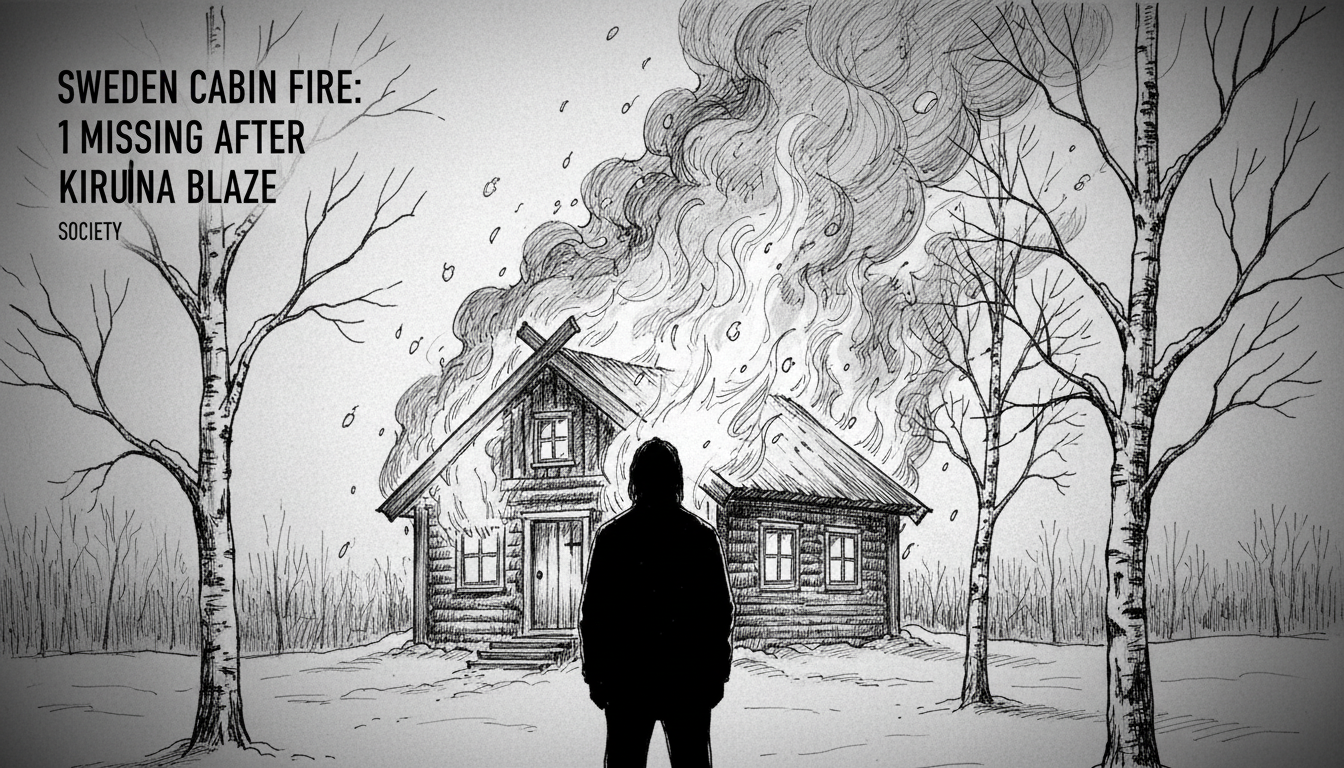
Sweden cabin fire investigators are searching for one missing person after a weekend blaze destroyed a stuga in the remote Arctic north. The fire tore through the wooden cabin in Övre Soppero, a village near Kiruna, during the night towards Saturday. Swedish police have been unable to contact the person believed to have been inside. Relatives have been informed of the grim situation.
For locals, the news carries a familiar, chilling weight. A stuga burning in the vast emptiness of Lapland is more than a property loss. It is a potential personal tragedy amplified by extreme isolation. The cabin was fully engulfed when emergency services were alerted. Reaching Övre Soppero from Kiruna involves a drive through wilderness. Response times in Sweden's northernmost regions are measured not just in minutes, but in critical kilometres of forest road.
The Isolated Stuga Life
The Swedish stuga is a cultural icon. For many, it represents a sacred retreat into nature, a simple wood-paneled haven for quiet weekends and summer holidays. In the far north, these cabins take on a different character. They are often more isolated, used for hunting, fishing, or as a base to experience the midnight sun or northern lights. Their remoteness is part of their appeal. Yet that same remoteness becomes a vulnerability in a crisis.
“Safety is something you think about differently up here,” says Lars Mikkonen, a retired fire safety officer in Luleå, speaking generally about northern cabins. “You are on your own for the first crucial moments. Many older stugor have wood-burning stoves, older electrical systems. You are far from the nearest hydrant, and even farther from a fire station.” The fire in Övre Soppero highlights this inherent tension. The very solitude that draws people north can turn dangerous when disaster strikes.
A Community Waits in Kiruna
Kiruna, Sweden's northernmost town, is a community defined by its relationship with the harsh, beautiful landscape. It is a mining town, slowly being relocated due to subsidence, but its soul is tied to the surrounding wilderness. News of a missing person in a cabin fire resonates deeply here. Everyone knows someone with a stuga. Everyone understands the logistics of distance.
While police have not released details about the missing individual, the incident has stirred conversations in local circles. Social media groups in Kiruna are filled with messages of concern and support. There is a shared understanding of the risks inherent to life in this part of Swedish Lapland. The vibrant summer season, with its 24-hour daylight, is just beginning. This tragedy casts a shadow over the transition into the season of hiking and fishing.
The Logistical Challenge of Arctic Emergencies
Fighting a fire in the Swedish Arctic is a monumental task. The infrastructure that serves dense southern cities simply does not exist here. Volunteer fire brigades, often the first responders in rural villages, cover enormous areas. Terrain can be difficult for heavy vehicles. In some cases, initial firefighting relies on whatever water source is nearby—a lake or a stream.
“Prevention becomes absolutely paramount,” explains Mikkonen. “It’s about ensuring smoke alarms have fresh batteries, that chimneys are cleaned, that electrical systems are checked. It’s about having a plan because when you call for help, it will be a long wait.” This incident will likely prompt local authorities to reiterate fire safety advice for cabin owners. Yet for the family of the missing person, such advice comes too late.
A Search in the Aftermath
As the investigation continues, the focus remains on the search. Police and rescue services will be meticulously sifting through the ashes of the cabin in Övre Soppero. The process is slow, difficult, and somber. Identifying the scene and determining a cause can take time, especially when a structure is completely destroyed. The missing person’s relatives now face an agonizing wait for answers.
The story transcends a simple news brief. It touches on the Swedish love affair with nature and the quiet risks of the stuga lifestyle. It underscores the realities of living in Europe’s last great wildernesses, where community ties are strong but the landscape is unforgiving. For urban Swedes, a cabin is a leisure destination. For many in the north, it is a second home, deeply woven into the fabric of life.
The Silence of the North
As the midnight sun circles the sky over Kiruna, the investigation moves forward. The silence of the Lapland forest, usually a soothing balm, now feels heavy with uncertainty. This tragedy is a stark reminder that in Sweden’s most beautiful and remote corners, safety is a personal responsibility shared by a far-flung community. The charm of isolation carries a price. The hope now is for closure for a grieving family, and for a renewed conversation about how to protect those who seek solitude in Sweden’s majestic, yet demanding, Arctic north.
Will this tragic event lead to improved safety protocols for Sweden's thousands of remote cabins? For now, a community holds its breath, waiting for news from the ashes near Kiruna.