
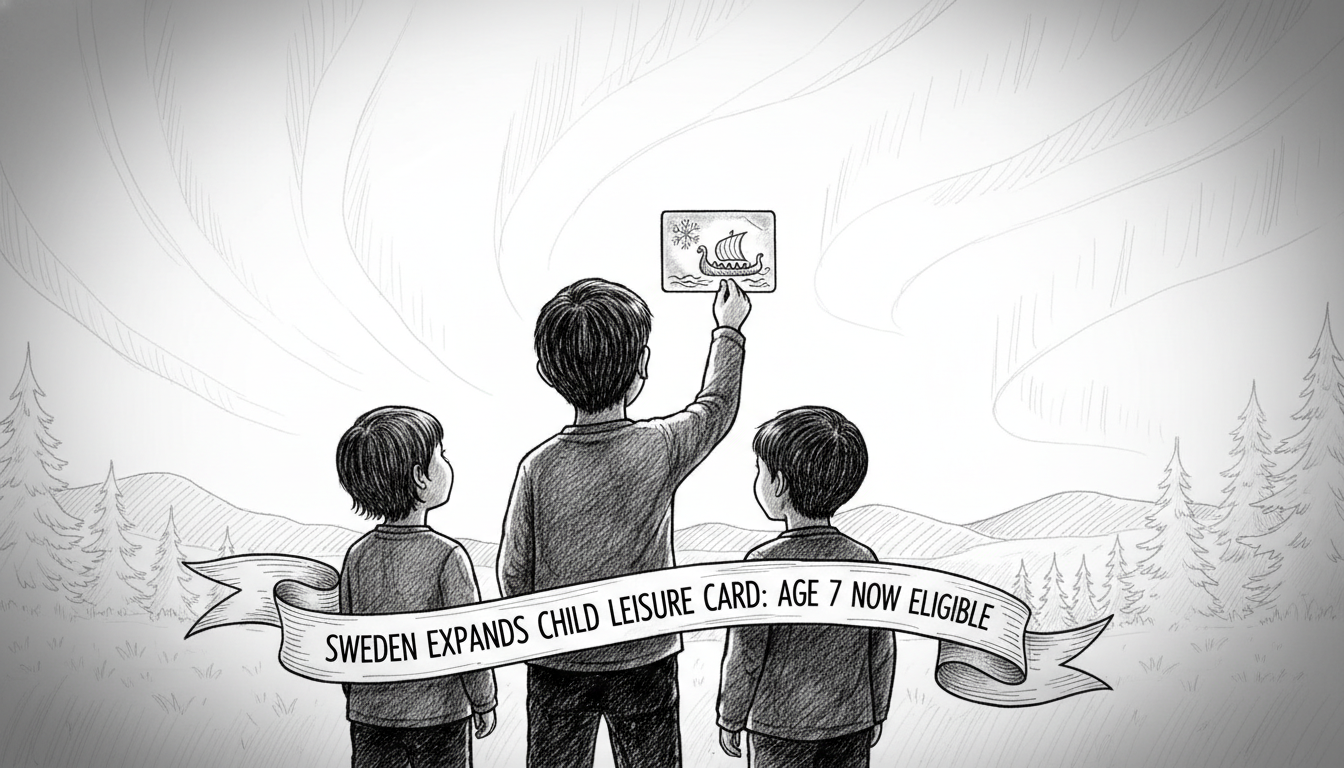
Sweden's government has lowered the eligibility age for the national leisure card to seven years old while increasing its financial value. The Riksdag decision, part of the spring budget amendments, represents a significant expansion of the country's family policy aimed at increasing social inclusion. Starting January 1st, 2025, all children aged 7-16 will qualify for the 'fritidskort', compared to the current 8-16 age bracket.
"This is about creating equal opportunities for all children to participate in leisure activities," said Social Affairs Minister Jakob Forssmed in a statement from Rosenbad. "By lowering the age and increasing support, we remove economic barriers for more families." The policy change passed with broad support in the Swedish Parliament, reflecting cross-party consensus on the card's social benefits.
Financial Boost for Families
The general annual subsidy increases from 500 to 550 Swedish kronor for all eligible children. Households receiving housing allowance, a key indicator of lower income, will see their support jump substantially. Their annual leisure card amount rises from 2,000 to 2,500 kronor per child. This tiered system directly targets economic disparities affecting children's access to organized activities.
Government calculations estimate the expansion will cost approximately 380 million kronor annually. Funding comes from reallocated resources within the Ministry of Social Affairs' budget. The increase affects roughly 1.2 million children currently eligible, plus the new cohort of seven-year-olds entering the system. This represents one of the largest single investments in children's leisure policy in recent years.
Policy Roots and Social Objectives
The leisure card program originated in 2018 as a response to studies showing declining participation in organized sports and cultural activities among children from low-income households. Research from the Swedish Sports Confederation indicated cost was the primary barrier. The card functions as a state-funded voucher parents can use to offset registration fees for everything from football clubs to music schools.
"The policy logic is straightforward," explained Professor Lena Andersson, a social policy researcher at Uppsala University. "Investing in structured leisure activities for children yields multiple returns: better physical health, improved social skills, and stronger community integration. For children in economically vulnerable situations, this can be transformative." The expansion to seven-year-olds aligns with Sweden's school start age, ensuring support begins when formal education does.
Children's Perspectives on the Change
Young people themselves have welcomed the broader inclusion, though some note practical limitations. "With the extra 500 kronor, I believe you can go quite far," said nine-year-old Cassius Renner Trulsson, referencing the increased support for lower-income families. His comment highlights how children directly perceive the policy's economic impact.
However, children also recognize that some activities remain expensive. Equipment for sports like ice hockey or horseback riding can quickly exceed the card's value. This points to the policy's limitation as a partial subsidy rather than full coverage. The government acknowledges this but argues the card lowers the initial financial hurdle significantly.
Implementation and Administrative Process
Municipalities, which administer the card locally, are preparing for the expanded eligibility. The Swedish Association of Local Authorities and Regions has received guidance from the government on implementing the changes. Parents will apply through their municipality's digital portal or social services office, with automatic renewals for existing recipients.
The increase will appear as a direct deposit to parents' bank accounts linked to the application. The system uses the same infrastructure as child allowance payments, minimizing administrative complexity. This streamlined approach has been a hallmark of Sweden's welfare bureaucracy, though some critics argue more proactive outreach is needed to reach all eligible families.
Comparative Context and European Trends
Sweden's approach differs from neighboring Nordic countries. Norway provides direct subsidies to sports clubs, while Denmark offers tax deductions for activity expenses. Finland has a similar voucher system but with lower monetary values. Sweden's tiered support based on housing allowance receipt is particularly distinctive, creating a stronger redistributive effect.
"The Swedish model is notable for its means-testing within a universal framework," said Dr. Erik Lundberg, who studies family policy at the Institute for Futures Studies. "All children get support, but those with greater need receive more. This maintains broad political support while targeting resources effectively." The policy reflects Sweden's traditional balance between universal welfare and targeted measures.
Long-Term Implications and Expert Analysis
Experts point to potential long-term benefits beyond immediate leisure participation. Studies from the Public Health Agency of Sweden show children in organized activities have better mental health outcomes and higher academic achievement. The expanded card could particularly benefit children in suburban areas with fewer free recreational options.
"This isn't just about sports fees," said Karin Svanberg, a sociologist specializing in youth development. "It's about creating routine, mentorship through coaches, and a sense of belonging outside school. For a seven-year-old, these experiences shape social development fundamentally." The earlier intervention at age seven may amplify these effects during critical developmental years.
Political Consensus and Future Directions
The leisure card expansion passed with support from the governing coalition and several opposition parties. The Social Democrats, who originally introduced the card, backed the changes while calling for further increases. Only the Sweden Democrats expressed reservations about the cost, though they ultimately supported the measure.
Future debates will likely focus on whether the amounts keep pace with inflation in activity costs. Some child advocacy organizations already argue the base amount should reach 1,000 kronor annually. The government has committed to reviewing the amounts biannually, with the next evaluation scheduled for 2026. This institutionalizes the policy as a permanent feature of Sweden's welfare landscape.
As families across Sweden prepare for the changes, the expanded leisure card represents both a practical financial boost and a statement of values. In a country where equality of opportunity begins in childhood, ensuring all children can join a team or learn an instrument remains a fundamental policy goal. The true measure of success will be seen not in budget documents, but in playgrounds and community centers where more children find their place.