
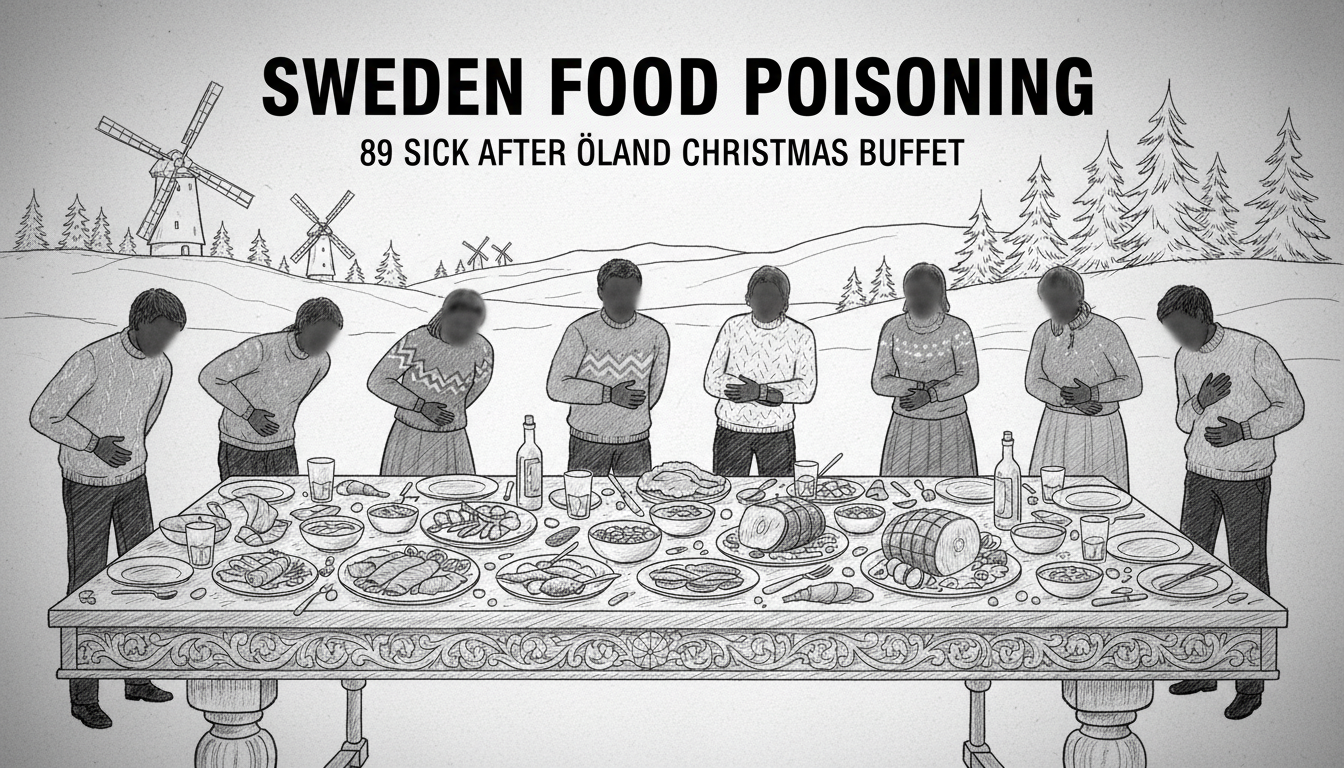
Sweden food poisoning cases have spiked after a traditional holiday meal on the island of Öland. At least 89 people reported falling ill with vomiting, diarrhea, chills, and fever after attending a 'julbord' at Hotell Skansen in Mörbylånga. The outbreak has cast a shadow over a cherished Swedish tradition and prompted a voluntary restaurant closure for deep cleaning.
For many Swedes, the 'julbord' is the culinary highlight of the year. It's a festive buffet laden with herring, meatballs, 'julskinka' (Christmas ham), and 'lutfisk'. Families and colleagues gather for hours of eating and drinking. The outbreak at Hotell Skansen, which occurred in the days before Christmas, turned celebration into sickness. Symptoms began one to two days after the meal.
"It is probably the winter vomiting disease," said Katarina Proos Vedin, a food inspector with Mörbylånga Municipality. Her statement points to norovirus, a highly contagious bug notorious for spreading rapidly in communal settings. The restaurant acted quickly, closing its doors over the weekend for what it called a "thorough cleaning and sanitization."
A Festive Tradition Interrupted
The 'julbord' is more than a meal; it's a social institution. In Stockholm, restaurants like the historic Operakällaren or the grand Stadshuskällaren host lavish versions. Companies book tables for their staff months in advance. The outbreak on Öland, a popular summer and holiday destination, highlights the vulnerability of these large-scale events. When proper handling protocols fail, the consequences can spread far and wide.
"You go for the companionship, the glögg, the herring," says Lars Bengtsson, a Stockholm resident who attends several 'julbord' each season. "Hearing about people getting so sick, it makes you pause. You trust the kitchen." This breach of trust is a significant blow for any restaurant, especially during the crucial holiday season.
The Science Behind the Sickness
Foodborne illness is a persistent public health challenge. Buffets present unique risks. Food sits at room temperature. Many guests handle the same serving utensils. Norovirus, the suspected culprit here, is incredibly resilient. It can survive on surfaces for days and only takes a few viral particles to make someone sick. It spreads through contaminated food, water, surfaces, and direct contact with an infected person.
"Prevention is about rigorous, continuous hygiene," explains a food safety expert who requested anonymity as they are not directly involved in this case. "For a 'julbord', this means constant monitoring of food temperatures, frequent replacement of dishes, and strict staff health policies. If a worker is ill, they cannot be near food. The chain of safety is only as strong as its weakest link."
The one-to-two-day incubation period is classic for norovirus. It explains why guests fell ill after returning home, potentially spreading the virus within their own households. This pattern complicates containment efforts.
Local Impact and Broader Lessons
For the small community of Mörbylånga on Öland, this is major local news. Hotell Skansen is a known venue for events. The outbreak affects not just the hotel's reputation but also the wider perception of the area's hospitality. Local health authorities are leading the investigation, interviewing the affected guests to identify a common food item. Was it the seafood, the cold meats, or a salad? Finding the source is critical.
This incident is a stark reminder for the entire restaurant industry. Sweden has high food safety standards, but lapses happen. "It's a wake-up call before the New Year's Eve buffets," the food safety expert notes. "Every restaurant doing a buffet service right now should be reviewing their protocols. Guest safety must be the absolute priority, over profit or tradition."
For the public, the advice is practical. When attending buffets, use hand sanitizer before eating. Notice if food looks like it's been sitting out too long. Observe if the restaurant is busy replenishing dishes from the kitchen. These small actions can reduce personal risk.
Looking Beyond the Outbreak
While the immediate focus is on the 89 reported victims and the hotel's cleanup, this story touches deeper themes in Swedish society. It's about trust in public spaces and the safety of communal traditions. Sweden takes pride in its quality and cleanliness. An event like this feels dissonant with that self-image.
It also intersects with Sweden immigration news in an unexpected way. The hospitality sector relies heavily on immigrant labor. Ensuring all kitchen and service staff, regardless of background or language skills, are perfectly trained in Swedish food safety laws (HACCP) is a constant challenge. Effective, accessible training is essential for prevention.
As the investigation continues, the guests are recovering. The hotel hopes to reopen, its reputation needing repair. The broader conversation, however, should continue. How can Sweden's beloved 'julbord' tradition be made safer? Can the industry adopt even stricter guidelines for buffet service during peak season?
This Öland outbreak is a single, unfortunate event. But it serves as a crucial case study. It reminds everyone—from restaurant owners in Stockholm to families in Gothenburg—that the joy of shared food comes with a shared responsibility for safety. The true test will be what the industry learns and how it adapts before next December, when the 'julbord' tables are laden once again.