
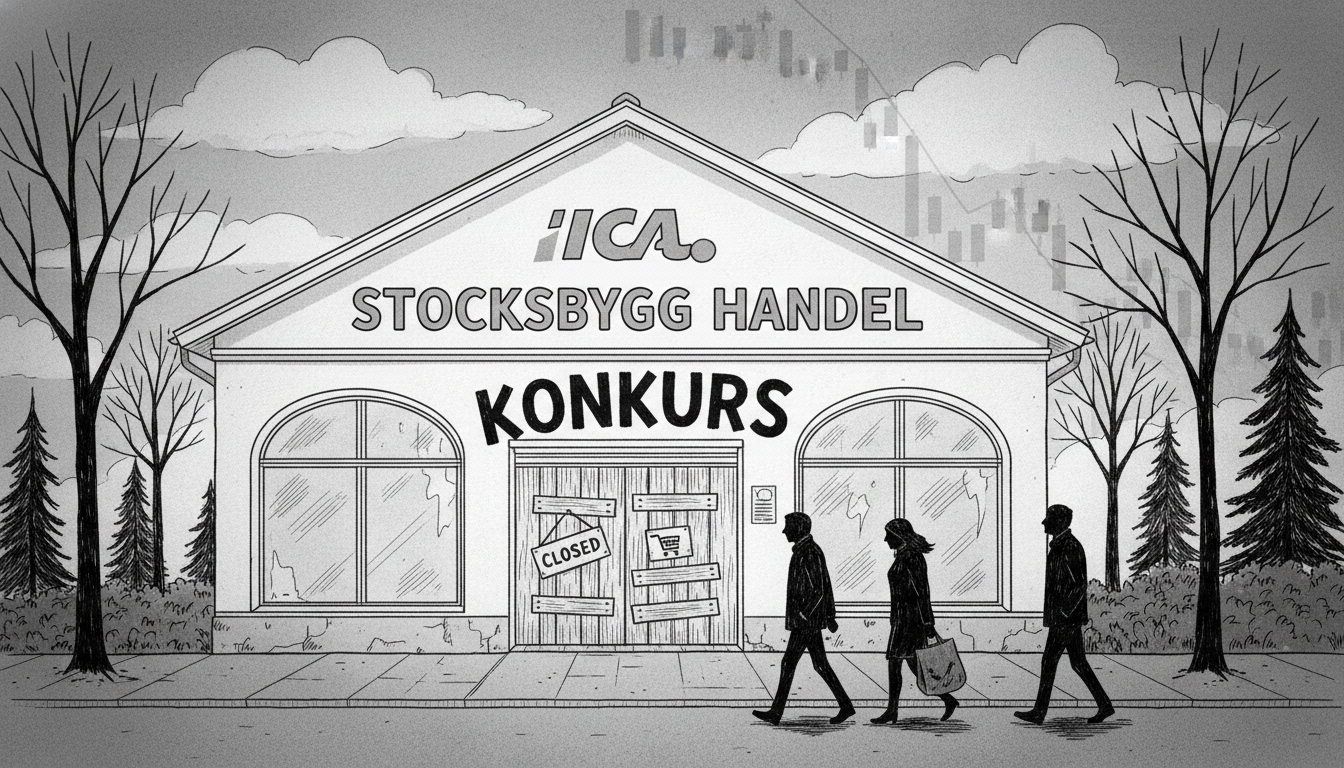
Sweden's grocery retail sector faces a localized shock as Ica Nära Tornet in the affluent Stockholm suburb of Stocksund has closed its doors following bankruptcy. A subsidiary of Ica Sverige will take over the store, but not before a final clearance sale liquidates remaining fresh goods at 25-50% discounts. The sudden closure highlights the precarious financial realities facing individual franchise owners within Sweden's dominant food retail chain.
‘We have between 25–50 percent off, and there is a great deal of confectionery left,’ said bankruptcy trustee Mikael Söderman. The store has been closed since Thursday, with a note on the door initially citing cash register problems. The underlying issue, however, was far more severe. The full picture of how the store reached this point remains unclear and may not emerge for up to six months until the trustee's administration report is complete.
A Franchise Model Under Scrutiny
The bankruptcy of Ica Nära Tornet puts a spotlight on the unique structure of Ica Gruppen’s operations in Sweden. Unlike many international chains, most Ica stores are independently owned and operated by retailers under franchise agreements. This model grants owners entrepreneurial freedom but also places the full burden of operational costs, local competition, and financial risk squarely on their shoulders. Ica Gruppen provides branding, supply chains, and collective marketing, but individual store profitability is not guaranteed.
‘We know nothing yet. But we will go through the annual reports and then we will return to that question,’ Söderman stated regarding the cause of the bankruptcy. This structure means a store's failure is not a direct reflection of the parent company's health but rather an isolated business event. However, repeated failures in certain areas could signal systemic pressures within the franchise network or specific market challenges.
The Final Sale and Immediate Aftermath
In the immediate term, the trustee's focus is on mitigating losses by selling remaining inventory. The rapid takeover by an Ica Sverige subsidiary indicates the parent company's desire to maintain a presence in the Stocksund area, which is a demographically strong market. The transfer is scheduled to occur immediately after the store closes for the final time, ensuring minimal disruption in service for local residents.
The clearance sale, targeting perishable items and confectionery, is a practical step to recover some value from assets that would otherwise be total losses. For consumers, it represents a bittersweet opportunity—access to discounted goods at the expense of a local business and employer. The scene of a store selling off its stock before a corporate relaunch is a vivid illustration of corporate resilience juxtaposed with individual entrepreneurial failure.
Analyzing the Pressures on Swedish Grocery Retail
Retail analysts point to a confluence of factors that can challenge smaller, independent grocery outlets, even those under the powerful Ica banner. Increased competition is a primary concern. Stocksund and similar suburbs are attractive markets for rivals like Coop, Hemköp, and Willys, as well as low-cost chains like Lidl. The rise of online grocery shopping and delivery services also shifts consumer habits, potentially drawing business away from physical neighborhood stores.
‘The Swedish retail market is intensely competitive, and smaller, independently-owned stores can be vulnerable to economic pressures,’ noted a retail sector analyst who spoke on background. Specific management practices, local lease agreements, and the owner’s ability to adapt to consumer trends are critical determinants of success. A store’s location, once considered a prime asset, can become a liability if foot traffic patterns change or local demographics shift.
The Human and Community Impact
Beyond the balance sheets, a bankruptcy like this has tangible human consequences. Employees face uncertainty, though the subsidiary takeover may offer some job continuity. The local community loses an independent business owner who was likely an integrated part of the neighborhood fabric. For regular customers, the closure alters daily routines and may reduce choice, even if a corporate-owned Ica soon reopens at the same address.
The note on the door citing ‘cash register problems’ now reads as a poignant understatement for a deeper financial collapse. It reflects the suddenness with which such crises can become public, moving from operational difficulties to complete closure within days. The trustee’s six-month investigation timeline underscores the complex financial unraveling required after such an event.
A Look Ahead for Ica and Swedish Retail
The swift action by Ica Sverige to install a subsidiary suggests the parent company is keen to protect its market share and brand presence. This model of allowing franchisees to fail while the corporation steps in to maintain the location is a established, if harsh, business practice. It allows Ica Gruppen to retain control of strategic locations without directly bearing the initial entrepreneurial risk.
This event in Stocksund serves as a case study in the vulnerabilities of the franchise model during economic uncertainty. It raises questions about the level of support and financial oversight provided by franchisors to their network of owners. As inflation and cost pressures continue to affect the Swedish economy, other independently-owned retail and service businesses may face similar strains.
The story of Ica Nära Tornet is more than a single store closure. It is a narrative about independence versus security, local entrepreneurship versus corporate scale, and the quiet struggles that occur behind the familiar logos of everyday life. When the store reopens under new management, customers may notice little difference on the shelves. The real change happened behind the counter, where one business dream ended and a corporate calculation began.