
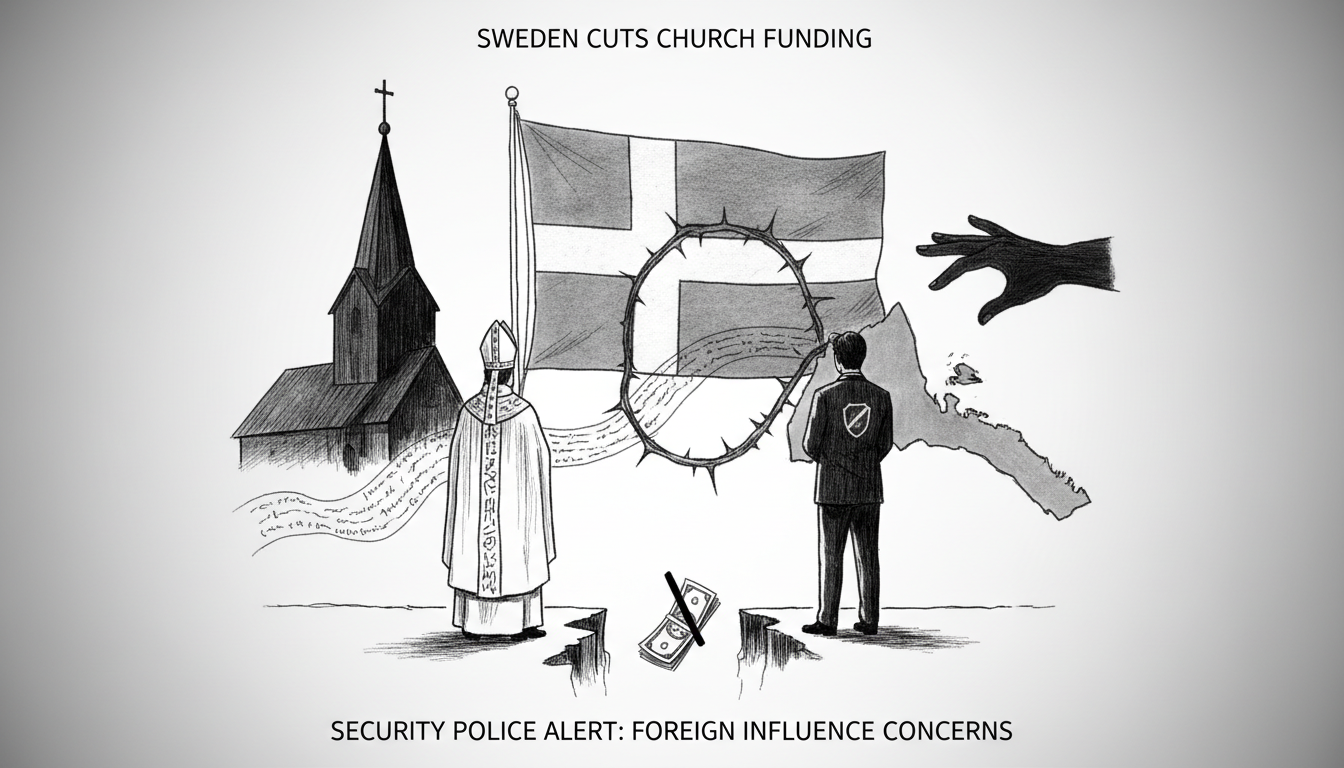
Stockholm is making a difficult decision about faith, funding, and foreign influence. The Swedish government has stopped its annual grant to the Eritrean Orthodox Church. The move follows a direct warning from the Swedish Security Service, known as Säpo. The agency expressed serious concerns. It believes the church, on behalf of the Eritrean state, may violate individual freedoms and rights in Sweden. Officials worry the state subsidies could indirectly support the Eritrean regime.
This is not just a bureaucratic decision. It touches the lives of thousands in the Eritrean diaspora community across Sweden. Many live in neighborhoods like Rinkeby and Botkyrka. They rely on their church for spiritual guidance and cultural connection. The state grant totaled around 800,000 Swedish kronor per year. That funding is now frozen.
The church leadership has responded firmly. In a public statement, they deny all allegations from the security police. They say they strictly follow Swedish law. This creates a stark conflict. On one side is the state's duty to protect democratic values. On the other is a religious community defending its integrity.
This situation reveals a growing tension in Swedish society. How does a nation balance integration with the autonomy of immigrant communities? Sweden has a long history of supporting religious organizations through the state church system. This system aims to promote social cohesion. But the Säpo warning suggests a potential flaw. Can foreign governments use religious institutions to extend their reach?
The Eritrean regime has a documented history of human rights abuses. It demands a 'diaspora tax' from its citizens abroad. The Swedish government has previously acted against these practices. This latest move with the church funding is a clear escalation. It signals a tougher stance on any activity perceived as undermining Swedish sovereignty.
For the average Stockholmer, this news might seem distant. But it reflects a broader national conversation. Sweden is grappling with the complex realities of a diverse society. The debate involves integration policies, national security, and the role of faith. It asks what true belonging means in a modern Nordic state.
What happens next? The church will likely appeal the decision. Its members must navigate this uncertainty. They may feel caught between their homeland and their new home. The Swedish state must prove its allegations or find a path to dialogue. This story is more than a funding cut. It is a test of Sweden's liberal values in an interconnected world. The outcome will resonate far beyond the walls of any single church.