
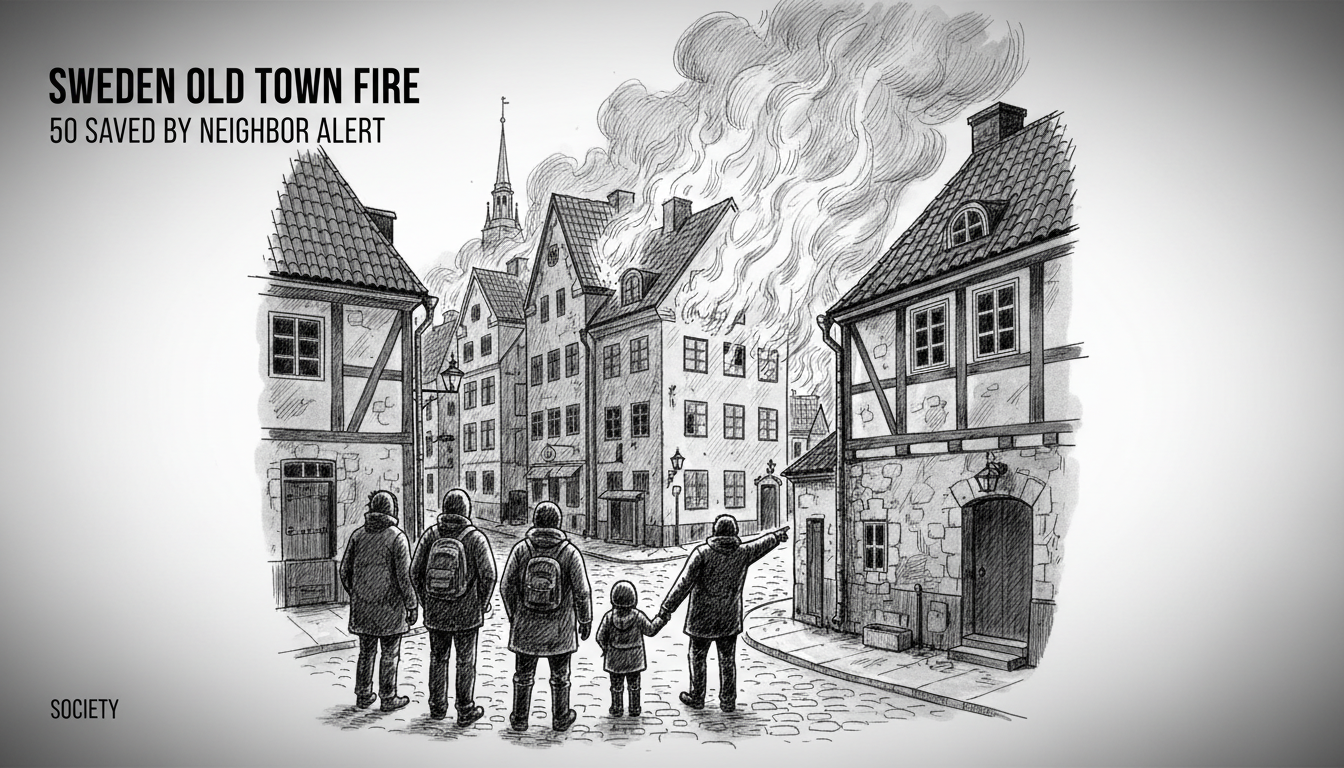
Sweden’s historic wooden town of Eksjö faced a major threat when a fire erupted in an Old Town apartment building, forcing the evacuation of 50 residents who spent the night in a local hotel. The blaze was first spotted by neighbor Alexander Kristensen, whose quick actions are credited with preventing a tragedy in the culturally precious area. His vigilance underscores a national challenge: protecting Sweden’s centuries-old wooden towns from modern fire risks.
It started with a strange glow. Alexander Kristensen was in his Gamla stan home in Eksjö when he noticed an odd light in a window of the neighboring building. Then he saw the soot staining the glass. 'That’s when the kitchen window blew out,' he said, describing the moment he realized danger was unfolding. He immediately called Sweden’s emergency number, SOS Alarm, and with another neighbor, began pounding on doors. Together, they ensured everyone got out from the two affected apartment buildings as sirens began to wail through the cobblestone streets.
A Night at the City Hotel
The displaced residents, shaken but safe, gathered at Eksjö’s Stadshotell. The city hotel, a cornerstone of the community, became an impromptu crisis center. Municipal staff provided blankets, warm drinks, and information. For many, the night was a blur of anxiety and gratitude. 'You think of your family, your photos, everything you’ve left behind,' said one evacuee, who asked not to be named. 'But you are just glad to be standing here with the others.' The sense of community was palpable, a testament to the close-knit nature of small-town Swedish life.
The Fragile Beauty of Wooden Towns
Eksjö’s Gamla stan is not just any neighborhood. It is one of Sweden’s best-preserved wooden towns, with roots stretching back to the 16th century. After a devastating fire in 1856, the town was rebuilt in a unified, picturesque style that remains today. Walking its streets is like stepping into living history. This cultural treasure, however, comes with inherent vulnerability. 'Wooden buildings, especially old ones, are tinderboxes,' explains Lars Bengtsson, a fire safety consultant with decades of experience in historical preservation. 'Fire can spread through cavities in walls and under roofs with shocking speed. Early detection and alarm are not just important—they are everything.'
Sweden has several such wooden towns, including Oskarström and Hjo. Each grapples with balancing preservation with modern safety codes. Retrofitting historic structures with sprinklers and modern alarm systems is complex and costly. Often, solutions must be invisible to maintain historical authenticity. 'We walk a tightrope,' Bengtsson adds. 'The goal is to protect both the lives within and the historical fabric around them.'
The Human Element of Emergency Response
This incident highlights a critical, often overlooked, layer of Sweden’s emergency response: the alert neighbor. Official systems are vital, but the human eye is frequently the first sensor. Alexander Kristensen’s story is one of community responsibility. In a society that values privacy and a certain social distance, his decision to act—to investigate a strange light and then mobilize—represents the informal safety net that exists in Swedish neighborhoods. 'You look out for each other,' he said simply. This ethos is echoed in Sweden's 'Grannsamverkan' (neighbor cooperation) initiatives promoted in many municipalities, encouraging residents to be observant and connected.
The Aftermath and a Look Ahead
As firefighters dampened the last hot spots, the process of assessment began. The immediate focus was on the structural safety of the affected buildings and supporting the displaced families. The longer-term conversation, however, turns to prevention. Local building authorities will investigate the fire's cause. Meanwhile, insurance assessments will determine the path for restoration, which in a historical building must follow strict preservation guidelines.
For the residents, returning to normalcy will take time. Some may not be able to return to their homes for weeks or months. The psychological impact of being forced from your home by fire lingers. Community support systems, from the local social services to voluntary organizations like the Swedish Red Cross, will play a key role in the coming days.
Preserving Heritage in a Modern World
The Eksjö fire is a stark reminder of the fragility of history. It raises urgent questions for communities across Sweden and the Nordic region. How do we protect our physical cultural heritage against ever-present threats like fire? Investment in preventative measures is an ongoing debate for municipal budgets. Some towns have established dedicated funds for fire safety upgrades in historical districts. Others run public awareness campaigns on fire prevention tailored to older housing stock.
This event also showcases the resilience of these communities. The swift evacuation, the organized reception at the hotel, and the communal spirit reflect a society prepared to handle crisis while upholding its values of care and order. The story is not just one of potential loss, but of action, cooperation, and preservation.
As the sun rose over Eksjö’s iconic wooden rooftops, the smell of smoke still hung in the air. But the town, which has weathered fires before, stood intact. The crisis was managed, and a disaster was averted. The lesson resonates far beyond this quiet street: in the fight to safeguard history, the most important tool is often a watchful neighbor willing to raise the alarm. How many other historical gems rely on that same, fragile human chain of vigilance every single day?