
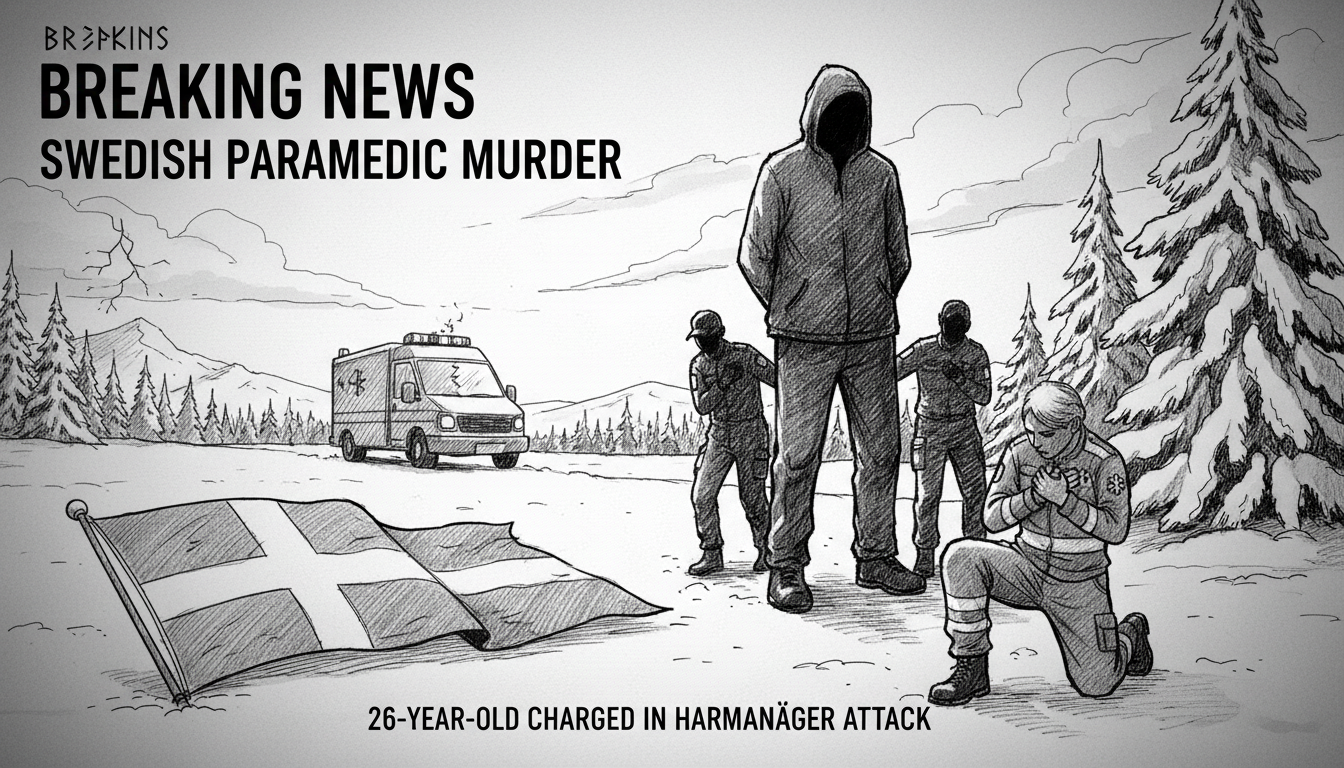
A 26-year-old man faces murder charges for killing a paramedic during an emergency call in Harmånger, Sweden. Prosecutors also charged him with attacking a second ambulance worker. The suspect admits to the actions but denies planning any murders. This case marks one of the most severe attacks on Swedish emergency medical personnel in recent memory.
The incident occurred while paramedics responded to a routine medical call in the small Gävleborg county community. Swedish emergency services typically operate with minimal security protection, relying on public trust and rapid police backup when needed. The attack raises urgent questions about safety protocols for healthcare workers responding to calls in remote areas.
Sweden's healthcare system employs approximately 35,000 paramedics and emergency medical technicians. These professionals respond to over 1.2 million emergency calls annually across the country. Attacks on ambulance staff remain relatively rare but have drawn increased attention following several high-profile incidents in recent years.
The Swedish legal system treats attacks on emergency personnel as particularly serious offenses. Convictions for murdering healthcare workers typically result in life sentences, with a minimum of 18 years imprisonment before parole eligibility. The court will consider the defendant's claim that he lacked murderous intent during proceedings.
This case comes amid broader discussions about violence against Swedish healthcare workers. The Swedish Association of Health Professionals reports that verbal threats against medical staff have increased by approximately 40% over the past decade. Physical attacks remain less common but generate substantial concern within the medical community.
International readers should understand that Swedish paramedics typically work in two-person teams without security escorts. The country's sparse population distribution means ambulance crews often operate in isolated areas with delayed police response times. This reality creates unique vulnerabilities for emergency medical providers serving rural communities.
The tragedy highlights the challenging conditions facing healthcare workers worldwide. While Sweden maintains generally high public safety standards, this incident demonstrates that emergency personnel everywhere face unpredictable risks when responding to calls. The case will likely prompt reviews of safety procedures within Swedish emergency medical services.
Court proceedings begin next month in Gävle District Court. Legal experts anticipate a trial lasting several weeks as prosecutors present evidence about the events in Harmånger. The outcome could establish important precedents for how Sweden handles violence against emergency medical providers.