
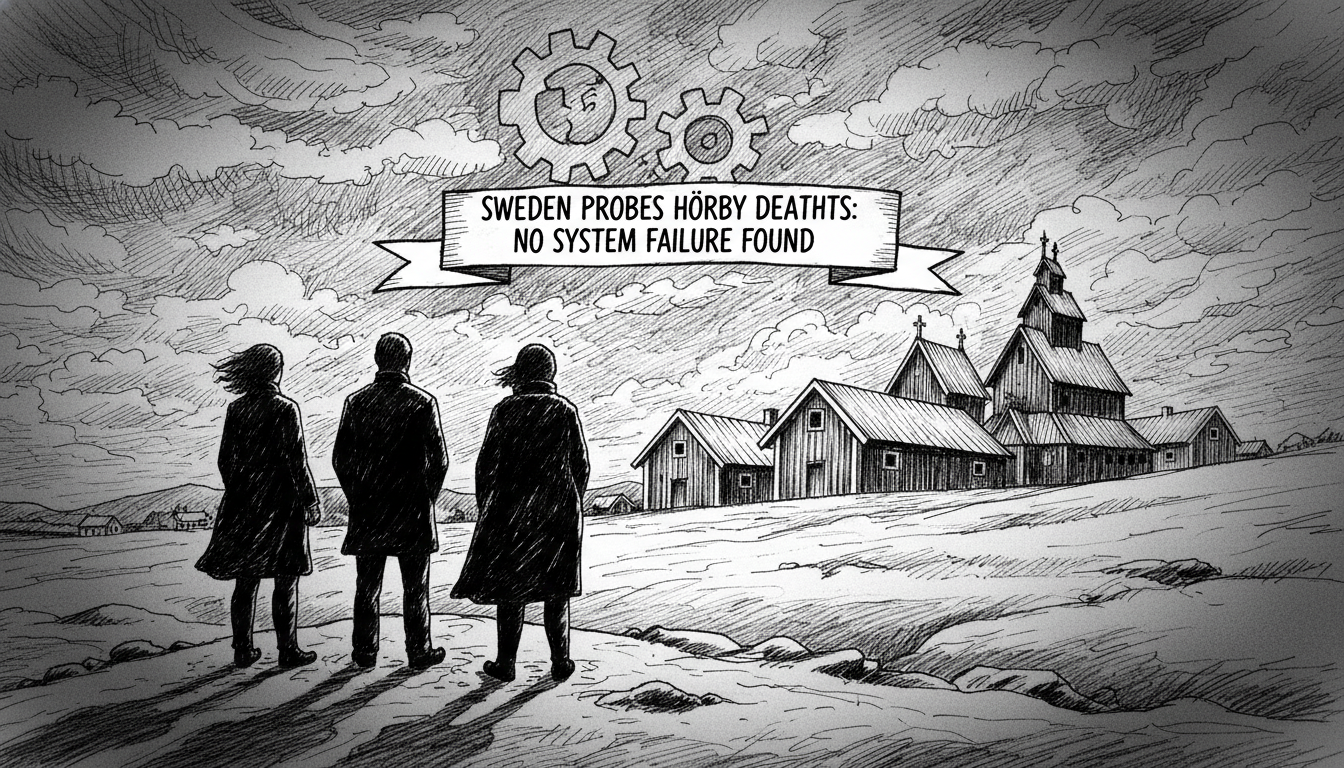
Sweden's Hörby municipality is reeling after a woman and a child were found dead in their home. The local community is in shock, searching for answers. At a press conference, municipal director Linda Strand stated there is currently no indication the municipality could have acted differently. "But we must continue to investigate because many people are still in shock," Strand said. "Going into details immediately can be difficult." The woman was a municipal employee. The child, under 15, was a student at a local school. Both were active in community life and known by many in this small southern Swedish town.
A Community in Mourning
Hörby, a municipality of around 15,000 people in Skåne County, is the kind of place where people know their neighbors. The news has spread quickly, leaving a profound sense of grief. The local school where the child studied has activated its crisis management team. Counselors are available for students and staff. Flags fly at half-mast outside the municipal building where the woman worked. In the town square, near the Coop supermarket and the local pizzeria, conversations are hushed. People speak of a normal family, well-integrated and active in local sports or cultural associations. This ordinariness makes the tragedy harder to comprehend. "It's the kind of news that makes you hold your own children a little tighter," said Anna, a local shop owner who asked not to give her full name. "Everyone is thinking about them. Everyone is wondering how this could happen here."
The Limits of Municipal Responsibility
Swedish municipalities carry a heavy burden of care. They are responsible for schools, social services, elderly care, and child welfare. When a tragedy involves a child, an automatic review is triggered. Authorities examine all previous contact between the family and the system. Did social services have a file? Were there any reports to social workers or teachers? Was the child absent from school? In this case, Linda Strand was clear. "For many, it has been a question of whether we missed something," she told reporters. "How can something like this happen? As of today, there is nothing to indicate that Hörby municipality could have done anything in a different way." This preliminary conclusion suggests no prior alarms were registered with official channels. The family was not on the social services' radar for heightened concern. This fact offers little comfort. It instead points to a tragedy that unfolded privately, behind closed doors, invisible to the community's safety nets.
The Invisible Struggle
Experts in social work and psychology note that the most critical warning signs are often not visible to public institutions. "The system is designed to act on observable signals—reports from school, neighbors, or healthcare providers," explains Karin Lundström, a professor of social work at Lund University. "When a family appears functional and integrated, and perhaps actively avoids showing weakness, it becomes incredibly difficult for any authority to intervene. The greatest challenge in preventative work is reaching those who do not ask for help." Lundström emphasizes that the investigation must be thorough, examining all potential touchpoints. This includes the child's school, any healthcare visits, and the mother's workplace. The goal is not to assign blame but to learn. Could communication flows between different parts of the system be improved? Are there subtle signs that all professionals are trained to recognize? The investigation in Hörby will likely follow this pattern, scrutinizing routines while acknowledging the inherent limitations of any system.
The Ripple Effect in a Small Town
The impact of such an event is magnified in a close-knit community like Hörby. The woman was a colleague. The child was a classmate. This is not an anonymous news story from a big city. It is a personal loss for hundreds of people. The local football club, where the child might have played, feels it. The municipal office, where the woman worked, feels it. This collective grief is a hallmark of small-town Swedish life, where networks are dense and interconnected. The municipality's role now shifts from potential investigator to primary supporter. Providing psychological first aid to staff, students, and the wider community becomes the immediate priority. "Many people are in shock," Strand reiterated, highlighting the need for sustained support. Community leaders, priests, and volunteers will be crucial in the coming weeks and months. Traditional Swedish practices of lighting candles in windows or gathering for a moment of silence in the town square will likely emerge as the community seeks to mourn together.
A National Conversation on Prevention
While the Hörby case currently shows no systemic failure, it inevitably touches a nerve in Sweden. The country prides itself on its strong welfare state and its commitment to protecting children. Every such tragedy prompts a national introspection. Are we doing enough? Could we do more? Debate often centers on resources for social services and schools. It also focuses on society's responsibility to look out for one another. The Swedish principle of "dugnad"—communal volunteer work—highlights a collective spirit. Yet modern life can also be isolating, even in a small town. Neighbors might not interact daily. Families may appear perfect from the outside. The Hörby tragedy underscores a painful truth: the welfare state, however comprehensive, cannot see into every home. It relies on a combination of professional vigilance and community awareness. Strengthening that link is a constant challenge.
The Path Forward for Hörby
For now, Hörby must navigate its grief. The police investigation into the deaths continues separately from the municipality's administrative review. Answers may come slowly. The community will have to find a way to live with unanswered questions. The coming days will see funerals and memorials. The school year will continue, with an empty desk in a classroom. The municipal office will feel the absence of a coworker. The real test for Hörby's social fabric is not in the immediate shock, but in the long-term support for those most affected. Can the community create a space where people feel safe to talk, to grieve, and to remember? The focus for local authorities is clear: provide care, be transparent about the ongoing review, and uphold the memory of two lost community members. As spring arrives in Skåne, bringing light to the long days, Hörby will move forward, forever marked by a loss that defies easy explanation. The ultimate lesson may be a sobering one about the quiet, private nature of some despair, and the enduring need for compassion in its aftermath.