
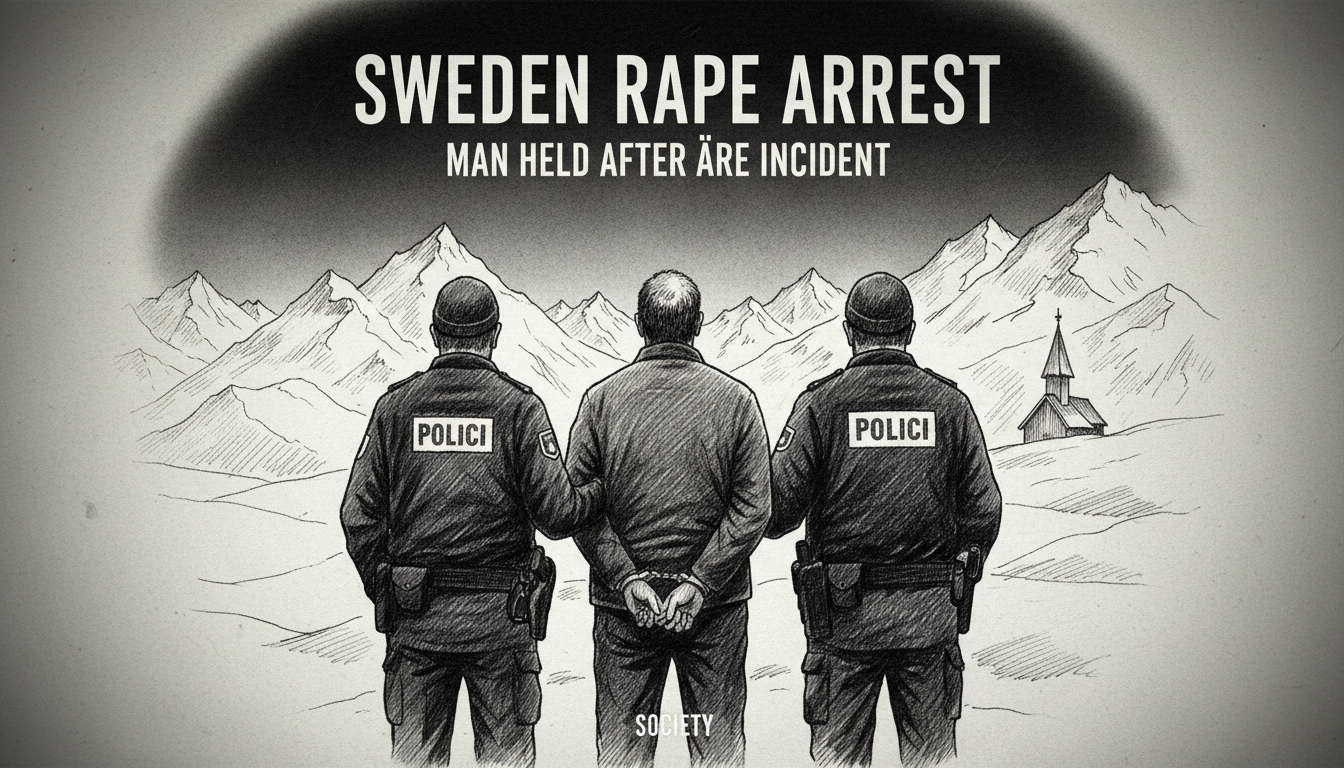
Sweden's comprehensive rape laws are being applied in Åre after a man in his 20s was arrested overnight Saturday. The suspect is now formally detained, suspected of a rape alleged to have occurred at an address in the popular ski resort. Police spokesperson Marie Andersson confirmed the investigation is ongoing. This single case in a quiet mountain town opens a window into Sweden's complex relationship with sexual violence, legal frameworks, and the challenges of reporting.
A Resort Town's Darker Side
Åre is Sweden's premier alpine destination. Its streets are usually filled with the sounds of skis clattering and après-ski laughter. This incident casts a long shadow over that festive atmosphere. It raises immediate questions about safety in spaces associated with leisure and escape. Local reactions in Åre are a mix of shock and grim recognition. While such serious crimes are statistically rare in the municipality, they are not unheard of. The arrest disrupts the narrative of the mountains as an idyllic retreat, reminding residents and visitors alike that societal issues follow us everywhere.
The Legal Framework in Action
Sweden's Penal Code defines rape broadly. It focuses on the absence of voluntary consent rather than solely on the use of physical force or threats. This legal approach is considered progressive by many international observers. The suspect's detention following a prosecutor's decision shows the system moving swiftly. Pre-trial detention in Sweden requires a prosecutor to convince a court there is probable cause for a serious crime and that detention is necessary. Reasons can include a risk of the suspect fleeing or obstructing the investigation. The legal process now enters a detailed phase. Police will continue their interviews and evidence collection. The suspect has the right to a public defense counsel. Sweden's legal process in such cases is methodical, often lengthy, and designed to protect the rights of all parties while seeking justice.
The Statistics Behind the Headlines
Discussing rape statistics in Sweden requires nuance. The Swedish National Council for Crime Prevention (Brå) reports fluctuations in recent years. A significant increase in reported rapes was noted after 2018. This followed a major legal reform that expanded the definition of rape to explicitly center on consent. Experts widely agree the rise in reports reflects greater willingness to come forward, not necessarily a surge in incidents. It indicates a change in reporting behavior, influenced by stronger legal protections and shifting social attitudes. However, a persistent gap remains between reported crimes and actual prevalence. Sexual assault remains one of the most underreported crimes globally. In Sweden, as elsewhere, victims may choose silence due to trauma, fear of not being believed, or dread of the legal process itself.
A National Conversation on Violence
This case in Åre touches a nerve in an ongoing national conversation. Sweden has implemented multiple national action plans against sexual and gender-based violence. These strategies involve law enforcement, the judiciary, social services, and non-profit organizations. The goal is a coordinated response from initial report to court verdict and victim support. Yet, challenges persist. Court cases are mentally grueling for victims. Support services, while available, can be stretched thin, especially in rural areas like Jämtland County. Experts like Professor of Criminology, Anna Kaldal, often stress that legal reform is only one pillar. "Strong laws are essential," she has said in previous commentaries, "but they must be matched by robust support systems and a cultural shift that removes stigma from the victim and places full accountability on the perpetrator."
Life in Åre After the Arrest
The community of Åre is now grappling with the aftermath. For a small, tight-knit community where tourism is lifeblood, such an event resonates deeply. It disrupts the sense of security. Local discussions likely balance concern for the victim with anxiety about the town's reputation. There is an unspoken tension in resort towns between presenting a flawless facade and addressing real problems. This incident forces that conversation into the open. It also highlights the reality that crime does not discriminate between urban and rural settings. The mechanisms of justice and support, however, can feel more distant outside major cities.
The Road Ahead for Justice
The legal process following this arrest will be meticulous. The preliminary investigation led by the police will gather all available evidence. This includes forensic material, witness statements, and digital evidence. The prosecutor will then decide whether to formally press charges. If charged, the case will go to trial in a district court. Sweden's court proceedings are typically detailed and evidence-focused. The burden of proof lies entirely with the prosecution. Throughout this, the alleged victim has rights to a legal counsel for injured parties and support from social services. The case, while currently a local police matter, embodies the entire Swedish system for addressing sexual crimes—its strengths, its intentions, and its immense emotional costs for those involved.
Beyond the Single Case
While the focus is on Åre, this arrest is a single data point in a national picture. It serves as a stark reminder that sexual violence occurs in every community, regardless of wealth, location, or reputation. Sweden's high reporting rates, compared to other countries, are often misinterpreted. They reflect a specific legal and social context rather than a unique level of criminality. The real story is about how a society chooses to define, record, and confront these crimes. Sweden has chosen a path of broad legal definitions and active encouragement of reporting. This path generates higher official statistics, which in turn fuel a complex and often misunderstood public debate. The man arrested in Åre is now part of that larger, difficult story. His case will proceed through the courts. But the questions it raises about safety, justice, and support in every corner of Sweden will linger long after the gavel falls.
Does a higher number of reported rapes signify a failing society, or one that is finally beginning to listen?