
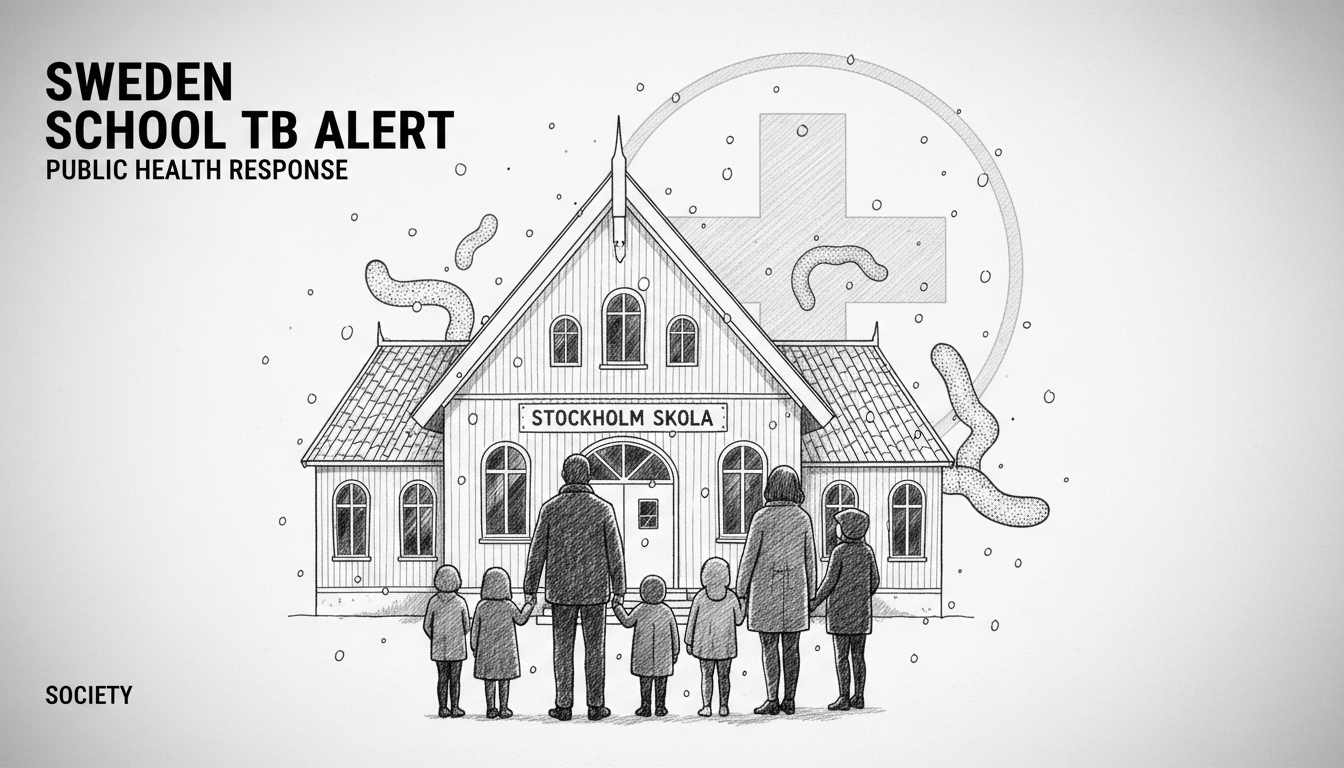
Sweden's public health system is responding to a tuberculosis alert at a central Stockholm high school. A letter from the school's principal to parents and students confirmed that Stockholm's infection control unit, Smittskydd Stockholm, is conducting contact tracing. This follows a confirmed case of TB in a person connected to the school community. The school remains open, with officials stating the risk of transmission within the school is low. This incident highlights the quiet, persistent presence of a disease many associate with history books.
A Letter Home and a Public Health Protocol
The first sign for many families was an email. In a calm, informative letter, the principal explained the situation. The school confirmed it is cooperating fully with Smittskydd Stockholm's contact tracing efforts. The identity of the person who fell ill—whether a student, teacher, or family member—has not been disclosed. This is standard practice to protect individual privacy under Sweden's strict personal data laws. "The risk of spread at the school is small, as it requires prolonged and close contact to risk infection," the principal's letter stated. This message aimed to reassure while urging vigilance.
Life at the school continues with a slight undercurrent of concern. Students walk the halls between classes in neighborhoods like Norrmalm or Östermalm. The routine is familiar: lectures, group work, fika breaks. Yet, public health nurses may now be a more frequent sight. The response follows a well-rehearsed Swedish public health playbook. Identify the case. Map their contacts. Test those at potential risk. Provide clear information. It is a system built on trust and a high level of public cooperation.
Understanding the 'Quiet' Disease in a Swedish Context
Tuberculosis often feels like a relic in Sweden. The country reports only about 400 cases annually, a rate of roughly 4 per 100,000 people. This is one of the lowest figures in the world, a testament to decades of strong healthcare and social policies. However, TB never fully disappeared. It persists, often in marginalized communities or among new arrivals from countries with higher prevalence. The bacteria Mycobacterium tuberculosis spreads through the air when an infectious person coughs or speaks. It requires close, prolonged contact in enclosed spaces—conditions that can, theoretically, occur in a classroom.
"It's crucial to distinguish between infection and disease," explains a Stockholm-based epidemiologist who requested anonymity as they are not directly involved in this case. "Many people can harbor a latent TB infection without ever getting sick or being contagious. Active TB disease is what we're concerned about here, and it's treatable with antibiotics." The standard treatment involves a six-month course of multiple drugs. The challenge is ensuring patients complete the full regimen to prevent drug-resistant strains from developing.
The Smittskydd Machine: Tracing Contacts in Stockholm
At the heart of this response is Smittskydd Stockholm. This unit operates like a detective agency for diseases. When a case of a notifiable infection like TB is confirmed, their team springs into action. They interview the patient to meticulously reconstruct their movements and contacts over the infectious period. For a school case, this means identifying classmates, teachers, friends, and family members who spent significant time nearby.
Those deemed close contacts are offered screening, usually a skin test or a blood test. A positive test doesn't mean you have active TB; it means you've been exposed and may have a latent infection. Preventative treatment is often offered to stop latent TB from becoming active. This process, while methodical, can be anxiety-inducing for teenagers and parents. The unit's communication is key—they must be thorough without causing unnecessary panic. In a city like Stockholm, where daily life is a mix of trams, crowded coffee shops, and school corridors, their job is complex.
Cultural Calm and the Reality of Risk
The Swedish approach to such a scare is characterized by a deliberate calm. You won't see headlines screaming about an epidemic. Instead, official communications emphasize facts, low risk, and systemic response. This aligns with a broader cultural tendency to trust authorities like the Public Health Agency (Folkhälsomyndigheten). The school's decision to stay open is a calculated one, based on the science of TB transmission. It also prevents disruption to hundreds of students' education.
However, beneath this calm surface, conversations happen. In parent chat groups, over coffee, and at dinner tables, people talk. They wonder. They may quietly check if their child has had a persistent cough. This is the human reality of any disease alert. For immigrants in Sweden, the news may hit differently. Some come from countries where TB is more common and carries a heavier stigma. A school alert in Stockholm could trigger old fears or concerns about being singled out.
A Global Disease in a Local School
This single case in a Stockholm school is a microcosm of global health. TB is a disease of poverty and inequality, but it does not respect borders. Sweden's excellent overall numbers can mask localized clusters. Events like this serve as a reminder that infectious diseases are a constant, if managed, part of modern life. They test the resilience of systems and the social contract.
The school's handling will be watched closely. Did communication strike the right balance? Was contact tracing swift and effective? Will every potential contact be reached? The answers matter for the health of those involved and for public confidence. For now, students carry on. They attend biology class, perhaps discussing bacteria with new relevance. They meet friends after school in Kungsträdgården. The rhythm of the city continues, backed by the quiet, diligent work of public health professionals trying to ensure one case doesn't become two.
What does it mean for a society like Sweden when a disease considered 'foreign' or historical appears in a local school? It underscores a simple truth: public health is not a victory won once, but a vigil maintained daily. The systems built over generations—universal healthcare, strong social support, infectious disease control—are being stress-tested by a very old bacterium. The outcome will depend less on panic and more on the precise, professional response that has long been a hallmark of Swedish society. As the contact tracers work, the rest of the city offers a lesson in keeping calm and carrying on.