
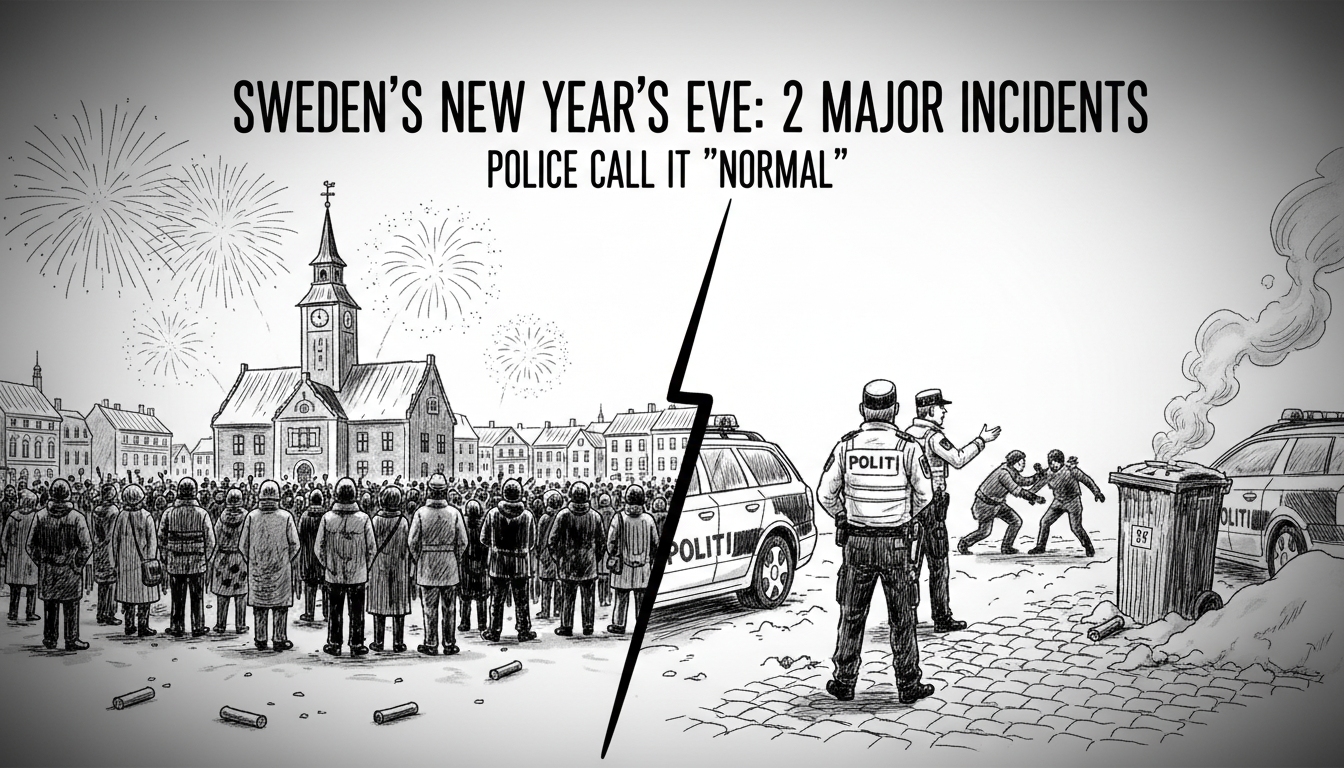
Sweden's New Year's Eve celebrations were marked by an attempted murder and a serious firework injury, yet police described the night as 'normal' and even 'somewhat calmer' than usual. The contrasting picture emerged from police reports across the country, highlighting the complex reality of a major holiday where widespread revelry meets isolated violence.
A man in his 40s was arrested early in the evening for an alleged stabbing at a hotel in Farsta, southern Stockholm. The victim sustained serious injuries and was transported to hospital by ambulance. Police opened an investigation into attempted murder. Separately, one hour before midnight, a young man in Solna, north of Stockholm, was struck in the face by a firework. He received on-site care before being taken to hospital, with police investigating for causing bodily harm.
Despite these serious events, the official assessment from Stockholm police was measured. Robert Sennerdal, press spokesperson for the Stockholm police region, characterized the Stockholm night as a 'normal New Year's night' but 'somewhat calmer' than average. In the southern region, press spokesperson Evelina Olsson offered a similar summary. 'I can summarize the night as messy,' Olsson said. 'People have celebrated and partied and fought, that's part of New Year's Eve.'
A Night of Contrasts
The police statements present a clear paradox. On one hand, specific, violent crimes occurred, requiring major investigations. On the other, the overall operational picture did not alarm authorities beyond expected holiday challenges. This contrast is central to understanding public safety during mass celebrations. The incidents in Farsta and Solna were severe but isolated within the context of a nation of over ten million people marking the holiday.
New Year's Eve consistently presents one of the highest workloads for Swedish emergency services each year. The combination of alcohol consumption, late-night gatherings, and the widespread use of fireworks creates a predictable spike in calls. Police resources are strategically deployed, with many officers working extended shifts to manage public order and respond to emergencies. The fact that the night was deemed 'normal' by seasoned officers indicates the system operated within its prepared capacity, even with serious crimes occurring.
The Fireworks Factor
The injury in Solna underscores an annual public safety debate in Sweden. While Swedish law regulates fireworks—requiring permits for use in many public spaces and prohibiting sales to those under 18—enforcement is notoriously difficult on December 31st. Consumer-grade pyrotechnics are legally sold for a short period before New Year's, leading to widespread, often irresponsible, use.
Public health agencies and rescue services routinely issue safety warnings in the days leading up to the celebration. Injuries range from minor burns to severe trauma, like the facial injury reported in Solna. Damage to property from stray rockets or fires is also common. The police investigation into 'causing bodily harm' in the Solna case suggests they are treating the incident as a serious matter, potentially looking for the individual who launched the firework.
Analyzing Holiday Crime Patterns
Criminologists note that holidays often see a shift in crime types rather than a uniform increase. Domestic disturbances, assaults in nightlife districts, and alcohol-related accidents typically rise. Premeditated crimes like burglaries might temporarily dip. The reported incidents align with this pattern: impulsive violence linked to celebration settings.
'The isolated serious incident is tragic, but not statistically indicative of a trend,' says a Stockholm-based criminologist who studies seasonal crime variations. 'The police assessment of a 'normal' night is likely based on volume metrics—total call-outs, arrests for drunkenness, reports of disturbances. Those numbers probably fell within the expected range based on historical data, even with high-profile cases.'
Sociologists point to the role of cultural ritual and alcohol. New Year's Eve carries significant social pressure for celebration and high spirits. This, combined with increased alcohol consumption, can lower inhibitions and escalate conflicts quickly. The hotel stabbing in Farsta, details of which remain under investigation, exemplifies how a personal dispute can turn violent in a charged holiday atmosphere.
Police Strategy and Public Perception
Police communications walk a fine line after such nights. Labeling the night 'normal' aims to provide calm, factual context and prevent public alarm. However, for those affected by the violence, or for communities where incidents occur, the term can feel dismissive. The challenge for authorities is to acknowledge specific tragedies while communicating the broader operational reality.
Their strategy involves significant pre-planning. Police presence is visibly heightened in city centers and known trouble spots. Coordination with private security at venues and with ambulance services is tightened. The goal is containment and rapid response. The arrest of a suspect in the Farsta case relatively quickly suggests police were deployed effectively to manage that incident.
The Aftermath and Ongoing Investigations
As the country woke up on New Year's Day, the clean-up began—both literal, from firework debris, and procedural. The two major investigations moved forward. In Stockholm, detectives worked to understand the motive and circumstances behind the hotel stabbing. In Solna, officers sought witnesses to the firework incident that caused the young man's injury.
For the victims and their families, the new year began with trauma and recovery. For the police, January 1st involved processing arrests, completing reports, and analyzing the night's data to inform planning for future years. The 'normal but calmer' assessment will be scrutinized internally against response times, resource allocation, and incident outcomes.
A Recurring Swedish Dilemma
This year's New Year's Eve in Sweden reflects a recurring national dilemma: how to balance the cultural tradition of vibrant, often boisterous, public celebration with community safety. The sale of powerful fireworks to the public remains a contentious issue. Proponents see it as a cherished tradition; opponents cite the annual toll of injuries, stress on pets, and burden on emergency services.
The police response highlights a pragmatic, data-driven approach. By measuring the night against historical benchmarks, they avoid sensationalism. Yet the human cost of the incidents in Farsta and Solna is real. It raises questions about whether 'normal' is an acceptable standard, or if more can be done to reduce the risks inherent in the holiday. As Sweden looks ahead, the debate continues: is a 'stökig'—messy—night an inevitable price for celebration, or a call for change?