
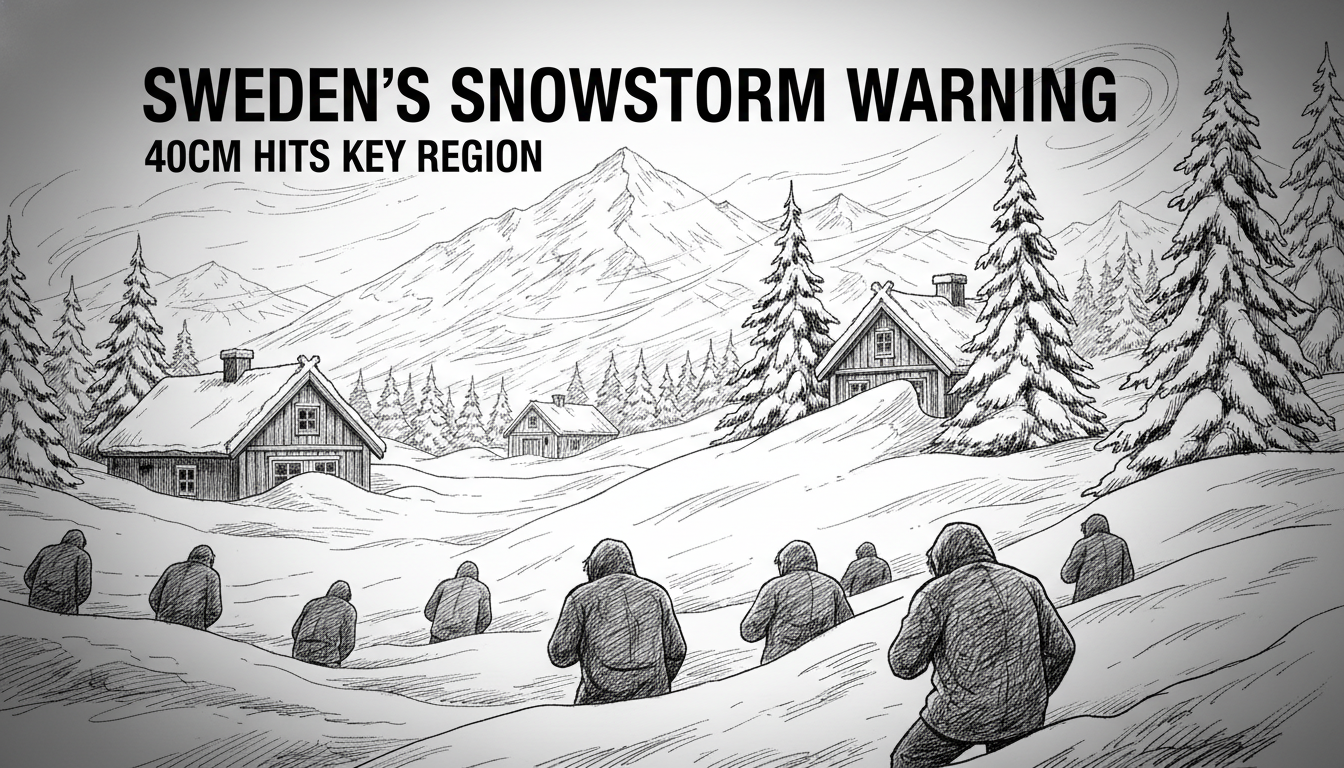
Sweden's SMHI has issued a critical orange weather warning for 20-40 centimeters of snow and strong winds, targeting areas north of Gävle to Uppsala and the Roslagen coast this Friday. The combination is expected to create hazardous road conditions and poses a serious risk of widespread power outages. This alert comes as many are still navigating the post-holiday return to work and school, promising significant disruption for thousands.
A Friday of Friction and Flakes
Residents from Gävleborg County down through Uppsala are bracing for a difficult commute and a potentially isolated weekend. The Swedish Meteorological and Hydrological Institute (SMHI) states the warning is due to "difficult road conditions" caused by heavy snowfall combined with strong, biting winds. Precipitation may switch between snow and rain, creating a slippery, heavy mixture on roads and walkways. For commuters relying on the E4 highway or regional trains connecting Stockholm to Uppsala and beyond, Friday travel is strongly discouraged. 'I was planning to drive back to Uppsala from a cabin up north on Friday, but that's cancelled now,' says Elias Ström, a university student. 'It's better to hunker down with extra coffee and wait it out.'
The anticipated 2-4 decimeters (20-40 cm) of snow, with potentially higher local amounts, is not unprecedented for January, but its timing amplifies its impact. This is the first major winter test of the year for infrastructure and public readiness. Utility companies across the warning zone have confirmed they are placing extra crews on standby. 'We are monitoring the situation closely,' a press officer for a major regional utility said. 'The primary risk comes from wet snow weighing down power lines and trees, combined with gusty winds that could cause breakages.'
Cultural Calm Meets Practical Prep
There is a distinct Swedish attitude towards weather like this—a blend of prudent preparation and subdued acceptance. The concept of 'mys' (coziness) often becomes a strategic response. Supermarkets in warned areas reported increased sales of candles, non-perishable foods, and coffee on Wednesday afternoon following the alert. 'We see a clear pattern when these warnings come,' notes Anna Lundgren, a store manager in Uppsala. 'People buy comfort food, things for baking, and goodies for hot drinks. It's about making a potential inconvenience into something pleasant.'
This contrasts with the bustling, normal life happening just south in Stockholm, which currently lies outside the main warning area. The capital may see only lighter snowfall, creating a sharp divide between the disrupted north and the functioning south. The Roslagen archipelago coast, however, part of the warning zone, faces a specific threat. The winds blowing in from the sea can be fiercer, and the often older, local power grids in smaller coastal communities are more vulnerable to outages. Local ferry services have already announced possible cancellations for Friday.
Expert Insight on the Orange Alert
Meteorologists explain that an orange warning from SMHI signifies a high-impact event that is likely to occur. It demands public attention and action. 'This isn't just a bit of snow,' explains freelance meteorologist Peter Granström. 'An orange code means the weather has the capacity to disrupt society. The combination here is key—wind redistributes snow, causing drifts that block roads even after plows have passed. It also lowers visibility dramatically. The public should treat this warning seriously.'
The agency's warning system, using yellow, orange, and red, is designed for clarity. Authorities and emergency services use these codes to ramp up their preparedness levels. Many municipalities in the affected region have their winter road maintenance teams prepared for extended shifts starting Thursday night. The goal is to keep primary routes open for essential services, but secondary and rural roads will likely become impassable for periods during the storm's peak.
Looking Beyond the Immediate Blizzard
The storm's effects will linger through the weekend. Even after the snow stops falling on Friday evening, clean-up operations will be extensive. Temperatures are forecast to remain below freezing, meaning the snow will not melt but will compact into ice on untreated surfaces. This ongoing hazard will affect weekend travel and outdoor activities. For families, it might mean canceled sporting matches or community events planned for the first weekend of the new year.
The event also sparks a broader conversation about climate resilience in Sweden's smaller towns and rural areas. While major cities have strong infrastructure, prolonged power outages in the countryside test the limits of response systems. It reinforces the national recommendation for every household to have a basic emergency kit—a practice taken seriously in some homes and overlooked in others. Will this storm serve as a reminder to check those supplies? As Sweden settles in for what could be a classic, disruptive winter blow, the blend of modern forecasting and old-fashioned preparedness defines the response. The real measure of success won't be the snowfall total, but how smoothly the recovery begins on Saturday morning.