
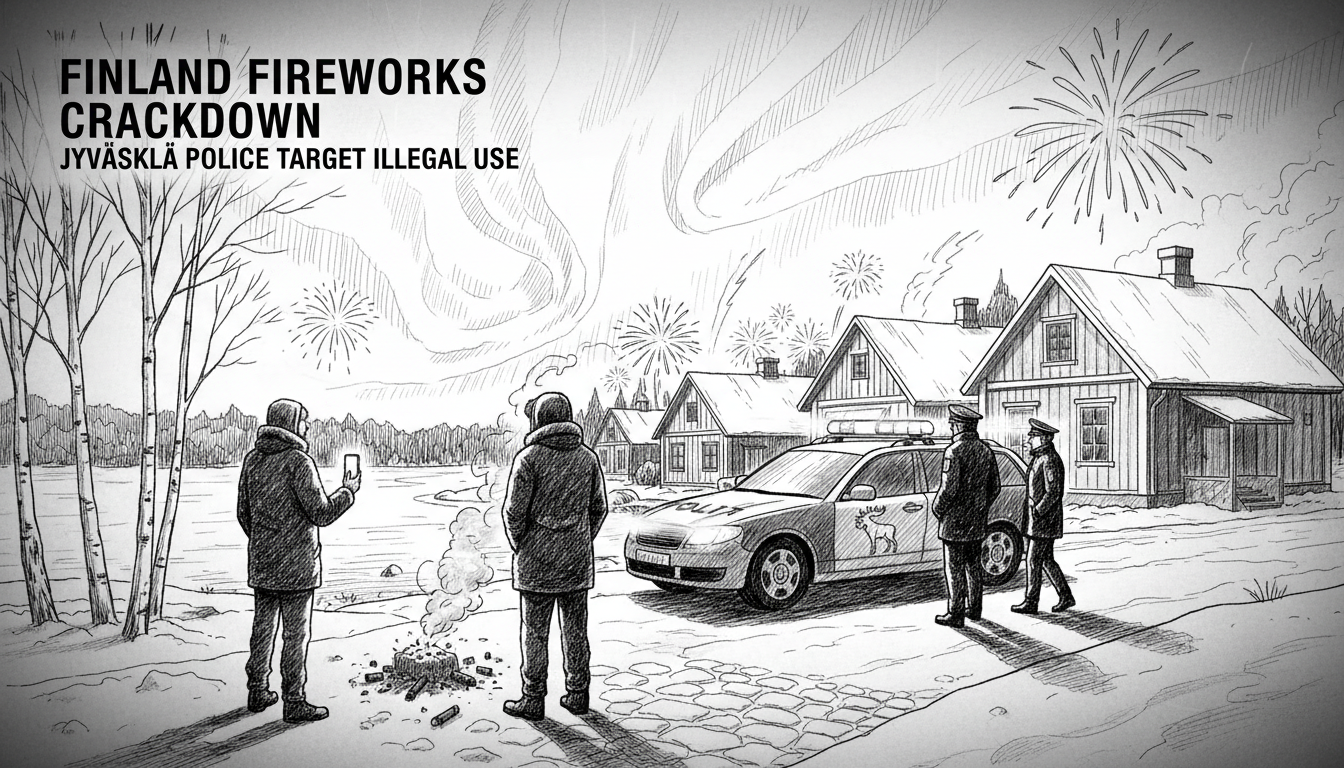
Finland's strict New Year's Eve fireworks regulations faced direct challenges in the cities of Jyväskylä and Jämsä, where police responded to multiple incidents involving young people setting off pyrotechnics outside legal hours. The Central Finland Police Department confirmed several enforcement actions were required on New Year's Eve, diverting officers from other duties to address violations of national time and age restrictions. This annual enforcement challenge highlights the persistent gap between Finland's detailed safety laws and public compliance during traditional celebrations.
"From an animal welfare perspective, it is unreasonable," said Field Commander, Chief Inspector Timo Jansson of the Central Finland Police, referencing the distress caused to pets and wildlife by unauthorized explosions. His statement underscores a key rationale behind the regulations, which aim to protect not only human safety but also animal wellbeing. The incidents in Jyväskylä and Jämsä, occurring in daylight hours, represent a clear breach of the law that permits fireworks only between 6:00 PM on December 31st and 2:00 AM on January 1st.
A National Framework for Controlled Celebration
Finland's approach to fireworks is defined by a precise legal framework designed to mitigate risk while preserving a cultural tradition. The Finnish Safety and Chemicals Agency (TUKES) sets the national rules, which local police departments are tasked with enforcing. The core regulations are straightforward: a strict eight-hour window for use, a minimum age of 18 for purchasing and igniting most fireworks, and prohibitions on use near buildings, crowds, or in any manner that endangers people or property. Violations are considered public order offenses and can lead to fines ranging from tens to hundreds of euros, depending on the severity and context of the infraction.
The policy represents a classic Nordic compromise, attempting to balance individual freedom to celebrate with collective responsibility for safety and peace. However, as the Jyväskylä cases demonstrate, this balance is tested annually. Police resources, particularly in smaller departments, are stretched thin on New Year's Eve, responding to everything from noise complaints and illegal sales to the more serious consequences of misuse. The 14 firework-related injuries reported nationally during the 2022-2023 celebrations, according to TUKES data, serve as a stark reminder of the physical dangers involved when protocols are ignored.
Enforcement on the Ground in Central Finland
The specific incidents in Jyväskylä and Jämsä, though not detailed in number, required a measurable police response. Chief Inspector Jansson's confirmation indicates these were not isolated minor breaches but significant enough to warrant official intervention. For local residents, especially pet owners, farmers with livestock, and wildlife advocates, daytime explosions are particularly disruptive and frightening. The sound of fireworks in daylight lacks the contextual cue of nighttime celebration, often causing greater panic among animals.
Police strategies on New Year's Eve typically involve visible patrols and responsive operations. Officers may confiscate fireworks from underage individuals and issue fines on the spot. The challenge lies in the scale of the event; with thousands of people potentially using fireworks simultaneously across a region, police can only respond to the most visible or reported violations. The actions in Central Finland suggest targeted enforcement where complaints were made or where activity was blatantly obvious, such as in public spaces during the day.
The Broader Debate on Safety and Tradition
This annual cycle of regulation and violation fuels an ongoing debate in Finnish society. Animal welfare organizations are among the most vocal critics, advocating consistently for even stricter rules or a cultural shift toward silent celebrations or light-based displays. They argue that the stress inflicted on domestic pets, livestock, and wild animals is a significant welfare issue that outweighs the tradition of explosive pyrotechnics.
Conversely, many citizens view fireworks as an integral and joyful part of marking the new year. The debate often centers on personal responsibility versus regulatory overreach. Experts in public safety and emergency medicine reinforce the importance of the rules, pointing to injury statistics and the strain on healthcare services. Each year, emergency departments prepare for treatable but often severe burns, eye injuries, and trauma caused by mishandled fireworks.
The situation in Jyväskylä also raises questions about youth access. Despite the age limit of 18, younger teenagers frequently obtain fireworks through older friends or family members. Enforcement of sales regulations at points of purchase is generally effective, but controlling secondary distribution is nearly impossible, placing the onus on parental supervision and peer pressure, which often falters.
Looking Ahead: Compliance and Cultural Shifts
The repeated incidents across Finland, including in Central Finland, suggest that education and enforcement alone may not achieve full compliance. Some Finnish municipalities have experimented with organized, professional public fireworks displays to provide a communal, safe alternative while discouraging widespread private use. The success of these initiatives is mixed, as many Finns still enjoy the hands-on tradition of lighting their own rockets and fountains.
Technological alternatives, such as drone light shows or high-quality silent fireworks, are gaining attention but face barriers of cost and accessibility. For now, the existing legal framework remains Finland's primary tool. Its effectiveness hinges on consistent enforcement and broad public acceptance of its necessity. The comments from Chief Inspector Jansson serve as an official rebuke of the irresponsible behavior witnessed and a reminder of the law's purpose.
As Finland moves forward, the tension between celebrating tradition and upholding safety will persist. The police response in Jyväskylä and Jämsä is a microcosm of a national challenge. It underscores that laws, no matter how well-intentioned, require public cooperation to be truly effective. The ultimate question for Finnish society is whether the cultural attachment to private fireworks will gradually align with the growing concerns for safety, animal welfare, and public peace, or if this New Year's Eve ritual will continue to be a flashpoint for enforcement action. The answer may determine whether future celebrations are marked by joyful light or by the sound of police sirens responding to yet another violation.