
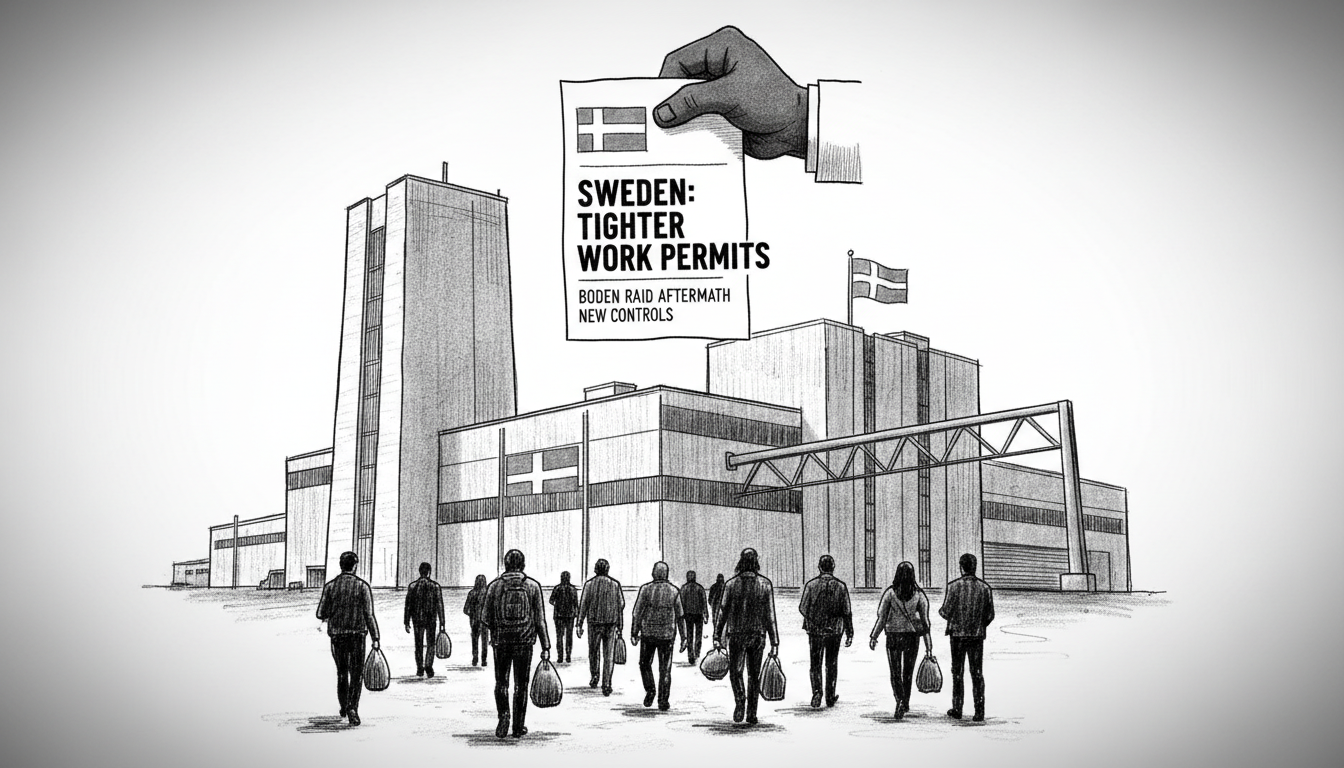
A major workplace inspection in Boden has triggered a significant policy response from Swedish authorities. The Swedish government is now enforcing stricter controls on temporary work permits. This follows a coordinated raid by police and multiple agencies at the Stegra industrial site in early November. The operation initially resulted in expulsion orders for 32 individuals. In a subsequent and more sweeping move, site management revoked access for 280 workers. These workers can no longer enter the premises due to tightened permit requirements.
Mikael Lindström, head of community relations for the site, explained the decision. He said the company acted preventively after the authorities' findings. The individuals affected could face work bans across the Schengen area and entry bans to Sweden. These are severe consequences for the workers involved. The company stated it could not guarantee that authorities would not make the same assessment about others in a future inspection. This preemptive action aims to mitigate that risk.
The situation highlights a specific regulatory framework. The Swedish Parliament has established rules for temporary work. EU, EEA, and Swiss residents can work in Sweden for up to 90 days without a permit for contract-based projects. For work lasting longer than three months, a visitor's residence permit is required. The recent enforcement action indicates that authorities found workers who did not qualify for these exceptions. This suggests potential gaps in compliance or documentation.
This event is not isolated. It reflects broader Swedish government policy on migration and labor market regulation. The Riksdag has debated these issues extensively. The current government coalition in Stockholm has prioritized stricter immigration controls. This raid and its aftermath are a direct manifestation of that political direction. The focus is on ensuring that temporary work schemes are not exploited. The bureaucratic process involves multiple agencies, from the Police to the Migration Board.
Historical context is important here. Sweden has long balanced an open labor market with robust social protections. Recent years have seen a political shift toward more restrictive policies. The government offices at Rosenbad have been central to crafting these new directives. The Riksdag building has hosted heated debates on the subject. This enforcement action in Norrbotten is a practical result of those political decisions. It shows policy moving from Stockholm politics to on-the-ground reality.
The implications are substantial for international companies and workers. For businesses, it means heightened due diligence on contractor compliance. For temporary workers, it underscores the critical importance of correct documentation. The Swedish government is clearly signaling that rules will be enforced rigorously. This could affect project timelines and labor supply in key industries. The message to the international community is clear. Sweden welcomes skilled labor but demands strict adherence to its laws.
What happens next will be telling. Will other major industrial sites face similar inspections? How will companies adapt their hiring and verification processes? The Swedish Parliament may review the effectiveness of these enforcement actions. The government policy in Sweden on labor migration remains a live and contentious issue. This case in Boden serves as a stark example of the new enforcement normal.