
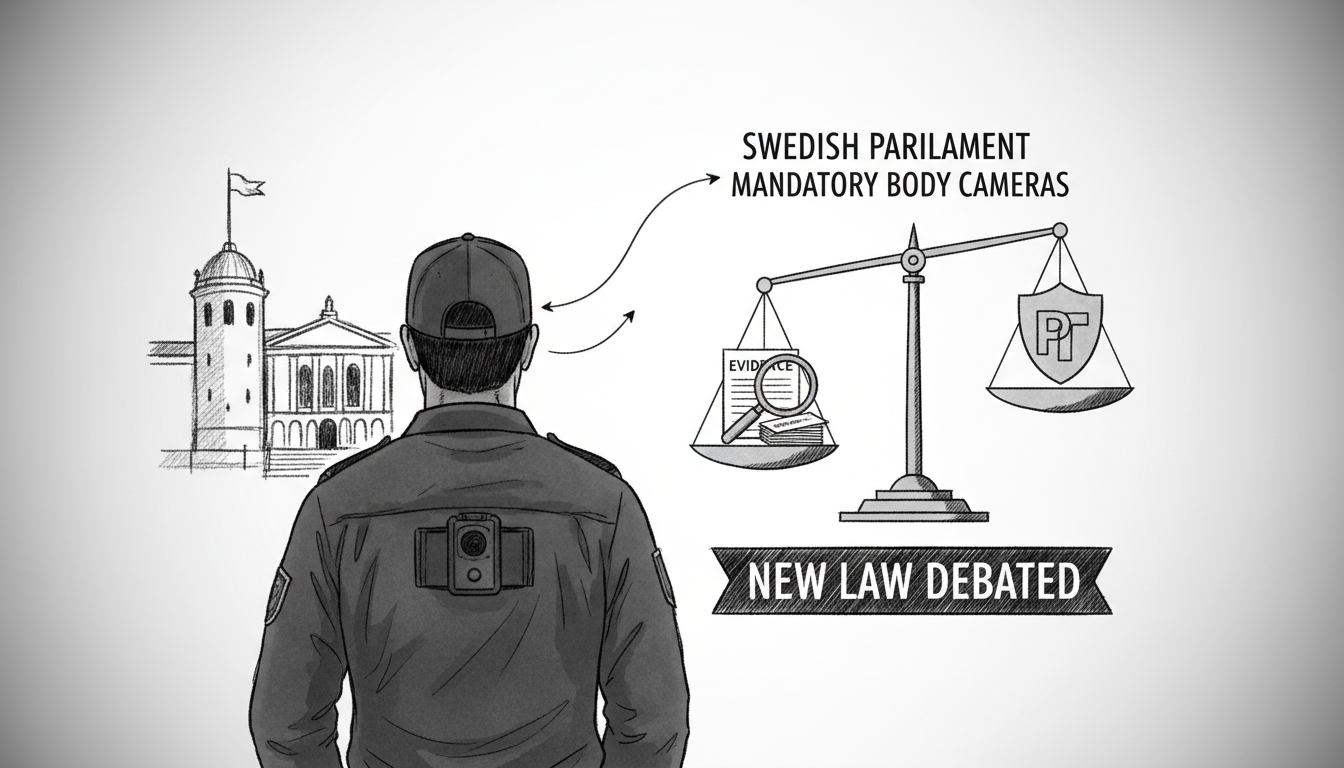
The Swedish government is advancing a legislative proposal that could mandate body cameras for private security personnel nationwide. This initiative, currently under review in the Riksdag, aims to standardize surveillance practices and reduce legal disputes. The proposal directly addresses gaps in evidence collection during incidents handled by private security firms.
Currently, body cameras are used by police officers, train conductors, and municipal parking attendants. Several municipalities have also run pilot projects with security guards. The new Riksdag decision would make this equipment obligatory for all licensed security personnel. The policy intends to create clearer records and decrease situations where testimony conflicts.
Josef Wiklund, a senior police official, supports the expansion. He said in a statement that the opportunity for security guards to use this technology seems reasonable. His endorsement carries weight in Stockholm politics, where inter-agency cooperation is a frequent topic. The proposal originates from government offices in Rosenbad, reflecting a broader push for accountability.
This move follows a pattern of integrating technology into Swedish public safety. The Swedish Parliament has previously debated surveillance tools and data privacy extensively. The current government policy in Sweden seeks a balance between security and civil liberties. Mandatory cameras represent a tangible shift toward documented interactions in public spaces.
The bureaucratic process involves committee reviews and potential amendments. A formal vote in the Riksdag building will determine the proposal's fate. Support appears strong among coalition parties, but opposition groups may raise privacy concerns. The final policy number and implementation timeline will be set after parliamentary approval.
For international observers, this development highlights Sweden's methodical approach to law enforcement modernization. The system relies on evidence-based adjustments rather than reactive measures. The debate also touches on the role of private actors in public safety, a growing trend across Nordic nations. Security companies will likely face new equipment costs and training requirements.
Analysis suggests this policy could reduce police workload by providing clearer evidence from initial incident responses. It also creates a standardized record that courts can use. The real test will be in implementation and public acceptance. Some citizens may view constant recording as intrusive, while others will welcome the transparency. The Swedish government must navigate these competing expectations as it finalizes the regulations.