
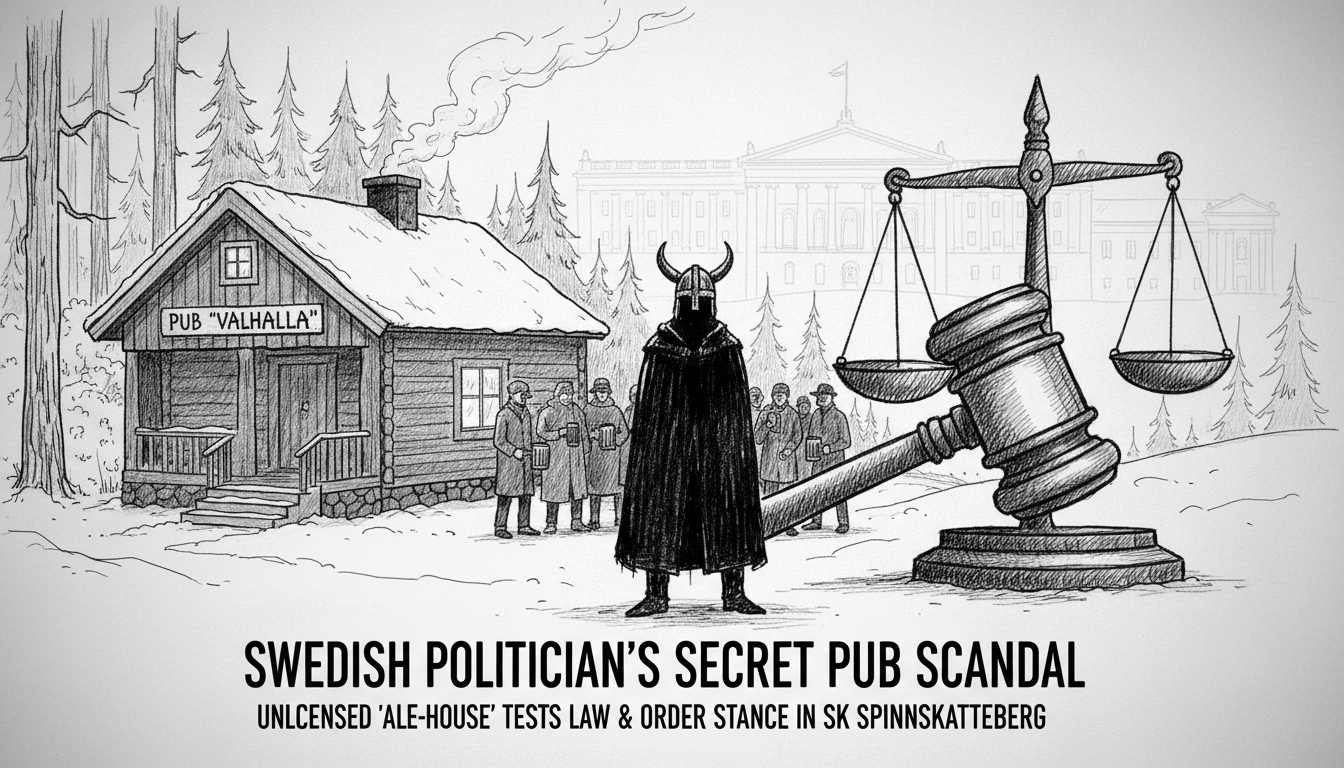
A local Sweden Democrat politician in Skinnskatteberg municipality faces scrutiny over an unlicensed pub operating at her residential address. Ewa Olsson Bergstedt, who sits on the municipal executive board and previously chaired the Sweden Democrats in Västmanland, was present as a guest at the establishment. The pub operated without the required municipal serving permit, a direct violation of Swedish alcohol legislation.
Investigative journalists documented alcohol sales at the location. They successfully purchased drinks despite the absence of proper licensing. The Alcohol Act, specifically Chapter 8, Section 1, outlines three strict exceptions for serving alcohol without a permit. These exceptions require a single, pre-determined guest list, no profit motive, and service in premises not used for professional alcohol sales. The operation in Skinnskatteberg met none of these legal criteria, according to the documented evidence.
The man operating the pub initially told reporters there were no specific rules for entry. He later claimed the event was a private party with a borrowed venue. In a written statement, Olsson Bergstedt declined an interview. She asserted she was merely an invited guest with no role in the company. She emphasized that a private residence is private and cannot hold a serving permit. This statement appears to contradict the documented public access to the venue.
This incident highlights the strict regulatory environment governing alcohol in Sweden. The Swedish government and local municipalities enforce these laws through dedicated alcohol inspectors. Violations are considered punishable offenses. The case raises questions about the awareness of legislation among public officials. Responsible personnel at any serving event must ensure moderation and prevent disorder, a core tenet of the law.
The political implications are immediate for the Sweden Democrats. The party has positioned itself as a champion of law and order within the Swedish political landscape. A local party figure being linked to a breach of these laws creates an awkward contradiction. It tests the party's internal discipline and its public messaging on social order. Such cases often prompt internal reviews within party structures at the local and national level.
Historically, alcohol policy remains a sensitive and regulated area in Swedish society. The system of government monopolies and strict licensing reflects a deep-seated cultural approach to consumption. For international observers, this case illustrates the intersection of local politics, municipal authority, and social regulation. Riksdag decisions frame the national law, but local enforcement falls to municipal bodies like the one Olsson Bergstedt helps lead.
The next steps likely involve the local licensing authority. An alcohol inspector confirmed the activity would be punishable. The municipality must now determine if a formal investigation is warranted. The outcome could range from warnings to fines. For the politician involved, the reputational damage may be more significant than any legal penalty. It serves as a reminder that public figures are held to a visible standard, especially regarding clear legal breaches in their own communities.
This is not the first time a Swedish politician has faced scrutiny over private conduct intersecting with public rules. It underscores the constant scrutiny faced by elected officials. Their actions, even in private settings, are subject to public and media examination. The case in Skinnskatteberg is a specific example of a broader dynamic in Stockholm politics and beyond. It shows how local incidents can quickly become national news, reflecting on party credibility and government policy in Sweden.