
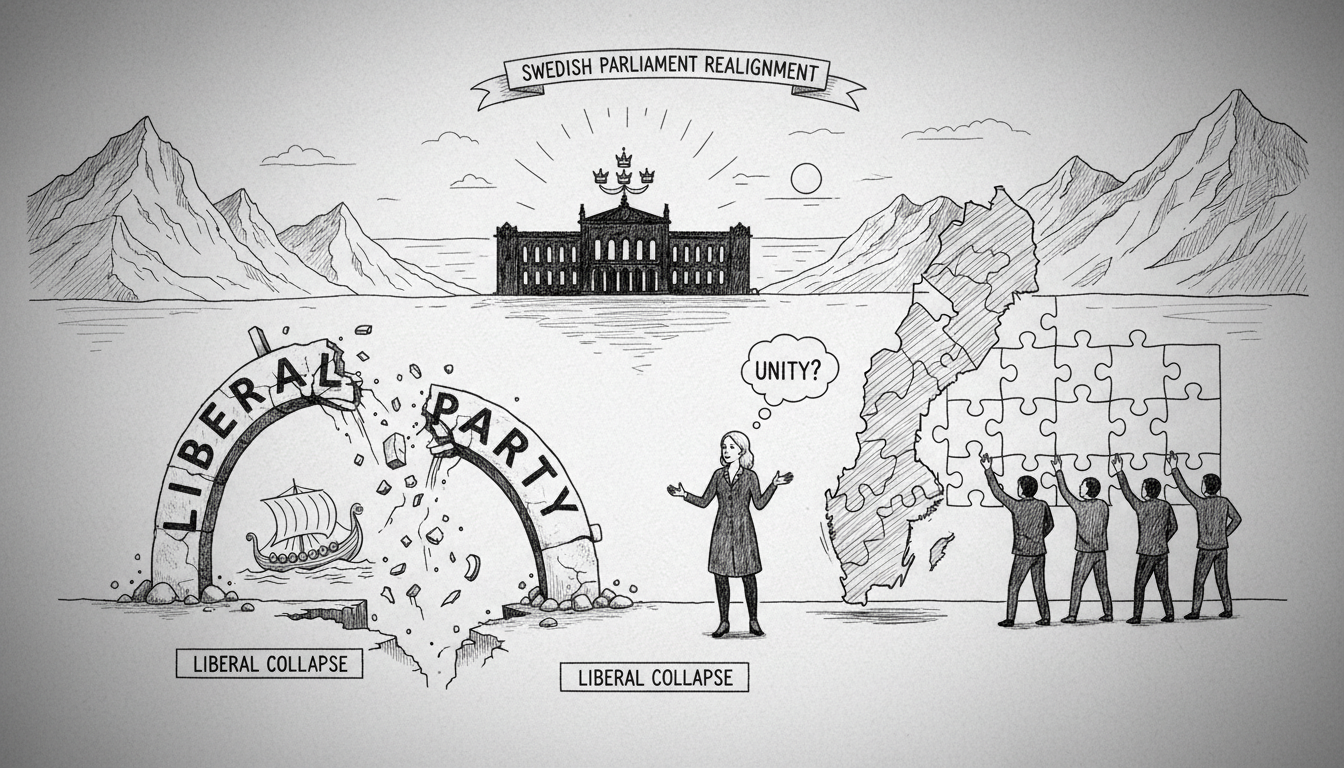
The Swedish government faces a profound structural shift in the Riksdag. New polling data indicates the Liberal Party may fall below the four percent parliamentary threshold. This development forces a complete recalculation of political majorities in Stockholm. The opposition bloc would then need to achieve near-total unity to challenge the sitting government. This scenario presents a continuing strategic problem for Social Democratic leader Magdalena Andersson. Her ability to form a stable alternative majority becomes significantly more complex.
Consecutive opinion surveys show a consistent downward trend for the Liberal Party. The data suggests only seven parties would secure seats if an election were held today. This potential exit would mark a historic contraction of Sweden's traditional multi-party landscape. It reflects a broader European trend of centrist liberal parties losing ground. The implications for government policy in Sweden are immediate and substantial.
A realignment would concentrate power among fewer actors in the Riksdag building. The current balance, carefully negotiated in Rosenbad, would become obsolete. Key legislation on budget, defense, and energy policy would require new coalitions. The opposition's path to a majority narrows considerably without the Liberals. This forces the Social Democrats, Left Party, Centre Party, and Greens into almost perfect alignment. Any single defection on a major vote could sink their proposals.
Historical context is crucial here. Sweden's parliamentary system is designed for coalition governance and compromise. The potential disappearance of a party that has held seats for over a century is unprecedented in modern times. It signals deep voter dissatisfaction with the political center. Analysts point to failed policy initiatives and internal party strife as primary causes. The Liberal Party's decline has been a slow burn over several electoral cycles.
The bureaucratic process for managing such a shift is untested. Committee assignments, speaking time, and state funding would be reallocated by Riksdag decisions. Senior ministers from the governing coalition have downplayed the instability. They argue their mandate remains clear from the last national election. Political observers in Stockholm's government districts are less confident. They note that day-to-day governance relies on predictable voting patterns.
What does this mean for international observers and the Swedish public? Policy stability is now in question. Major reforms promised by the Swedish government may face greater hurdles. Opposition parties must craft a coherent, unified platform to be seen as a viable alternative. The next few months of Riksdag decisions will serve as a critical stress test. The very architecture of Swedish parliamentary democracy is undergoing a silent but seismic shift.