
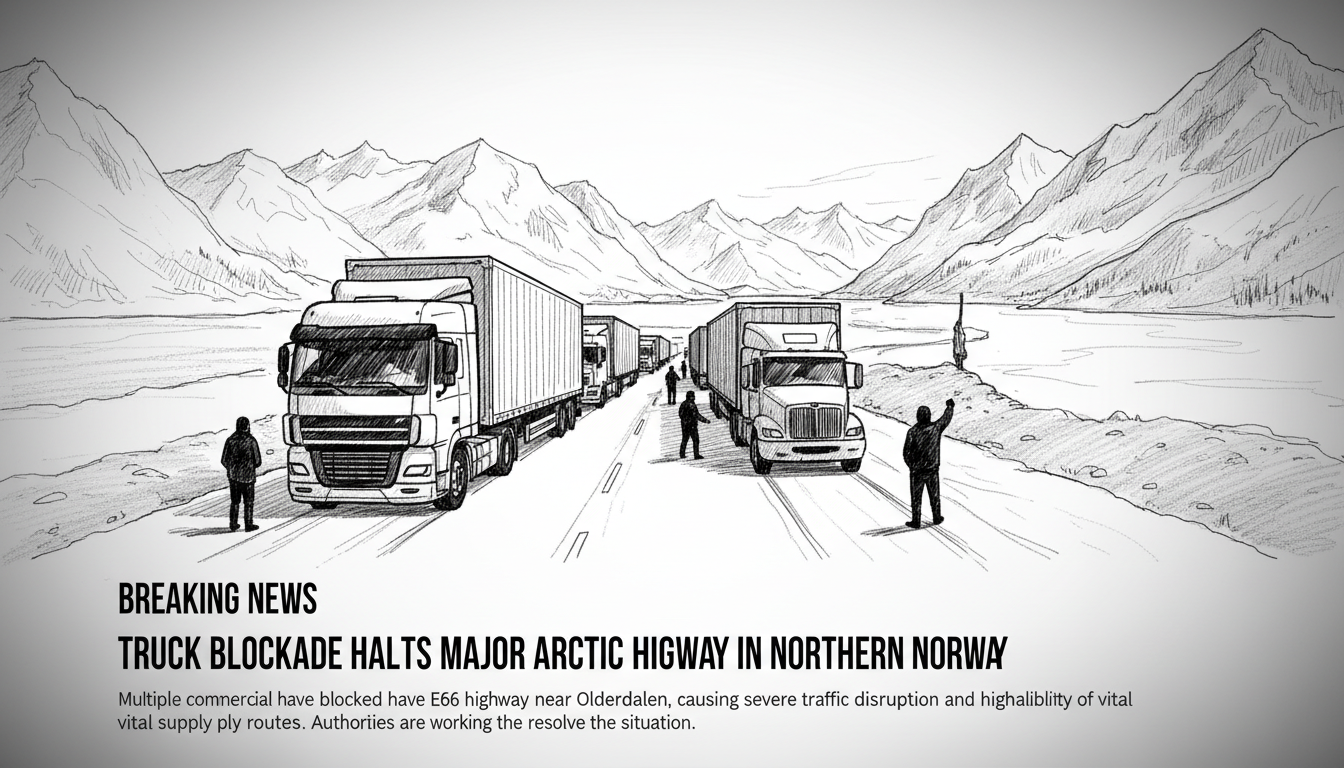
Norwegian police have responded to a major traffic disruption on the E6 highway near Olderdalen in Troms county. Multiple commercial trailers have completely blocked the roadway at Russebakken, creating severe traffic chaos in the region.
Operational commander Robin Åsheim Lindberg confirmed the situation in official police logs. The blockade has stranded motorists and disrupted transportation along one of Northern Norway's most vital transport corridors.
The E6 highway serves as the primary road connection through Troms county, linking northern communities with southern regions. This arterial route carries both local traffic and heavy commercial vehicles transporting goods to remote Arctic communities. Blockades of this nature create immediate logistical challenges for supply chains.
Northern Norway's transportation infrastructure faces unique vulnerabilities. The region's mountainous terrain and limited road alternatives mean highway blockages can isolate communities for extended periods. This incident highlights the fragility of Arctic transport networks during winter months.
Local authorities typically deploy emergency response teams to manage such situations. Police work to establish detour routes while negotiating with those responsible for blockades. The economic impact grows with each hour the highway remains closed.
International readers should understand that Norway's E6 highway stretches from the Swedish border near Oslo all the way to Kirkenes near the Russian border. It represents one of Europe's most northern major highways and serves as a lifeline for Arctic communities.
What causes transport blockades in Norway? Labor disputes, weather conditions, and political protests have all triggered similar incidents in recent years. The country's strong labor movement sometimes uses transportation disruptions as leverage during negotiations.
This current blockade occurs during a sensitive period for Northern Norwegian commerce. Winter conditions already challenge supply chains, and additional disruptions threaten essential deliveries to remote towns. Groceries, medical supplies, and heating fuel all depend on reliable road transport.
Norwegian authorities face the dual challenge of resolving the immediate blockage while addressing the underlying causes. Past incidents have lasted from several hours to multiple days, depending on the complexity of negotiations.
Travelers in Northern Norway should monitor official traffic alerts and prepare for extended delays. Alternative routes in this region are extremely limited, and air transport becomes the only option during prolonged highway closures.
The situation demonstrates how remote Arctic communities remain vulnerable to transportation disruptions. As climate change affects northern regions, maintaining reliable infrastructure becomes increasingly crucial for economic stability and community wellbeing.