
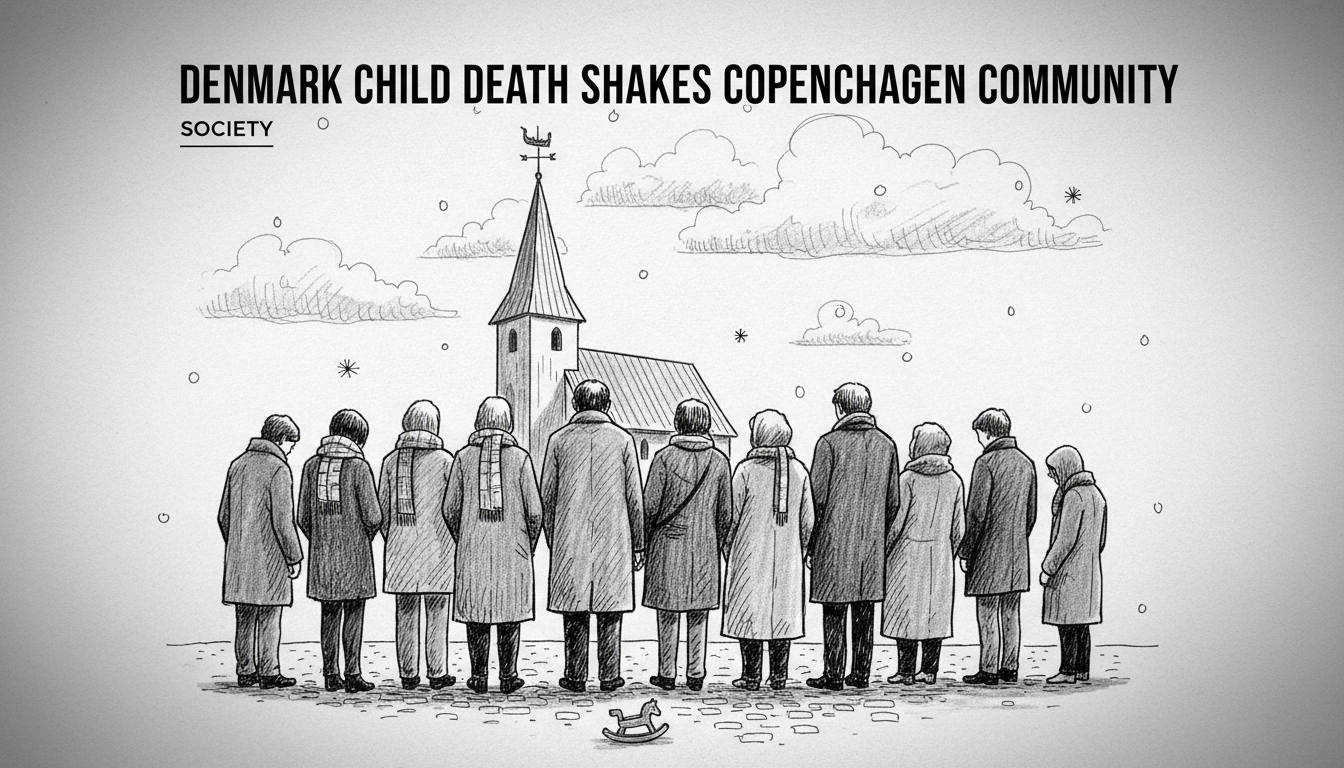
Denmark's social services and community cohesion face difficult questions after a two-year-old boy was killed in Høje Gladsaxe. A 32-year-old man has confessed to throwing the child from the seventh floor of an apartment building. The tragedy has left a Copenhagen suburb in mourning and sparked a complex conversation about safety and support.
A Suburb in Mourning
Residents gathered in silence with flowers and candles outside the building where the family lives. The small memorial grew throughout the day. Soft toys and notes joined the bouquets on the asphalt. A younger neighbor pointed to a spot on the ground, his voice quiet. 'Can you see the mark over there? That’s where he landed, the little boy,' he said. The community's shared grief is palpable. People who might only have nodded hello now stand together, united by a profound sense of loss and disbelief.
'The two-year-old was the sweetest little boy. Always happy. Always smiling. His mother was so happy with him,' a neighbor told local media, capturing the devastating personal loss behind the headlines. This sentiment echoes through the hallways and shared spaces of the large residential blocks. Such buildings in areas like Høje Gladsaxe often house diverse communities, where social bonds are crucial for wellbeing.
Confession and Immediate Aftermath
The 32-year-old suspect confessed during his constitutional hearing. Police have not released a motive, and the investigation continues. The legal proceedings will now focus on establishing the full circumstances and any potential prior contact with support systems. The sudden violence has traumatized witnesses and neighbors. Local authorities have offered crisis counseling to residents, especially children, who may have seen or heard the incident.
Community police have increased their presence in the area. This is a standard measure meant to provide reassurance. Officers are visible, engaging with residents who are processing the shock. The response from municipal services in Gladsaxe will be scrutinized in the coming weeks. Denmark’s extensive welfare system is designed to prevent such extremes, making this case a potential focal point for evaluating intervention strategies.
The Systems Designed to Protect
Denmark possesses a strong social safety net. It includes early childhood health visitors, municipal family services, and accessible mental health care. The system relies on coordination between general practitioners, schools, and social workers to identify families or individuals in need. Yet this tragedy prompts a hard look at whether these networks are always connected enough to catch those at highest risk.
In 2022, Danish police registered 54 homicides nationwide. Child homicides are statistically rare in Denmark, a fact that makes each case deeply shocking to the national consciousness. When they occur, they trigger intense scrutiny of the protective mechanisms in place. 'Every single case is one too many,' said a former head of a child welfare NGO, speaking on background. 'The question is always: could different actions at an earlier stage have changed the outcome?'
Experts point to several potential pressure points. High caseloads for social workers can challenge proactive engagement. Stigma around mental health may prevent some from seeking help until a crisis occurs. Furthermore, the integration of new citizens into local support networks remains an ongoing priority for Danish municipalities. Effective integration helps build the community bonds that are vital for safety.
A Community's Resilience Tested
The true test for Høje Gladsaxe will be the coming months. The initial shock will fade, but the need for support will remain. The affected family, and the witnesses, will require long-term psychological care. Community centers in Copenhagen suburbs often become hubs for healing after trauma. They can host group sessions and provide a neutral space for residents to reconnect.
Local community leaders have a critical role in guiding this process. They can help channel the collective grief into constructive support, ensuring the family is not isolated. 'In these moments, the community's strength is measured by its compassion and its ability to surround the bereaved with practical care,' noted a Copenhagen integration consultant. This involves respecting privacy while offering concrete help with daily tasks.
Danish society often reacts to tragedy with a search for systemic improvement rather than only assigning blame. There will likely be internal reviews within the Gladsaxe municipality. Politicians may call for evaluations of how mental health alerts are handled or how different agencies share information. The goal is to learn and adapt, though this offers little solace to those directly grieving.
Looking Ahead After Unthinkable Loss
The memorial in Høje Gladsaxe is a quiet, powerful testament to a life lost far too soon. It also represents a community's determination to affirm value and care in the face of senseless violence. The conversations happening in living rooms and municipal offices across Denmark touch on fundamental questions. How do we build societies where such despair is intercepted? How do neighbors look out for one another in an increasingly fragmented world?
For now, the focus remains on the family and their neighbors. The flowers will eventually wilt, but the impact of this loss will shape that Copenhagen suburb for years. The ultimate challenge for Denmark's social policy is to translate this moment of collective heartbreak into more effective, connected, and compassionate support for every individual. The system is strong, but its human connections must be stronger.