
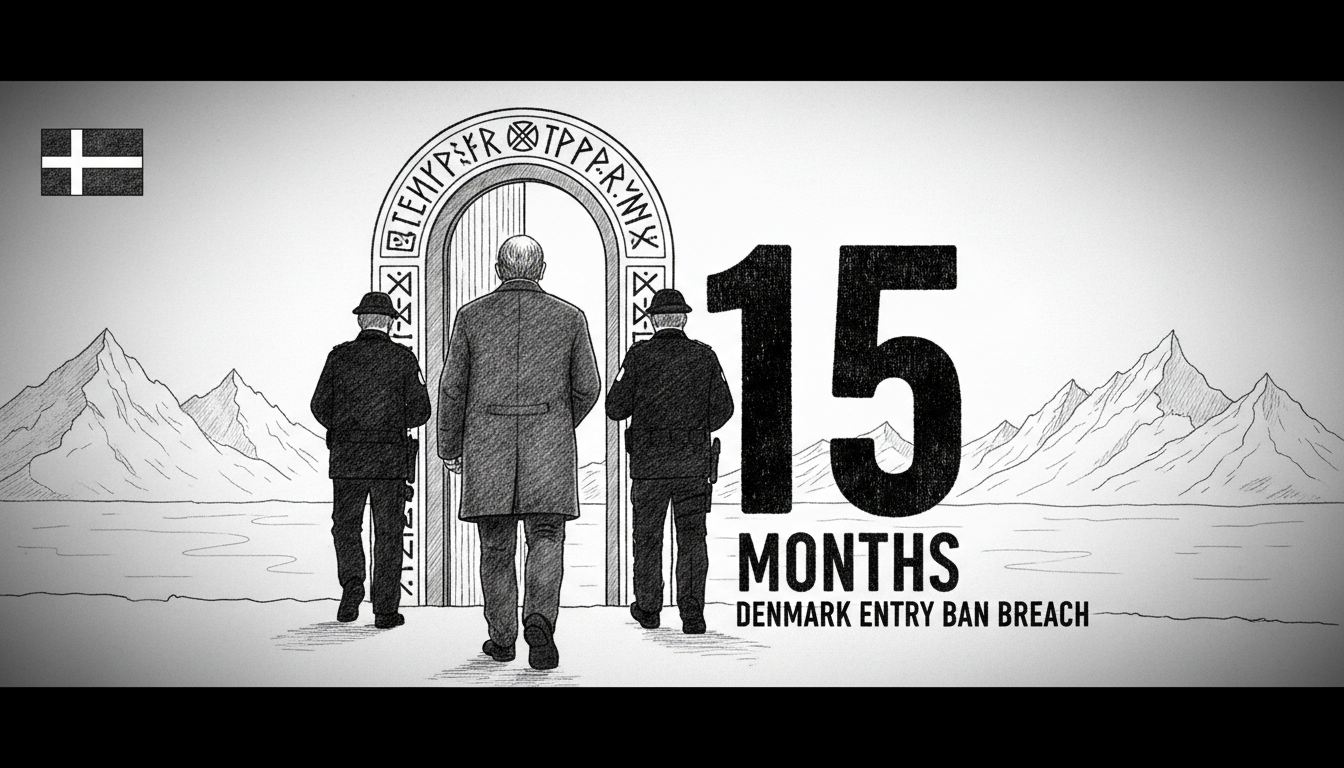
Denmark immigration rules were enforced with immediate effect in Skagen this weekend. A 38-year-old man of Romanian descent received a one-year, three-month prison sentence for violating an entry ban. His apprehension followed a police call to a minor shoplifting incident, revealing a more serious breach of Danish law.
From Petty Theft to Prison Sentence
The sequence began routinely for police in the northern town of Skagen. Officers responded to a report of a small shoplifting incident on Saturday morning. Upon checking the identity of the 38-year-old man involved, they made a critical discovery. Their database search showed he had been previously expelled from Denmark and was actively violating a standing entry prohibition. This shifted the case from a minor retail crime to a significant immigration offense. The man was promptly arrested and held for a constitutional hearing.
The legal process moved with notable speed, a hallmark of Denmark's system for clear-cut immigration violations. At the hearing at the Court in Hjørring on Sunday, the man admitted to breaking the entry ban. He also agreed to have his case resolved immediately through a 'straksdom' or immediate sentencing procedure. Prosecutor Stephen Pedersen confirmed the outcome: an unconditional prison term of 15 months, coupled with a new expulsion order and a 12-year entry ban into Denmark.
The Weight of an Entry Ban in Danish Law
This case underscores the severe consequences of defying Danish immigration authorities. An entry ban is not a suggestion but a legally enforced prohibition. Violation is a criminal act prosecuted under the Danish Aliens Act. Sentences are typically uncompromising, combining imprisonment with extended new bans. For this individual, the original expulsion and ban were replaced with a longer 12-year prohibition, effectively resetting the clock.
Legal experts point to the efficiency of this process as a deliberate policy tool. "The immediate sentencing in clear-cut cases like this serves multiple purposes," says Karen P. Hækkerup, a former Minister of Justice and current legal commentator. "It delivers a swift consequence, which acts as a deterrent. It also efficiently removes the individual from the country upon release, upholding the integrity of the original expulsion order." This efficiency is a key feature of Denmark's approach to managing its borders and immigration system.
EU Freedom and National Enforcement
The defendant's Romanian citizenship adds a complex layer to the story. Romania has been a member of the European Union since 2007, granting its citizens the right to free movement within the EU. However, this freedom is not absolute. Member states retain the right to expel individuals on grounds of public policy, public security, or public health. Once an expulsion order with an entry ban is issued, it overrides the general principle of free movement for that individual.
"This case is a clear example of the intersection between EU law and national sovereignty," explains Professor Mikael R. Madsen, director of iCourts at the University of Copenhagen. "While EU citizens enjoy freedom of movement, Denmark maintains the authority to protect public order. A legally issued entry ban, especially following criminal activity, is a powerful exercise of that national authority. The EU framework allows for this, provided due process is followed." The man's admission of guilt and acceptance of immediate sentencing streamlined this due process.
A Broader Pattern of Policy
This incident in Skagen is not an isolated event but fits into a broader Danish social policy context. Over the past two decades, Denmark has implemented some of Europe's strictest immigration and integration laws. Policies have consistently aimed to reduce unwanted immigration and rigorously enforce the repatriation of individuals denied the right to stay. The enforcement of entry bans is a critical component of this strategy.
Statistics from the Danish Ministry of Immigration and Integration show a consistent pattern. In recent years, several hundred people annually are convicted for violating entry bans. The majority receive immediate prison sentences. The government argues this strict enforcement is necessary to maintain control over immigration and uphold the rule of law. Critics, however, sometimes question the proportionality of sentences, particularly when the initial trigger for police contact is a minor, non-violent offense like shoplifting.
Life After the Sentence
For the 38-year-old man, the immediate future is set. He will serve his 15-month sentence in a Danish prison. Upon completion, he will be deported to Romania under the terms of the new expulsion order. The 12-year entry ban will then take effect, prohibiting his legal return to Denmark or any other Schengen country for that period, as Denmark typically reports such bans to the shared Schengen Information System (SIS).
Re-entering Denmark during this ban would constitute a new, and likely more severely punished, criminal offense. The long-term consequence extends beyond Denmark's borders. A deportation and entry ban record can complicate future visa applications to other non-EU countries, creating a lasting ripple effect from the decisions made in a Skagen shop and a Hjørring courtroom.
A Message from the North
The story from Skagen sends a unambiguous message about Danish immigration policy. It highlights a system designed for rapid enforcement, where even a minor police intervention can uncover a major legal breach. The combination of immediate imprisonment and a lengthy new entry ban illustrates the high stakes of violating Danish immigration law. This approach reflects a political and social consensus in Denmark that prioritizes strict border control and the conclusive enforcement of expulsion orders.
As the man begins his sentence, the case closes a loop of enforcement. It also opens questions about rehabilitation, the finality of such bans, and the long-term human impact of policies that are, in a courtroom on a Sunday, reduced to swift procedure and definitive judgment. For Danish authorities, it is a routine success. For the individual, it is a life-altering event that started with a small theft in a quiet northern town and ended with the heavy gates of a prison and a 12-year lock on the border.