
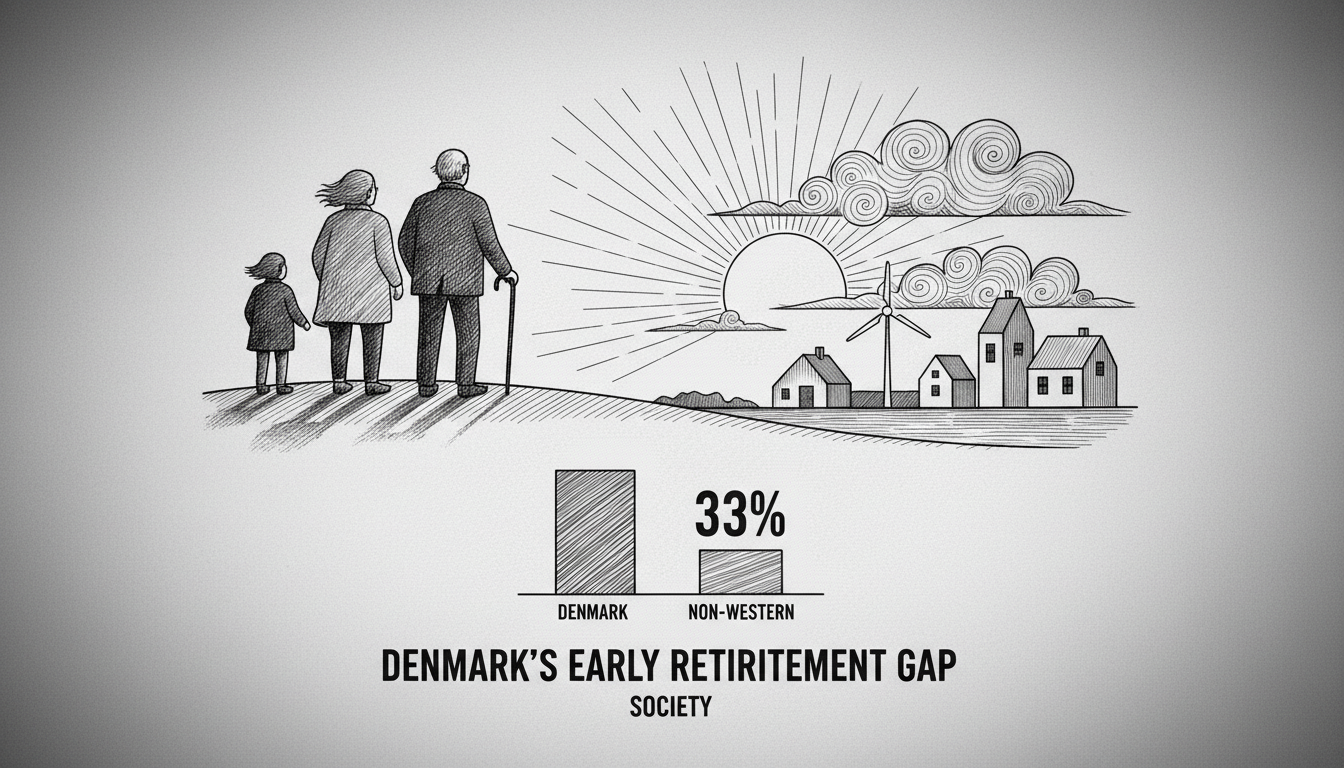
Danish social policy faces a stark demographic reality: one in three early retirement recipients in major cities is a non-Western immigrant. New analysis from the think tank CEPOS reveals that over 30% of people on early retirement pension, or 'førtidspension,' aged over 40 in two of Denmark's largest municipalities are non-Western immigrants. This figure dramatically outpaces their share of the general population, igniting a fresh debate about integration, labor market health, and the sustainability of the famed Danish welfare model.
For someone like me, reporting on integration for years, these numbers are shocking yet familiar. They represent thousands of individual stories of unfulfilled potential and persistent barriers. The early retirement pension is a vital social safety net, designed for those permanently unable to work due to health reasons. Its rising use among a specific demographic group points to systemic failures long before an application form is ever filled out.
A Closer Look at the Disparity
The CEPOS report focuses on Copenhagen and another large municipality, areas with significant immigrant populations. While non-Western immigrants and their descendants constitute a notable portion of residents here, their representation on early retirement is disproportionately high. The Danish welfare system is universal, granting legal residents access to benefits if they meet strict medical and functional capacity criteria. This disparity therefore suggests a deeper chasm in health outcomes and labor market attachment.
Recent policy shifts add critical context. In 2023, the Danish government tightened early retirement rules, shifting focus toward an applicant's actual work capacity rather than medical diagnoses alone. This reform aimed to get more people into some form of employment, but its impact on these emerging demographic trends remains unclear. Experts argue the data signals problems that begin decades before retirement age.
| Group | Share of Early Retirement (40+) in Major Communes | General Population Share* |
|---|---|---|
| Non-Western Immigrants | Over 30% (1 in 3) | Significantly Lower |
| Rest of Population | Remaining ~70% | Majority |
| *Comparative population share is not specified in the CEPOS release but is understood to be lower. |
Unpacking the Underlying Causes
Multiple, interconnected factors likely drive this trend. Language barriers and lower formal education levels upon arrival can limit job opportunities to more physically demanding sectors. "We see a pattern where individuals from non-Western backgrounds often enter the labor market in jobs with a high risk of wear and tear," says a social policy researcher I spoke with, who wished to remain anonymous due to the sensitivity of the topic. "When physical health declines, their options for retraining or lighter work are constrained by those initial language and skill gaps."
Discrimination in the hiring process remains a stubborn reality, as documented by numerous studies. Mental health challenges, including stress related to acculturation and traumatic pre-migration experiences, also play a significant role. The result is a segment of the population that, after years of struggling in the labor market, meets the stringent medical criteria for early retirement. Municipal social service centers in cities like Copenhagen and Aarhus see these cases daily.
The Political and Social Reckoning
The data arrives amid an already heated national conversation about immigration and welfare. Parties on the right argue it confirms the need for stricter benefit eligibility and stronger assimilation policies. "This is a clear indicator that our integration efforts have failed for a large group," stated a local councilor from a right-leaning party. Those on the left caution against stigmatization, emphasizing structural barriers and calling for improved access to language education, vocational training, and mental health support long before early retirement becomes an option.
The human cost is immense. Early retirement provides necessary economic security for those truly unable to work, but it often comes with social isolation and a lost sense of purpose. For the welfare state, a high reliance on benefits by any subgroup raises questions about long-term fiscal sustainability and social cohesion. It challenges the very principle of universality if outcomes are so uneven.
Seeking Solutions Beyond the Statistics
Addressing this requires a multifaceted approach long before the retirement age. Experts point to several key areas: drastically improving Danish language acquisition for new arrivals, creating more recognized pathways for foreign qualifications, and combating ethnic discrimination in workplaces more aggressively. Health initiatives must also target immigrant communities proactively to address both physical and mental well-being.
Furthermore, the tightening of early retirement rules may paradoxically hit this group hardest. Without parallel investments in targeted upskilling and health interventions, more people could end up in a benefits limbo—incapable of securing a job yet not qualifying for pension. Municipal job centers are now on the frontline of implementing these complex new rules.
As Denmark continues to refine its social contract, this data serves as a powerful mirror. It reflects not just who receives support, but who the labor market has left behind. The challenge for policymakers is to see the people behind the percentage—and to build bridges into work that are strong enough for everyone to cross.
Are the current integration policies sufficient, or do these figures demand a fundamental rethinking of how Denmark builds inclusive economic health?