
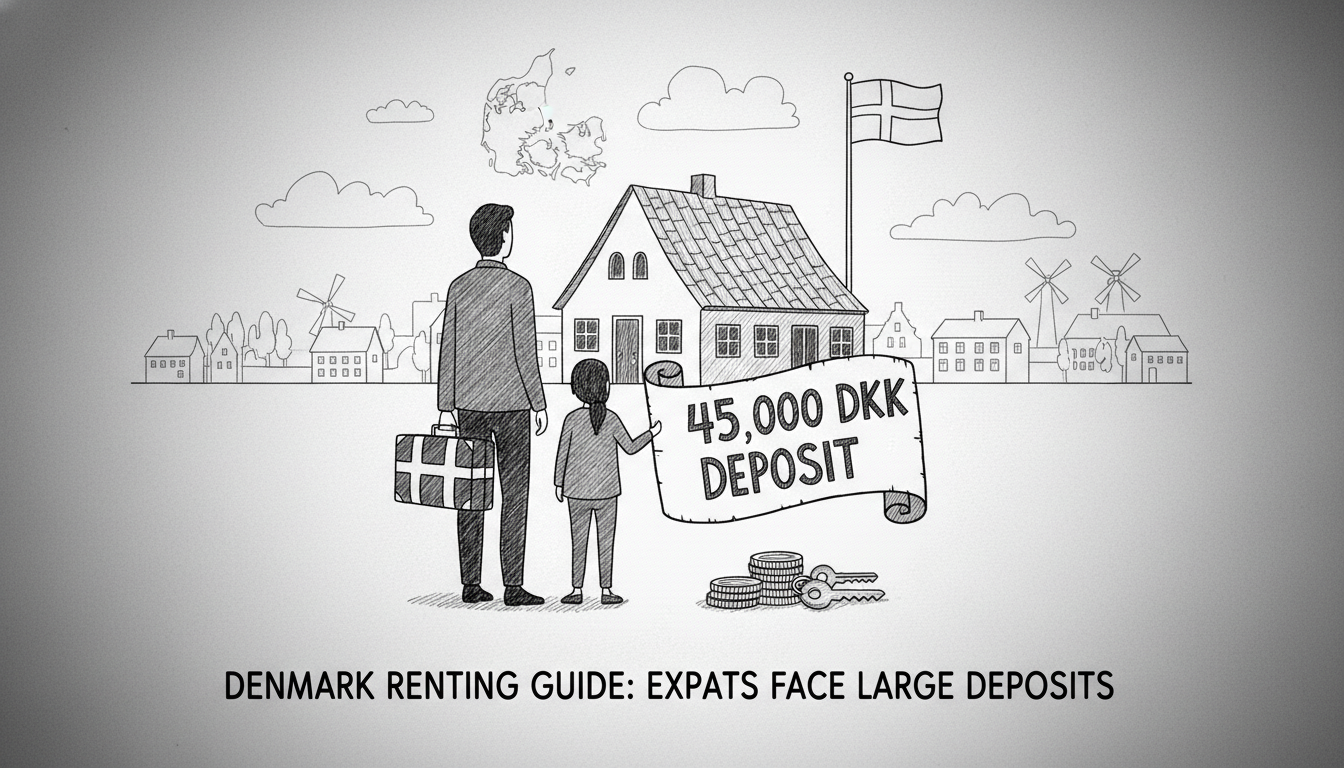
Danish society news often highlights its welfare model, but the rental market presents a significant financial hurdle for newcomers. An average security deposit of three months' rent means expats regularly pay 20,000 to 50,000 Danish kroner upfront before moving in. This system, designed to protect property owners, creates a steep initial barrier to housing in Copenhagen and other major cities. Navigating this process requires understanding contracts, knowing your rights, and meticulous documentation. As a reporter who has witnessed friends navigate this system, I see its fairness tested at the intersection of social policy and personal finance.
The High Cost of a Danish Key
The Danish rental deposit rules are clear but costly. The Rent Act caps a security deposit at three months' rent, a sum that must be placed in a dedicated, locked bank account. For a typical Copenhagen one-bedroom apartment renting between 8,000 and 15,000 DKK monthly, this translates to an initial outlay often reaching 45,000 DKK. This does not include the first month's rent paid in advance. 'The high upfront cost is the single biggest shock for newly arrived internationals,' says Karl Jensen, a legal advisor with the Danish tenant organization LLO. 'It protects landlords but can delay or prevent access to housing for those without substantial savings.' These funds sit in a special account where the landlord cannot access them directly, and the tenant earns interest on the deposit.
Deciphering the Danish Rental Contract
A standard Danish rental contract, governed by the Rent Act, offers strong tenant protections but demands careful reading. Most agreements are for indefinite periods, providing long-term stability. Fixed-term leases are less common. Key clauses to scrutinize include maintenance responsibilities and the rule about who pays for minor repairs, typically those under 1,500 DKK. Signing only a written contract, preferably with an English translation for clarity, is non-negotiable. However, the Danish version is the legally binding document in any dispute. Experts universally advise tenants to document the property's condition with timestamped photos and a detailed inspection form, available from tenant unions, before moving a single box in. Verbal agreements hold little weight in Denmark's formal housing system.
A System of Rights and Recourse
The Denmark social policy framework provides tenants with substantial rights. Rent increases are regulated, often tied to the official net price index, and landlords must justify any hike above this inflation-linked rate. Tenants have three months to challenge an increase they deem unreasonable. For repairs, landlords must act within a reasonable time, with emergency issues like a broken heater in winter requiring attention within 24 hours. In urgent cases where a landlord is unresponsive, a tenant may arrange repairs and deduct the cost from the rent, but must first notify the landlord in writing. Notice periods are typically three months, offering security against sudden eviction. These protections are enforced through the Housing Complaints Board, which processes thousands of cases each year, many concerning deposit returns.
Essential Steps for Expat Tenants
Success in the Danish welfare system's housing corner requires specific administrative steps. Securing a CPR number is the absolute first priority, as this personal identification number is required for all official contracts and to open the mandatory deposit account. You must then register your new address at the local municipality's citizen service center. Joining a tenant organization like LLO or Lejernes LO for an annual fee of 600-800 DKK is a highly recommended investment. These groups provide legal counsel and representation, handling approximately 50,000 member cases annually. They can be invaluable if a disagreement over deposit deductions or rent increases arises. Meticulous record-keeping—from the initial listing and all communications to the move-in inspection report—forms your best defense.
Navigating the Practical Realities
The search itself often begins on digital platforms like BoligPortal or FindRoommate. Competition is fierce, especially in the capital. When you secure a viewing, be prompt, prepared, and professional. Once an agreement is reached, ensure the landlord establishes the deposit account with a bank like Nordea or Danske Bank, with your approval. Both parties receive regular statements. Never hand over a cash deposit directly to a landlord. This practice is illegal and leaves you without protection. The process, while rigid, is designed for transparency. Yet, the high financial entry point remains a topic of debate among integration experts who note it can exclude lower-income workers or students from certain segments of the housing market, challenging Denmark's immigration policy goals of inclusive communities.
The Balancing Act of Security and Access
Analysts point to a core tension in the market. The strong legal protections for tenants, part of the broader Danish welfare system philosophy, necessitate safeguards for landlords. The three-month deposit is that safeguard. However, it creates a clear barrier. 'The system is secure but exclusive at the point of entry,' notes economist Freja Nielsen, who studies urban housing. 'It assumes a level of liquidity that many newcomers, even skilled professionals, may not have immediately after an international move.' This dynamic places a premium on financial planning for expats considering a move to Denmark. It also makes understanding the rules not just helpful, but financially critical. The question remains whether this balance between tenant security and market access could be adjusted to better support integration without undermining the protections that make Danish renting stable for those already housed.