
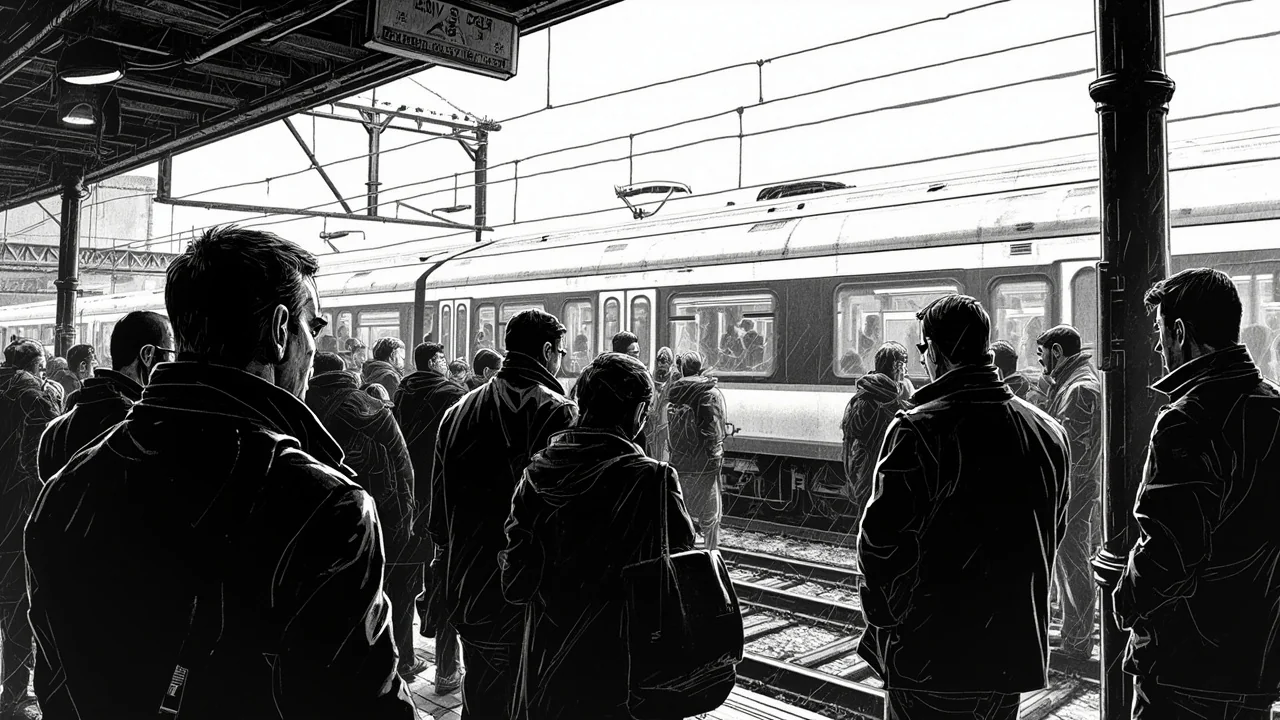
DSB cancelled all 58 regional trains on Denmark's critical Fredericia-Aarhus rail link for over three hours Friday evening. The sudden suspension, announced at 4:30 PM, stranded thousands of passengers and underscored the persistent vulnerability of the nation's transport arteries to extreme weather. A sunken track near Hedensted Station, caused by waterlogged ground after prolonged wet weather, forced the halt of all traffic on one of Jutland's busiest corridors until repairs concluded around 8:00 PM.
Commuter Chaos on a Critical Corridor
For Friday evening commuters and weekend travelers, the announcement triggered immediate disruption. The 110-kilometer Fredericia-Aarhus line forms the backbone of East Jutland's rail network, connecting major hubs like Vejle and Horsens to Denmark's second-largest city. While DSB's intercity and high-speed trains continued running with an extra stop at Hedensted, the cancellation of all regional services left a significant gap. The state railway operator deployed replacement bus services between Fredericia and Vejle, specifically for passengers traveling to and from the smaller south Jutland towns of Børkop and Brejning. 'When there has been a lot of water in the track for a while, the ground can become very soft, and then the track can give way a little,' a Banedanmark press officer explained in a statement, describing the cause of the subsidence.
The incident highlights a recurring challenge for Danish infrastructure. This specific corridor has experienced similar weather-related disruptions in recent winters, raising questions about long-term resilience. Passengers faced uncertainty during the Friday rush, with DSB's online journey planner flashing red warnings and station staff directing travelers to alternative transport. The promise of compensation through DSB's Travel Time Guarantee for delays exceeding 30 minutes offered little immediate solace for those facing cancelled plans and extended travel times.
The Anatomy of a Infrastructure Failure
Banedanmark, the state-owned rail infrastructure company, identified the core problem as geological. The track's foundation softened and sank under the weight of saturating rainwater, a process known as subsidence. This required emergency crews to inspect the line, drain the water, and stabilize the track bed before any trains could safely pass. Such weather-related faults are becoming a familiar narrative in Danish society news, pointing to broader climate adaptation issues. While Denmark's welfare system is famed for social security, its physical infrastructure faces increasing stress from volatile weather patterns.
'These are the precise incidents that test our systems,' said a transport analyst familiar with Danish rail policy. 'The response protocol worked—buses were deployed, information was disseminated—but the frequency of these outages asks a larger question about investment in climate-proofing our critical networks.' The analyst noted that while Copenhagen integration projects often dominate infrastructure headlines, maintaining reliable connectivity across Jutland is equally vital for national cohesion and economic function. The temporary fix on Friday evening allowed normal service to resume by 8 PM, but the underlying vulnerability remains.
Passenger Rights and Systemic Stress
For affected passengers, the primary recourse is DSB's Rejsetidsgaranti, or Travel Time Guarantee. This policy mandates compensation for delays over 30 minutes, with payout amounts scaling with the length of delay. Customers must apply via DSB's website or app, a process that places the burden of claim management on the individual. While this safety net is a standard part of Denmark's social policy approach to consumer protection, it is a reactive solution. It compensates for inconvenience but does not prevent the disruption from occurring in the first place.
The event also reveals the interdependency of Denmark's transport modes. A failure on the rail network increases pressure on roads, as some travelers likely switched to private cars or coaches. Municipalities along the route, already engaged in complex tasks regarding local Denmark immigration policy and service provision, must also contend with the knock-on effects of national infrastructure failures. Social centers and community hubs in towns like Vejle and Horsens indirectly feel the impact when residents face difficulty traveling for work, education, or family visits.
Looking Down the Line
Friday's cancellation was a localized, temporary fault. Yet it serves as a microcosm of a national conversation. How does a nation renowned for its efficient Danish welfare system future-proof the physical systems that underpin daily life? Investment in drainage, ground stabilization, and more resilient track materials represents a significant long-term cost. Banedanmark's ongoing maintenance schedules now must weigh these climate adaptation needs against routine upgrades.
The silent, sinking track near Hedensted is a small symptom of a large challenge. It disrupted thousands of lives for an evening and will generate a ledger of compensation claims. More profoundly, it asks whether Denmark's famed social stability can be maintained without equally stable and reliable infrastructure. As weather patterns become more extreme, the nation's railways, like its society, must find ways to adapt or face increasing disruption. The trains are running again, but the question of resilience remains firmly on track.