
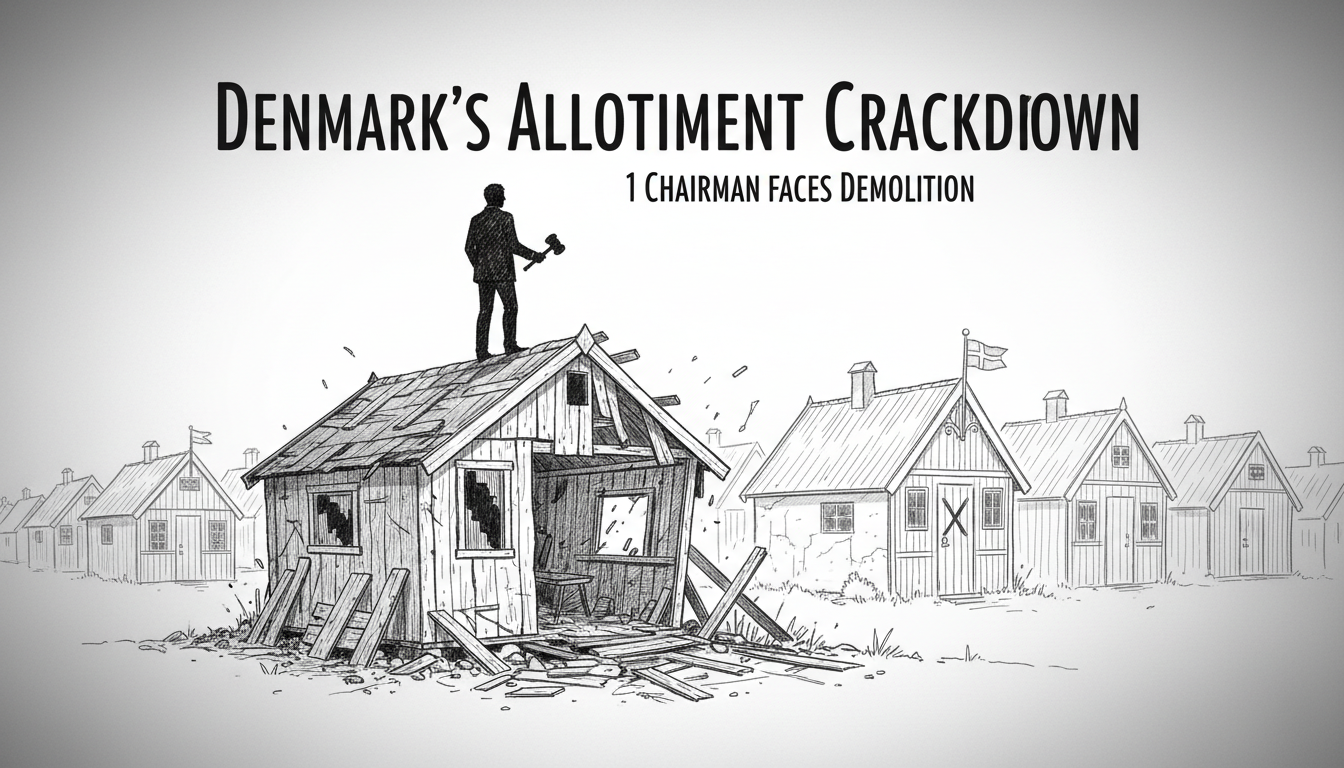
Denmark's strict allotment garden rules are forcing a housing association chairman to tear down his home and find new accommodation. Odense Kommune confirmed widespread violations after an unannounced inspection found lights in windows, cars in driveways, and people living year-round in the recreational plots. This enforcement action highlights the persistent tension between cherished Danish traditions and the pressing realities of the modern housing market.
For the chairman and other residents of the controversial kolonihaveforening, the notice is a life-altering directive. They must now navigate a tight rental market with limited options. The situation in Odense is not isolated, as municipalities across Denmark grapple with similar breaches. These gardens, designed for summer leisure and growing vegetables, are increasingly seen as a last resort for those priced out of conventional housing.
A Tradition Under Pressure
Kolonihaver are a beloved feature of Danish society, offering urban dwellers a patch of green for seasonal use. Regulations explicitly forbid permanent residence to maintain their communal, recreational character. Odense's recent inspection, however, revealed a different reality. Officials observed clear signs of full-time habitation, confirming long-held suspicions about the specific association.
This crackdown comes amid a national conversation about housing affordability. While Denmark's welfare system provides strong social support, its major cities face significant pressure on rental and purchase markets. Experts point to illegal kolonihave occupation as a symptom of these broader systemic strains. For some, the low cost and sense of community in these gardens become irresistible, even if it means breaking the law.
The Human Cost of Enforcement
The immediate human impact is stark. Families and individuals who have made these structures their homes face eviction and the loss of their investment. The chairman, tasked with leading the association, is now personally affected by the rules he is supposed to uphold. Finding a new, legal home in Odense or surrounding municipalities presents a formidable financial and logistical challenge.
Community centers and social workers in Danish municipalities often see the consequences of such enforcement actions. "When people lose even an informal housing solution, the stress and instability can ripple through their entire lives," said a local integration advisor, who asked not to be named. "The question for social policy is always: what happens next? Where do they go?"
A Widespread Challenge for Municipalities
Odense's situation reflects a national enforcement dilemma. Danish municipalities are legally obligated to uphold planning and housing regulations to ensure safety and order. Allowing kolonihaver to become informal settlements sets a problematic precedent and can create substandard living conditions. However, consistent monitoring and enforcement require significant resources.
Urban planning experts note the difficulty in balancing rule-of-law with compassionate social policy. "The kolonihave rules exist for good reason, to preserve a unique urban space," said Professor Lars Jensen, a housing policy analyst. "But when we see persistent violations, it's a clear signal that for a segment of the population, the formal housing market is not functioning as it should. Enforcement is necessary, but it's not a solution to the underlying shortage of affordable options."
The Search for Solutions
The path forward involves more than just demolition orders. Social policy analysts suggest that successful resolution requires coordination between municipal housing departments, planning authorities, and social services. Proactive efforts to connect displaced residents with legitimate housing options, such as social housing waiting lists or housing benefit guidance, are crucial.
Some advocate for a re-examination of whether certain kolonihave areas could be legally rezoned to address housing needs, though this is often controversial. The cherished Danish model of the kolonihave is deeply ingrained, and many fear that formal conversion would destroy its essential character. The challenge is to protect tradition without ignoring the clear social need it is currently, and illegally, filling.
A Microcosm of Broader Tensions
The unfolding situation in Odense serves as a microcosm of wider issues in Danish integration and social policy. It touches on themes of belonging, community, and the limits of the welfare state's reach. The residents living in these gardens are often fully integrated into the social fabric of their local areas—their children attend nearby schools, they shop in local stores—yet their housing status remains precarious and outside the legal framework.
This paradox is at the heart of the matter. Denmark's society functions on a foundation of clear rules and high trust, a system that generally delivers high quality of life. Cases like this reveal the cracks where the system struggles to accommodate everyone. The kommune's duty is clear, but the outcome feels like a loss for community cohesion.
As the chairman prepares to dismantle his home, the episode leaves a lingering question for Danish society. How can it uphold the regulations that preserve its cherished institutions while also addressing the very human needs that lead people to break them? The answer will require more than a control visit; it demands a thoughtful look at the space between policy and lived reality. The future of these green oases may depend on finding a new balance.