
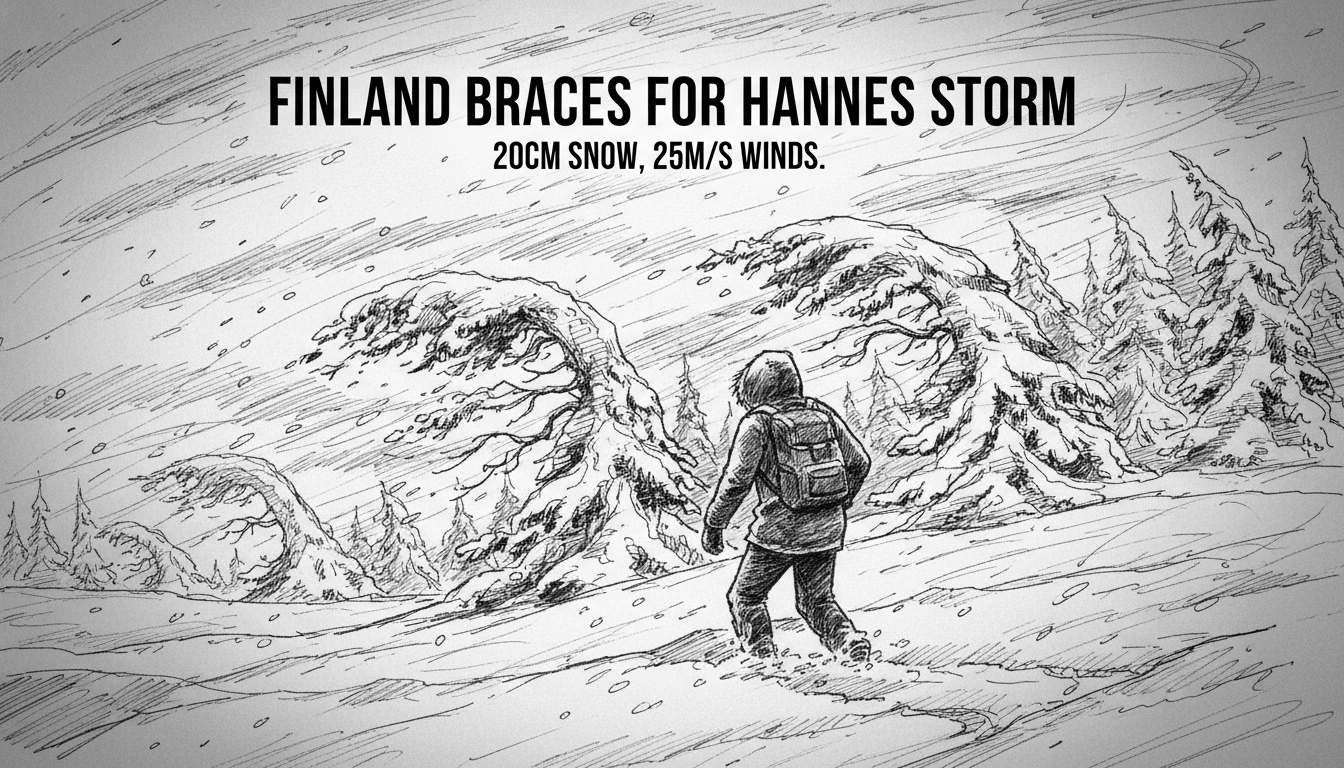
Finland weather forecasts are warning of a major disruption as Storm Hannes prepares to sweep across the country, threatening Christmas travel plans with heavy snow and dangerous winds. The Finnish Meteorological Institute (Ilmatieteen laitos) has issued severe weather warnings for nearly the entire nation, predicting a sharp turn from calm conditions to a powerful winter storm by Saturday. This sudden shift presents a significant test for national infrastructure and holiday travelers during one of the busiest periods of the year.
From Calm to Crisis: A Rapid Weather Shift
Residents across Finland enjoyed relatively mild conditions on Friday, a deceptive calm that weather officials say will not last. The institute's forecast models show a potent low-pressure system, named Hannes, moving across the Nordic region overnight. This system will bring a widespread area of precipitation that will quickly transition to heavy, wind-driven snow in the north and a mix of rain, sleet, and strong gusts elsewhere. The contrast between today's manageable weather and tomorrow's forecasted storm highlights the volatile nature of Finnish winters, where conditions can deteriorate with little warning. Meteorologists stress that the public should not be fooled by the temporary lull, as the situation is expected to change rapidly.
"The storm is developing as we speak over the North Atlantic," said a senior forecaster at the Finnish Meteorological Institute in a public briefing. "We are looking at a very dynamic situation where heavy snowfall will combine with strengthening winds, creating potentially hazardous travel conditions and reduced visibility. The impact will be felt nationwide, but the northern regions are likely to bear the brunt." The institute's warnings are not issued lightly; they follow a strict protocol based on wind speed, precipitation intensity, and the potential for societal disruption.
Specific Threats and Regional Impacts
The storm's impacts will vary significantly from south to north. In Lapland, the heart of Finland's Christmas tourism industry, forecasts predict snowfall accumulations of up to 20 centimeters. This heavy snow, falling on already frozen ground, will be accompanied by strong winds, leading to blowing snow and near-whiteout conditions on open roads and in rural areas. For reindeer herders, forestry workers, and tourists heading to resorts like Levi or Rovaniemi, the storm poses serious operational challenges and safety risks.
In western and coastal areas, including cities like Turku and Pori, the primary threat is wind. Gusts are predicted to reach speeds of up to 25 meters per second, which is strong enough to cause structural damage, topple trees onto power lines and roads, and make driving high-profile vehicles extremely dangerous. The Finnish Transport Infrastructure Agency (Väylävirasto) has already placed its road maintenance teams on high alert, preparing snowplows and emergency response units. Ferry traffic in the Archipelago Sea and across the Gulf of Bothnia is also likely to face cancellations or severe delays due to high waves and poor visibility.
Central and eastern parts of the country, including the capital region of Helsinki, can expect a mix of wet snow, rain, and strong gusts. While snow accumulation here may be less, the combination of icy precipitation and wind creates its own dangers, particularly for road and rail networks. Slippery conditions on highways and at airports could cause cascading delays during a peak travel weekend. The Finnish national railway, VR, has stated it is monitoring the situation closely and may need to adjust schedules, particularly for long-distance northbound services.
Christmas Travel in the Crosshairs
The timing of Storm Hannes could not be worse for domestic travel. This weekend marks the beginning of the main Christmas exodus, as thousands of Finns leave cities to celebrate the holidays with family in their hometowns across the country. Major highways like E75 (heading north to Lapland) and E12 (heading east) are expected to see a sharp increase in traffic volume, precisely when conditions are forecast to be at their worst. This convergence of peak travel and severe weather creates a high-risk scenario for road safety.
Authorities are urging people to reconsider non-essential travel on Saturday. For those who must travel, thorough preparation is essential. The Finnish National Rescue Association (SPEK) recommends packing a winter emergency kit in vehicles, including warm clothing, blankets, food, water, a flashlight, and a shovel. Drivers should ensure their vehicles have suitable winter tires with adequate tread depth and are filled with windshield washer fluid designed for freezing temperatures. Charging mobile phones fully before departure and informing others of your route and estimated arrival time are also critical safety steps.
Air travel is also facing significant headwinds. Helsinki-Vantaa Airport, the nation's primary hub, has acknowledged potential for delays and cancellations, especially for flights to and from northern airports like Kittilä and Ivalo, which are directly in the storm's path. Airlines are likely to issue flexible rebooking policies, and passengers are advised to check their flight status frequently throughout Saturday. The ripple effects of any major disruption could last into Sunday, complicating travel plans for the Christmas holiday itself.
Expert Analysis on a Warming Climate's Role
While severe winter storms are a fixture of Finnish climate history, meteorologists are increasingly examining how broader climate change influences these events. A warming Arctic can alter jet stream patterns, potentially leading to more volatile and unpredictable winter weather in northern latitudes. Although it is impossible to attribute a single storm like Hannes directly to climate change, the increasing frequency of intense precipitation events aligns with long-term climate models for the region.
"What we are observing is consistent with the trends," explained a climate researcher familiar with Nordic weather patterns. "A warmer atmosphere holds more moisture, which can fuel heavier snowfall when temperatures are still below freezing. At the same time, we see stronger low-pressure systems developing over the increasingly ice-free waters of the North Atlantic and Barents Sea. This combination can produce the exact type of powerful, snow-laden storm we are forecasting for Hannes." This analysis suggests that Finland may need to prepare for more frequent and intense winter storms in the coming decades, requiring resilient infrastructure and adaptive crisis management.
Preparedness and Government Response
The Finnish system for handling such crises is well-coordinated but faces a constant test from nature. The Finnish Meteorological Institute acts as the primary warning authority, feeding data to the Emergency Services College and the Ministry of the Interior. Local rescue departments across the country are the first responders, equipped to handle traffic accidents, power outages, and stranded motorists. Municipalities are responsible for keeping primary roads clear, a task that requires immense resources during a widespread storm.
Social media and national broadcasters play a crucial role in disseminating warnings. The institute's website and app provide detailed, location-specific forecasts, while public service broadcasts interrupt programming with severe weather announcements. This multi-channel approach is designed to reach as many citizens as possible, from tech-savvy urban dwellers to elderly residents in remote areas. The effectiveness of this communication will be a key factor in mitigating the storm's impact on public safety.
As Friday evening settles over Finland, the nation is in a state of watchful preparation. The calm before Storm Hannes offers a final window to secure outdoor furniture, check on elderly neighbors, and make informed decisions about weekend plans. The coming 24 hours will reveal how well Finland's society and infrastructure can withstand the force of a major winter storm during its most cherished holiday season. The true measure of resilience is often found not in avoiding the storm, but in navigating through it together.