
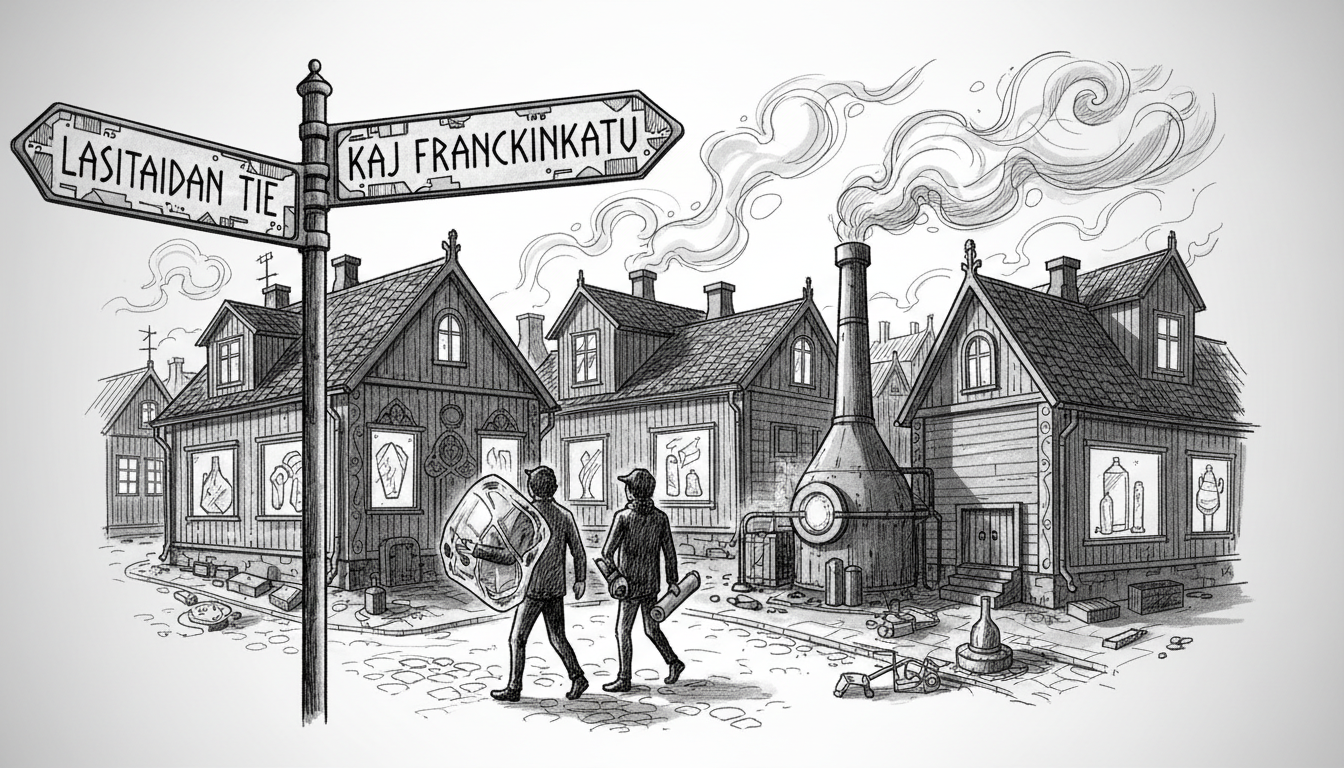
Finland's town of Riihimäki is renaming two streets to honor pioneering female glass artists. The decision by Economic Development Director Anna-Riitta Kujala, finalized on Friday, December 26, 2025, aims to cement the town's identity as 'The Glass City,' but not without local debate.
Mattilantie and sections of Etelän Viertotie will become Helena Tynellin katu and Nanny Stillin katu. The change affects five properties and follows a spring 2025 public consultation that generated twelve formal objections and mixed feedback online. A 14-day appeal period is now underway, concluding in early January 2026.
"Tynell and Still were among Riihimäki glass's most significant designers. They helped create Riihimäki as a glass city," Kujala stated in the city's announcement. "The story of glass is part of Riihimäki's identity and authentic cultural heritage. The city's glass history deserves more visibility in everyday life and the townscape."
A Decision Forged in Public Debate
The path to renaming was not straightforward. The city's consultation process opened the floor to residents, revealing a community divided between pride in its heritage and concern over practical disruptions. While many agreed the artists were deserving, others pointed out that numerous notable figures from the local glass industry lack similar recognition.
This tension is common in urban identity projects. "Renaming streets is one of the most visible ways a community can curate its historical narrative," says Dr. Eeva-Liisa Pelkonen, a professor of urban cultural studies at the University of Helsinki. "It signals who and what the community values most. However, it directly impacts residents' daily lives—their addresses, maps, and personal sense of place. The friction is almost inevitable."
The five affected property owners must now update official documents. The city plans to mitigate confusion during the transition period.
The Foundational Legacy of Riihimäki Glass
The push for recognition is rooted in a profound industrial history. The Riihimäki Glass factory, founded in 1910, was the town's economic and cultural heart for decades. At its peak, it employed hundreds and produced tableware, lighting, and art glass exported worldwide. The factory's closure in 1990 left a void, but its legacy forms the cornerstone of the town's modern branding efforts.
Helena Tynell (1918–2016) and Nanny Still (1926–2009) were giants of this era. Tynell, known as the 'First Lady of Finnish Glass,' created iconic light fixtures and tableware for the Riihimäki factory and major brands like Iittala. Still, a prolific designer also associated with Riihimäki and Iittala, was renowned for her bold, colorful forms in glass and ceramics. Honoring them in the street grid places their contributions permanently on the map.
"This isn't just about history; it's about economic revitalization," argues Mikael Ahlström, a consultant specializing in cultural tourism. "For a town like Riihimäki, differentiating itself is crucial. 'Glass City' is a strong, tangible brand that can attract tourists, inspire creative industries, and foster civic pride. Naming streets after these artists is a low-cost, high-visibility marketing tool."
From Industrial Past to Cultural Future
Riihimäki's strategy reflects a broader Nordic trend where post-industrial towns leverage unique heritage for new growth. The city already houses the Finnish Glass Museum, which draws specialists and tourists. The street renaming is a tactical piece of a larger plan to weave the glass narrative into the physical fabric of the town.
"The city holds a unique cultural-historical trump card," Kujala noted. "A glass city isn't born from speech alone; it requires actions, too. Changing street names is one of these actions."
Not all residents are convinced by the economic argument. Some question whether the symbolic gesture outweighs the hassle. "Of course we're proud of the glass history," said one resident on a local social media forum, who asked not to be named. "But does changing a street name for five houses really build a future? I'd rather see investment in supporting new small glass studios or better promoting the museum we already have."
The Road Ahead for Riihimäki's Identity
The city plans to officially celebrate the new street names with an opening ceremony in spring 2026. This event will likely double as a promotion for Riihimäki's cultural offerings.
The success of such place-making initiatives is often measured in subtle ways: increased visitor numbers, more media mentions as 'The Glass City,' and ultimately, a stronger local economy. For tech and gaming hubs like Helsinki and Espoo, identity is often linked to innovation and startups. For Riihimäki, the path leverages a deep, artistic past.
The debate itself may prove valuable. "Controversy shows people care," Dr. Pelkonen observes. "It gets them talking about their history and what their town represents. The city's challenge is to channel that engagement into sustained support for the broader cultural ecosystem, not just a one-off naming."
As the appeal period runs its course, Riihimäki moves closer to etching the names of Tynell and Still into its daily life. The decision underscores a central question for many Finnish communities beyond the major tech centers: how to honor a defining industrial past while constructing a viable future. In Riihimäki, the answer is being written, one street sign at a time.