
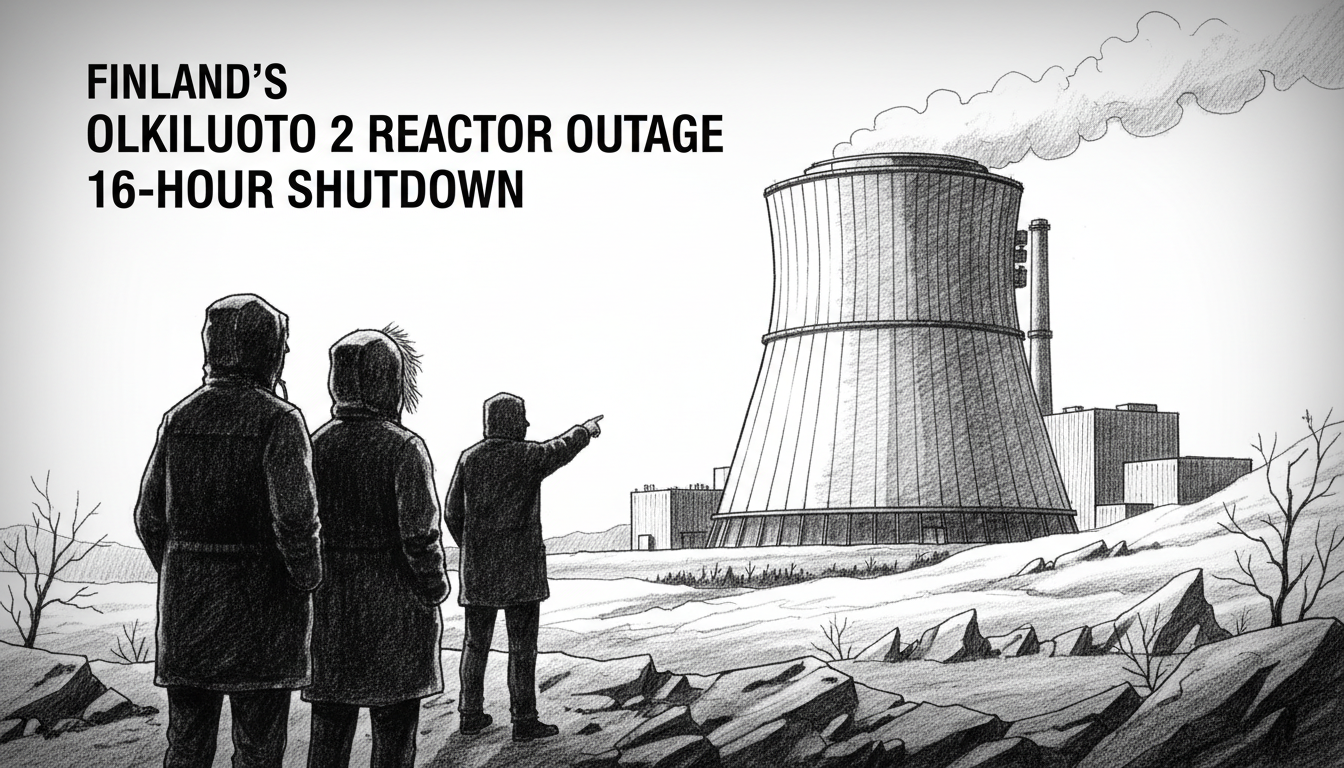
Finland's Olkiluoto 2 nuclear reactor was taken offline due to a technical fault, sparking immediate analysis of its impact on national energy security and electricity prices. The 890-megawatt reactor experienced the disruption at 10:59 AM local time, with the Nordic power exchange Nord Pool estimating a restoration time of approximately 16 hours. This unplanned outage at one of the country's key power generation assets comes as Finland continues its ambitious transition toward carbon neutrality, a goal heavily reliant on stable nuclear output. The incident highlights the delicate balance of the Nordic power grid and the critical role of nuclear energy in Finland's climate strategy.
A Technical Fault in a Strategic Asset
The Olkiluoto 2 reactor, owned and operated by Teollisuuden Voima Oyj (TVO), is a cornerstone of Finland's baseload electricity production. Located on Olkiluoto Island in Eurajoki, the plant's two operational reactors, OL1 and OL2, have been workhorses for the national grid. The specific nature of the technical fault has not been publicly detailed by TVO, but all such events trigger stringent safety protocols. Finnish nuclear regulator STUK monitors these situations closely, requiring operators to follow established procedures for shutdown, investigation, and restart. "Any unplanned outage is taken seriously," said a Helsinki-based energy analyst who requested anonymity due to client relationships. "The immediate questions are about safety, cause, and duration. A 16-hour estimate suggests it's a contained issue, not a major safety event, but it will test the system's resilience."
The timing of the outage, though coincidental, places a spotlight on Finland's energy infrastructure. Nuclear power provided roughly 30% of Finland's electricity production in 2022. The loss of nearly 900 MW of constant, carbon-free power requires compensation from other sources. This typically means increased generation from hydro power, combined heat and power (CHP) plants, or imports via cross-border connections from Sweden, Norway, and Estonia. During periods of low wind or hydro reserves, however, the gap may be filled by fossil-fuel-based generation, impacting both carbon emissions and wholesale electricity prices on the Nord Pool exchange.
Grid Stability and Price Implications
The Nordic electricity market is highly integrated, and a sudden loss of capacity in one country affects the regional balance. Nord Pool's public notification of the outage and its duration is a standard market transparency measure, allowing traders and grid operators to adjust. "An outage of this magnitude and duration will certainly be factored into the day-ahead and intraday pricing," explained Dr. Laura Saarikoski, an energy markets researcher at the University of Helsinki. "The impact on consumer prices today may be muted if alternative capacity is readily available. The real test is whether the estimated 16-hour window is accurate. Prolonged outages have a compounding effect on prices and system planning."
Finland's journey toward its 2035 carbon neutrality goal makes nuclear energy a non-negotiable component of its energy mix. The intermittent nature of wind and solar power necessitates stable baseload generation, a role nuclear fills without direct CO2 emissions. The Olkiluoto 3 reactor, a 1600 MW European Pressurized Reactor (EPR), is in the final stages of commissioning and will eventually dwarf the output of OL2. Its repeated delays, however, have underscored the risks of over-reliance on single, massive projects. The OL2 outage serves as a reminder that even established reactors require maintenance and can face unexpected faults, emphasizing the need for a diverse and flexible energy system.
This incident occurs within a complex political and regulatory framework. The Finnish Parliament, the Eduskunta, has consistently backed nuclear power as part of the nation's climate and energy strategy. Policy decisions made in Helsinki's government district have long-term implications for energy security. The Ministry of Economic Affairs and Employment closely monitors such disruptions, assessing their impact on national targets. Furthermore, Finland's energy policy is increasingly interwoven with EU directives on climate, energy union governance, and market integration. A stable domestic nuclear fleet is seen as strengthening Finland's position in regional energy cooperation and its ability to meet binding EU climate commitments.
The Broader Context of Finnish Energy Security
Beyond immediate price effects, the outage invites a broader discussion on resilience. Finland has invested heavily in interconnectors to bolster its security of supply. The recent commissioning of the 650 MW Fenno-Skan 2 link to Sweden and the planned 700 MW Aurora Line to northern Sweden are designed to mitigate domestic generation shortfalls. However, the Nordic region as a whole can face simultaneous stress from cold spells or low hydropower reserves, making domestic generation paramount. "Nuclear provides energy independence," notes Professor Antti Majanen from Aalto University. "When OL2 is offline, we import more. That's the market working, but it also exposes us to price volatility and availability in neighboring countries. It reinforces why maintaining our existing nuclear fleet is a strategic priority."
TVO's operational history with OL1 and OL2 is generally considered strong, with high capacity factors typical of the Finnish nuclear sector. Planned outages for refueling and maintenance are scheduled years in advance to minimize market disruption. Unplanned outages, while infrequent, are an operational reality for any complex industrial facility. The response protocol involves isolating the fault, conducting repairs under regulatory oversight, and performing rigorous safety checks before reconnection to the grid. The 16-hour public estimate suggests TVO's engineers have identified the issue and believe it can be resolved within a single work shift, but nuclear restarts are never rushed.
Looking Ahead: Reliability in the Green Transition
As Finland looks to phase out coal and reduce its reliance on imported fossil fuels, the reliability of its nuclear and renewable fleet becomes even more critical. The Olkiluoto 2 event is a minor blip in the grand scheme, but it is a data point in the ongoing assessment of energy system robustness. Each unexpected shutdown provides lessons for operational procedures, spare part inventories, and grid management. For policymakers in Helsinki, it reaffirms the importance of a balanced energy portfolio that can withstand the loss of any single unit without jeopardizing climate goals or economic stability.
The coming hours will show if TVO meets its restoration timeline. Once OL2 is safely back online, the focus will shift to the official fault analysis report to STUK and any longer-term maintenance implications. For now, the Finnish power system is absorbing the shock. The incident underscores a fundamental truth of the energy transition: ambitious climate targets depend not just on building new clean capacity, but also on the meticulous, safe operation of the foundational assets already in place. As the sun sets over the Olkiluoto island, engineers will be working to ensure that this cornerstone of Finnish electricity production returns to its silent, steady service.