
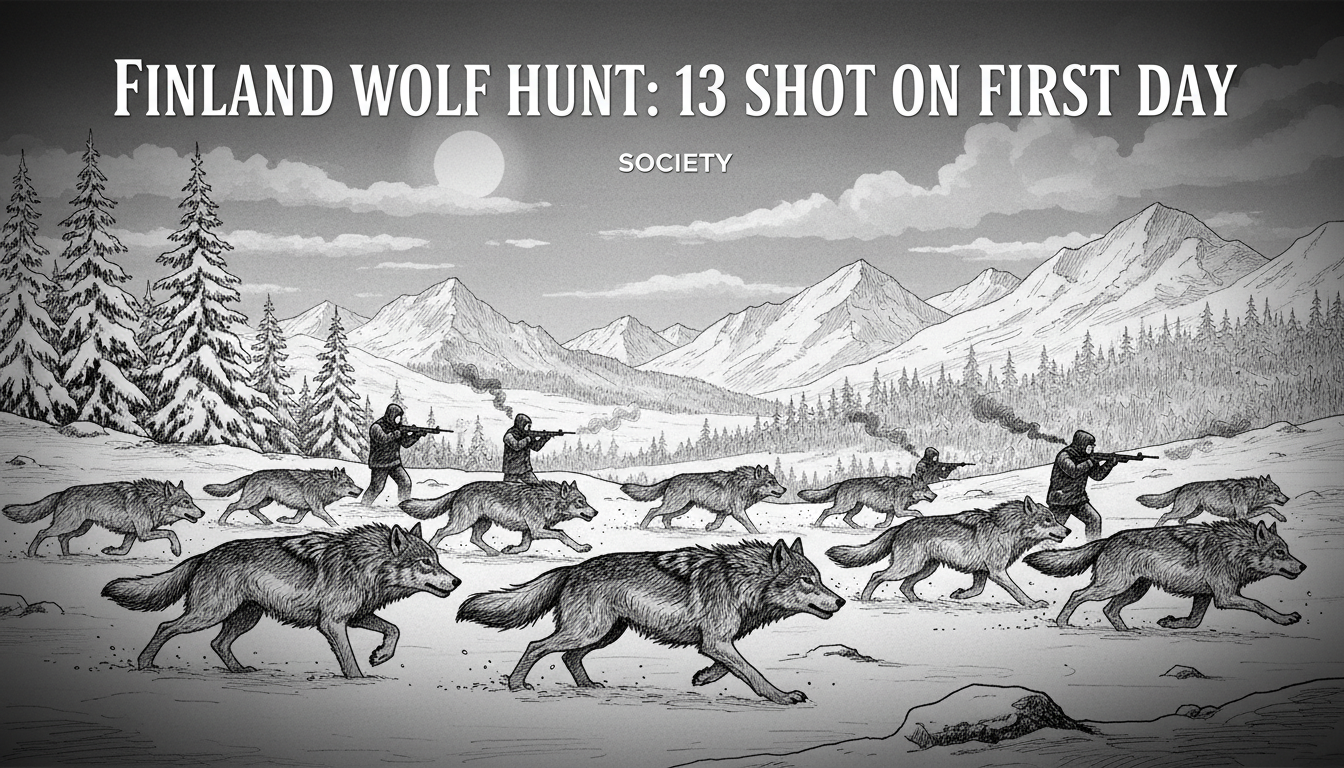
Finland's wolf hunting season opened with a surge of activity, as hunters shot 13 wolves within the first 24 hours. The hunt, permitted until February 2026 following a legislative change, has a national quota of 100 wolves outside reindeer herding areas. The immediate intensity of the hunt highlights the deep-seated tensions between rural communities, conservationists, and wildlife management authorities in the Nordic nation.
"Today was the kind of day when you get a catch," said Pasi Sikala, chairman of the Nivala Eränkävijät hunting association. Sikala, who was not personally involved in the day's hunt, described wolf hunting as "a bit of a game of luck." His region in Northern Ostrobothnia saw half of its four-wolf quota filled on the opening day. The rapid start demonstrates hunters' eagerness to utilize the newly available hunting window.
A Controversial Legislative Shift
The hunt follows a significant amendment to Finland's hunting law, which removed the wolf's year-round protected status. This legislative shift, driven by persistent concerns from rural areas about livestock predation and safety, has been met with strong opposition from conservation groups. Organizations like the Finnish Association for Nature Conservation argue that the hunt violates the EU's Habitats Directive, setting the stage for potential legal challenges at the European level.
Hunting is strictly regulated despite the controversial change. The Finnish Wildlife Agency trained designated hunt leaders in December. Each wolf hunt must be conducted as a group hunt under the supervision of a named leader and sufficient deputies, primarily for safety reasons. "The operation is carried out as a group hunt for safety," Sikala explained, noting the wolf's speed and the challenges of the hunt, which often involves dogs at significant risk.
Quotas Filling Rapidly in Key Regions
The impact of the first day was most pronounced in specific quota areas. On the border of Kauhajoki and Isojoki, within the Lauhanvuori quota area, hunters shot three of the allocated six wolves immediately. This 50% depletion of a local quota in a single day raises questions about the distribution of hunting pressure and the sustainability of such rapid offtake in specific wolf territories.
Sikala stated that the large number of hunting enthusiasts in the vast area ensured plenty of participants for wolf hunts. He noted that no special permit is required for wolf hunting in most of Finland, as it is included in local hunting clubs' rental agreements. However, hunters must possess valid hunting rights and legal firearms. The chairman reported no incidents of harassment or sabotage against hunters in his association, suggesting the criticism is currently more vocal online than on the ground. He reminded the public that interfering with legal hunting is a punishable offense under Finnish law.
Balancing Ecology and Rural Livelihoods
The wolf hunt sits at the heart of a complex debate balancing biodiversity, rural traditions, and animal welfare. Finland's wolf population has experienced fluctuations, leading to constant adjustments in management policy. Pro-hunting advocates, often from rural communities, argue that controlled hunting is necessary to manage pack sizes, reduce livestock conflicts, and maintain social acceptance for wolves in the landscape. They contend that a managed population is a tolerated population.
Conservationists counter that Finland's wolf population, estimated at around 300 individuals before the hunt, is not robust enough to sustain an annual hunt of this scale without genetic and demographic risks. They emphasize the wolf's role as a keystone predator in ecosystems and warn that hunting could disrupt pack structures, potentially leading to more unpredictable behavior and increased livestock conflicts—the opposite of the intended outcome.
The Path Forward and EU Scrutiny
The coming weeks will test the implementation of the new policy. With quotas in some areas already half-spent, the total national quota of 100 wolves could be met well before the February 2026 deadline. This scenario would force authorities to decide whether to close the season early or consider—contentiously—adjusting quotas. All activity is under the watchful eye of the European Commission, which has previously questioned Finland's wolf management plans.
The Finnish government's approach aims to walk a tightrope, using regulated hunting as a tool to address rural concerns while theoretically maintaining a favorable conservation status for the species. The effectiveness of this strategy, and its compliance with European law, will be judged by the population trends that emerge in the years following this hunt. The opening day's tally of 13 wolves is not just a number; it is the first concrete data point in a high-stakes national experiment in large carnivore coexistence.
As Sikala noted, enthusiasm for the hunt's opening day varied. "It depends on who you ask," he said. "Some are certainly more eager than others." This simple statement encapsulates the national divide. The echo of those first shots across Finnish forests marks the beginning of a new, uncertain chapter in the long and fraught relationship between Finns and the wolf.