
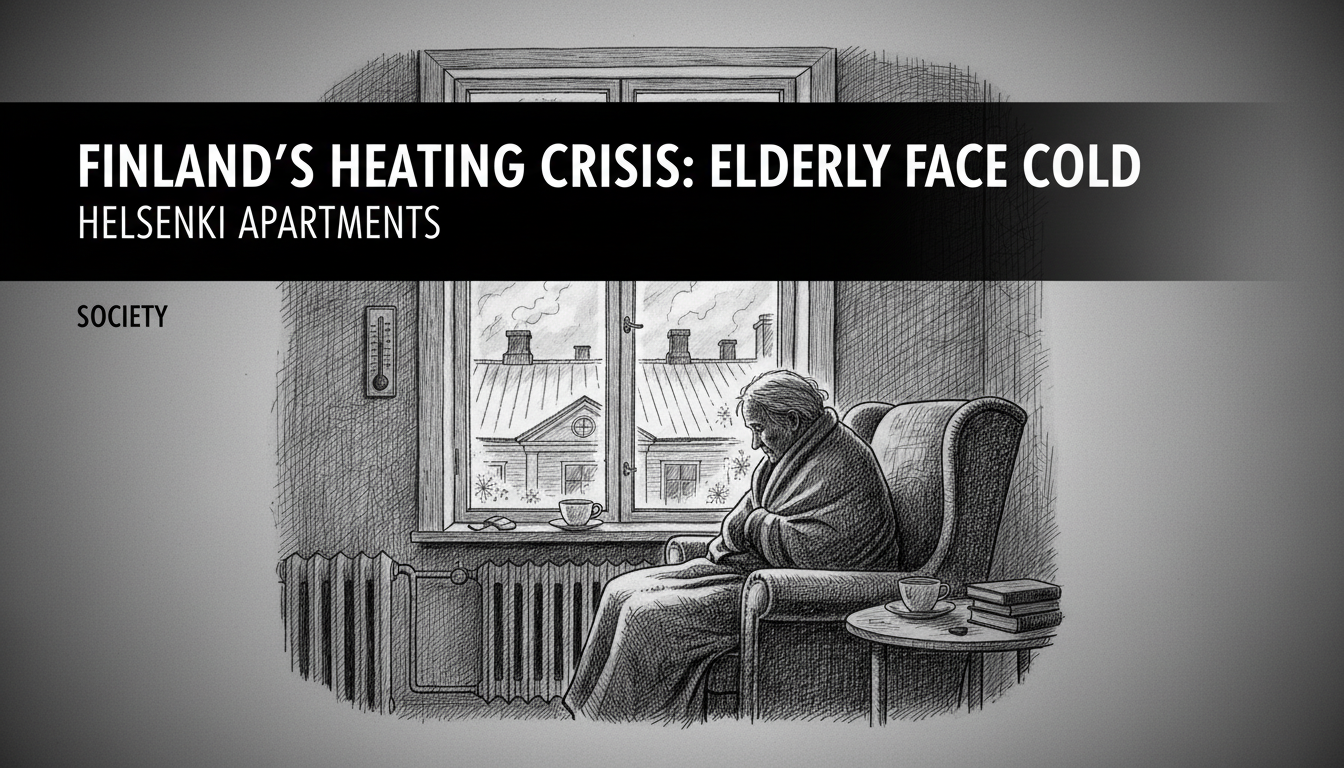
Finland's elderly residents are enduring dangerously low indoor temperatures in some of Helsinki's most prestigious neighborhoods, exposing a growing crisis in the nation's housing infrastructure. Mirja Noland, a 75-year-old pensioner, spends her tenth winter in a state-owned apartment in Kruununhaka where the temperature hovers around 17 degrees Celsius, forcing her to sleep in a wool hat and rely on hot water bottles for warmth.
A Chilling Reality in a Prime Location
Noland's one-room apartment is in a building constructed in 1904, located in Kruununhaka, one of Helsinki's oldest and most desirable districts. Despite the area's high property values, her daily life is dominated by the cold. She has developed a routine of cooking oven meals to generate heat and taking hot showers to warm her body. She has stuffed blankets against the front door to block drafts from the hallway, a makeshift solution to a systemic problem. "I wake up sometimes at night from the cold," Noland said, describing a reality that contradicts Finland's reputation for efficient, reliable heating.
Her layered clothing—wool leggings, regular leggings, long wool socks, and slippers made from dog hair—is a testament to the inadequacy of her apartment's heating system. Finnish building codes typically mandate minimum indoor temperatures of 20-21°C for residential habitability, but older buildings often fall short due to outdated infrastructure. Noland has contacted her housing maintenance company, or taloyhtiö, multiple times, but no permanent solution has been found.
The Systemic Failure of Old Infrastructure
Finland's reliance on district heating, which serves about 57% of homes, is a point of national pride. In Helsinki, a vast network of underground pipes delivers heat to apartment blocks. However, this system's effectiveness depends on the condition of the building it serves. Pre-war buildings like Noland's frequently suffer from poor insulation, aging radiators, and inefficient window seals, creating pockets of cold even within a well-functioning district network.
Housing maintenance companies are legally responsible for ensuring apartments meet basic standards, including adequate heating. The challenge is financial and logistical. Comprehensive energy renovations in historic buildings are complex and expensive, requiring consensus among all apartment owners in the housing company. For elderly residents on fixed pensions, the prospect of special assessments for major renovations can be daunting, creating a stalemate where temporary suffering is preferred to unaffordable debt.
"This is a classic conflict between preserving architectural heritage and ensuring modern living standards," said Elina Saarelainen, a housing policy researcher at the University of Helsinki. "The building stock from the early 1900s is beautiful but often energy-inefficient. Renovations must balance historical value with the urgent need for thermal comfort, especially for vulnerable populations."
A National Policy Blind Spot
The situation highlights a gap in Finnish social policy. While there are subsidies for energy renovations and general housing support (asumistuki), there is no specific, rapid-response mechanism for tenants suffering from inadequate heating in otherwise sound apartments. The process relies on tenant complaints prompting action from the housing company, which can be slow and bureaucratic.
For the elderly, the health risks are significant. Prolonged exposure to cold temperatures increases the risk of respiratory illnesses, cardiovascular strain, and hypothermia. The mental health impact—the constant stress and discomfort of being cold in one's own home—is also severe. "Your home should be a sanctuary, not a source of daily hardship," Saarelainen noted. "When basic thermal comfort isn't met, it undermines everything else."
This is not just an issue of old pipes; it's a question of dignity. Noland's efforts—the oven meals, the hot showers, the layered blankets—represent a determined attempt to maintain normalcy. Yet, these are personal adaptations to a systemic failure. The responsibility ultimately lies with the property owner, in this case, a state-owned entity, to ensure the apartment is habitable year-round.
The EU Context and Energy Efficiency Goals
Finland's struggle with its old building stock occurs within a broader European Union push for energy efficiency. The EU's Renovation Wave strategy aims to double renovation rates to cut emissions, a goal that directly implicates buildings like Noland's. However, the gap between ambitious climate targets and the lived reality of elderly residents is stark. Deep energy retrofits are capital-intensive and disruptive, often pushing them down the priority list for housing companies focused on immediate, cheaper fixes.
Finland has its own national targets for improving building energy performance. Yet, the pace of renovation in the oldest, most problematic buildings remains slow, often leaving the most vulnerable tenants in the cold—literally. Experts argue that policy needs to better target support for the elderly and low-income residents trapped in inefficient apartments, combining renovation subsidies with temporary heating assistance.
Seeking Solutions Beyond the Thermostat
Solving cases like Mirja Noland's requires a multi-faceted approach. First, housing maintenance companies must be held to a stricter standard of responsiveness for heating complaints, with clear timelines for assessment and repair. Second, municipal health and social services could play a more proactive role in identifying at-risk residents living in substandard conditions, acting as an advocate between tenant and landlord.
Third, and most crucially, funding mechanisms for renovating historic, energy-inefficient buildings need to be strengthened. This could involve increased government grants specifically tied to improvements that benefit vulnerable tenants, or low-interest loans for housing companies that prioritize health and safety upgrades. Preserving Helsinki's historic charm should not come at the cost of its residents' well-being.
Mirja Noland's cold apartment in a prime Helsinki district is a paradox that challenges Finland's self-image as a model of functional welfare and modern living. It reveals how aging infrastructure, bureaucratic inertia, and policy gaps can converge, leaving individuals to battle the cold alone. As another Finnish winter sets in, the question remains: how many other elderly residents are layering up, not for a walk in the crisp air, but for another day inside their own uncomfortably cold homes?