
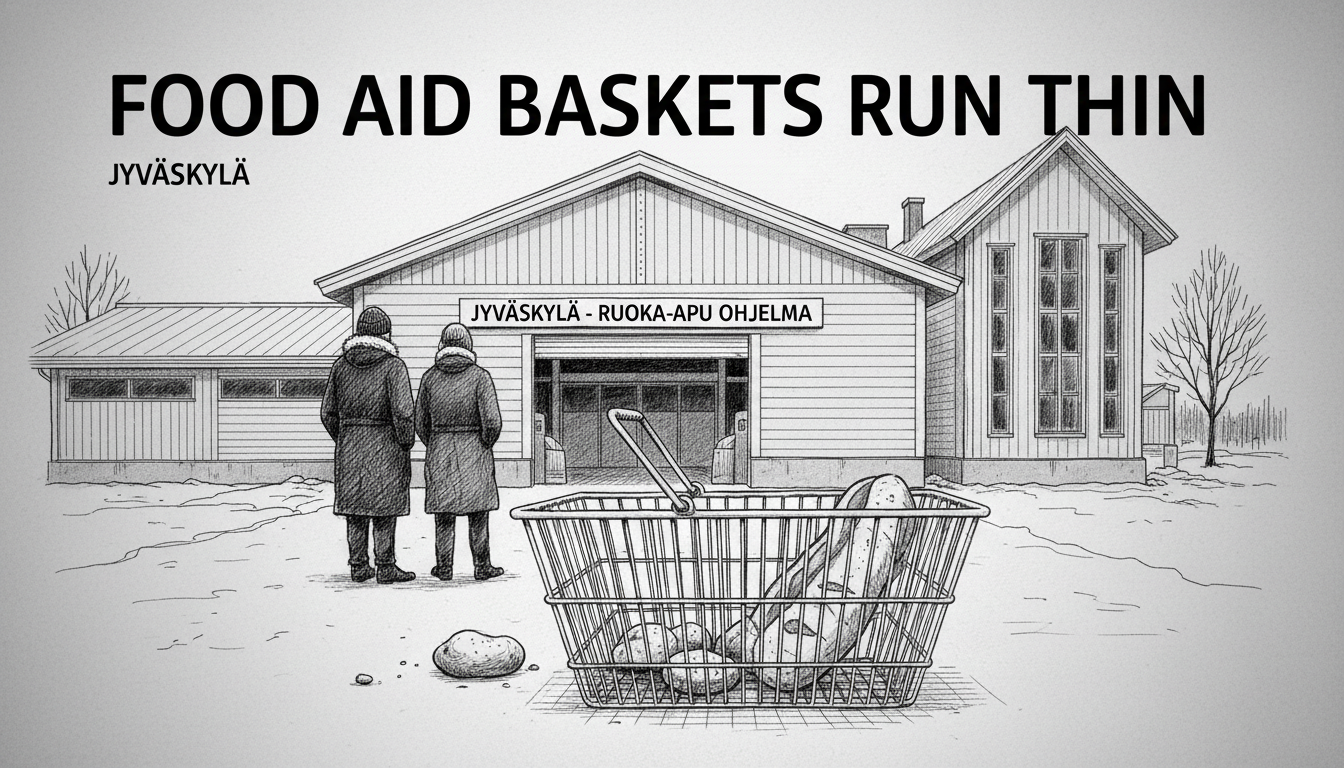
The shelves at the Lyydia food aid center in Jyväskylä are looking unusually sparse. This Finnish city's official food assistance program is experiencing a significant shortage of donations from local supermarkets. The program relies heavily on surplus goods from retailers, a stream that has recently slowed to a trickle. This situation highlights a growing vulnerability in Finland's social safety net, which increasingly depends on private sector partnerships.
Carita Salkojärvi, the network coordinator for Jyväskylän Suvanto, which runs the Lyydia program, described the recent offerings. She said in a statement that last week's food basket contained hamburger sauce, a toothbrush and toothpaste, candy pastilles, and bread. People receiving the aid were quite disappointed with the selection. Today was an exceptionally good day, with fresh vegetables available alongside the usual staples.
The Lyydia program is a formal collaboration between the City of Jyväskylä, the Central Finland Wellbeing Services County, the local Evangelical Lutheran parish, and various non-profit organizations. This public-private model is common across Finnish municipalities for addressing food insecurity. The current shortfall in Jyväskylä points to a broader, systemic issue where essential welfare services are subject to the fluctuating generosity and operational cycles of commercial entities.
Food waste reduction campaigns, often called 'waste hustle' or 'hävikkitalkoot' in Finnish, have been highly successful. These initiatives encourage supermarkets to donate nearly-expired or surplus food. Their success, however, creates a paradox. When stores become more efficient at managing inventory, they generate less surplus to donate. Food aid programs then face shortages precisely because the commercial sector is optimizing its operations. This leaves vulnerable populations caught between corporate efficiency and social need.
The situation in Central Finland reflects a national conversation about the role of the state versus the market in welfare provision. While EU directives push for circular economies and reduced waste, the practical outcome can strain local charity networks. The Eduskunta, Finland's parliament, has debated more stable funding models for basic assistance, but concrete policy changes have been slow. For now, organizations like Jyväskylän Suvanto must navigate the uncertainty of donated goods. The immediate future for recipients in Jyväskylä means food baskets with less nutritional variety and more processed, non-perishable items, a clear step back from Finland's goals of comprehensive social support.