
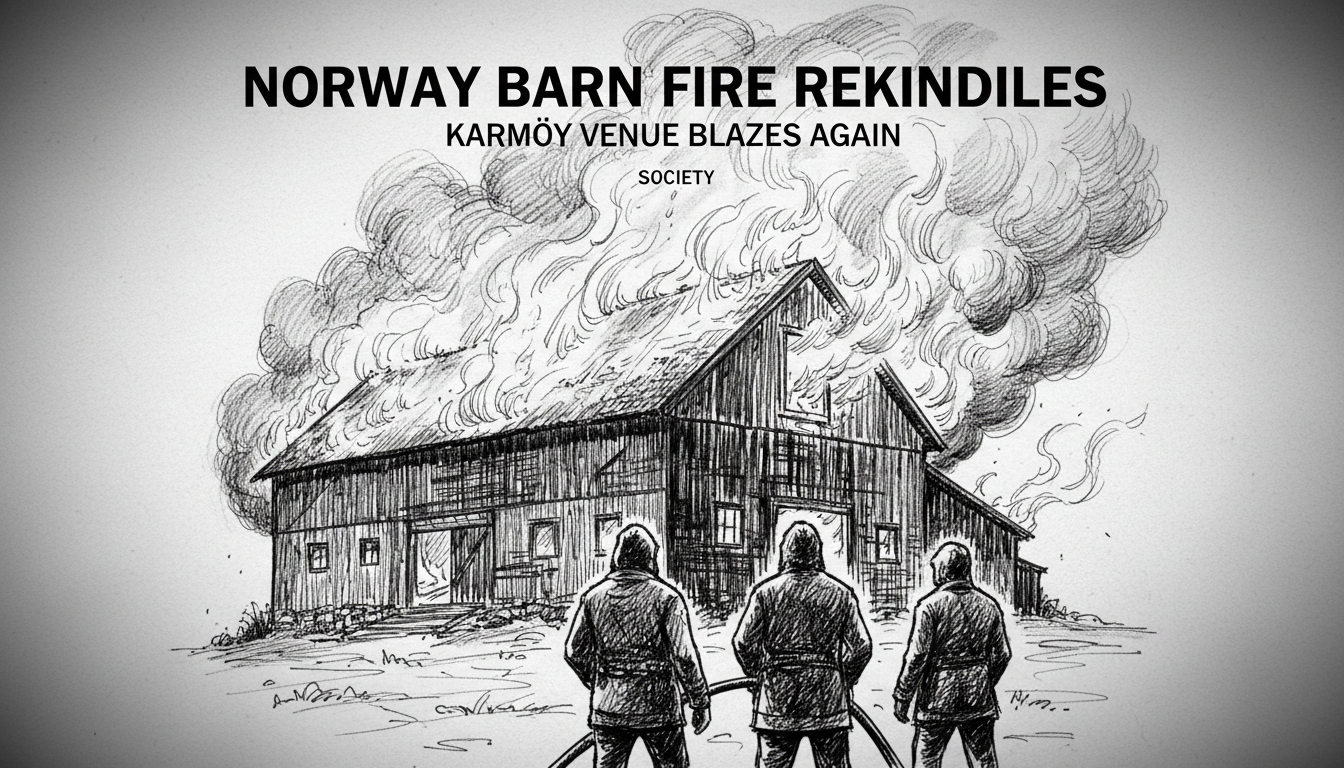
Norway fire crews are battling a reignited blaze in a barn on the island of Karmøy, hours after they believed it was extinguished. The barn, used as a party venue, erupted in flames again on Thursday afternoon, producing heavy smoke that officials say is blowing away from nearby homes. Firefighters had initially gained control of the fire between noon and 1 p.m., but open flames reappeared, forcing a renewed response.
“It has flared up again in the building and there are now open flames on site,” said duty officer Tor Kåre Steinskog. “I would assume they will gain control relatively quickly.” He confirmed that fire crews were on the scene and actively working to suppress the fire. The structure, which has other uses besides housing animals, is a known local gathering spot.
A Persistent and Challenging Blaze
This incident highlights a common and dangerous characteristic of fires in older wooden structures: the high risk of reignition. Barns, particularly those built with traditional Norwegian timber, are porous and can trap embers deep within their beams and walls. Firefighters may extinguish visible flames, but smoldering heat can persist for hours, eventually finding new oxygen and fuel to burst back into life.
“Complete extinguishment in these types of buildings is a labor-intensive process,” explained a veteran fire safety consultant familiar with Norwegian rural architecture. “It requires extensive overhaul—literally pulling apart sections of the building to find and cool every single hot spot. If that isn’t done, you’re just waiting for the wind to change.” The consultant noted that the barn’s conversion to a party venue, or ‘festlokale’, introduces complex questions about fire loads from furniture, decorations, and electrical systems.
The Dual Life of a Rural Building
The barn’s primary function as a social space, not a farm building, is a key detail. Across Norway, and particularly in regions like Rogaland, repurposing older agricultural structures is a popular way to preserve cultural heritage while creating community hubs. However, this adaptive reuse brings modern safety requirements into conflict with historical construction methods.
Such venues must comply with strict Norwegian fire safety regulations (brannvernforskriften). These rules govern everything from the number and placement of exits to the installation of smoke detectors and fire-resistant materials. An older barn, with its dry wood and potential hidden voids, presents inherent challenges in meeting these standards. Local municipal building authorities are responsible for inspecting and licensing such venues.
“When a building changes its core use, its risk profile changes entirely,” the fire safety consultant added. “What was once a storage space for hay is now a space filled with people, sound systems, and lighting. The investigation into this fire will certainly examine whether the current use aligned with its safety certifications.”
Community Impact and Emergency Response
Karmøy, an island municipality north of Stavanger, is a blend of coastal industry, including offshore energy supply, and traditional communities. A fire in a well-known local venue resonates deeply. While officials reported the smoke was drifting away from residential areas, the sight of a renewed plume would have caused significant concern.
The Rogaland Fire and Rescue Service’s response demonstrates the standard protocol for such incidents. Initial knockdown of the fire is followed by a prolonged period of monitoring and overhaul. The reignition suggests that either the overhaul phase was incomplete, or a deeply seated ember was missed. Modern firefighting techniques often use thermal imaging cameras to detect these hidden hot spots, but they can be elusive in thick, dense timber.
Norway has a strong tradition of volunteer fire departments, especially in rural areas, working in tandem with professional crews. Their knowledge of local building structures is invaluable. The speed with which crews returned to the Karmøy barn indicates a high state of alert and an understanding of the persistent risk.
Broader Questions for Norwegian Fire Safety
This incident, while localized, touches on a national conversation about safety in repurposed wooden buildings. Norway’s architectural heritage is deeply tied to wood, from the stave churches to coastal boathouses and inland barns. As communities seek to keep these structures alive through new uses, the balance between preservation and protection becomes critical.
Are the existing regulations sufficient for these hybrid buildings? Is there adequate guidance and support for owners converting agricultural properties? The investigation into the Karmøy fire will likely inform these ongoing discussions. Data from the Norwegian Directorate for Civil Protection (DSB) shows that building fires, while declining in overall number, remain a significant property risk, with electrical faults and human error as leading causes.
For now, the focus remains on the ground in Karmøy. The priority is the complete and final extinguishment of the blaze, ensuring the safety of firefighters and preventing any spread. Once the site is cold, the work of understanding why the fire came back to life will begin. That analysis will determine if this was an unavoidable challenge of fighting fire in wood, or if it points to broader issues needing attention. The charred skeleton of the barn, intended for celebration, now stands as a stark reminder of fire’s tenacity.