
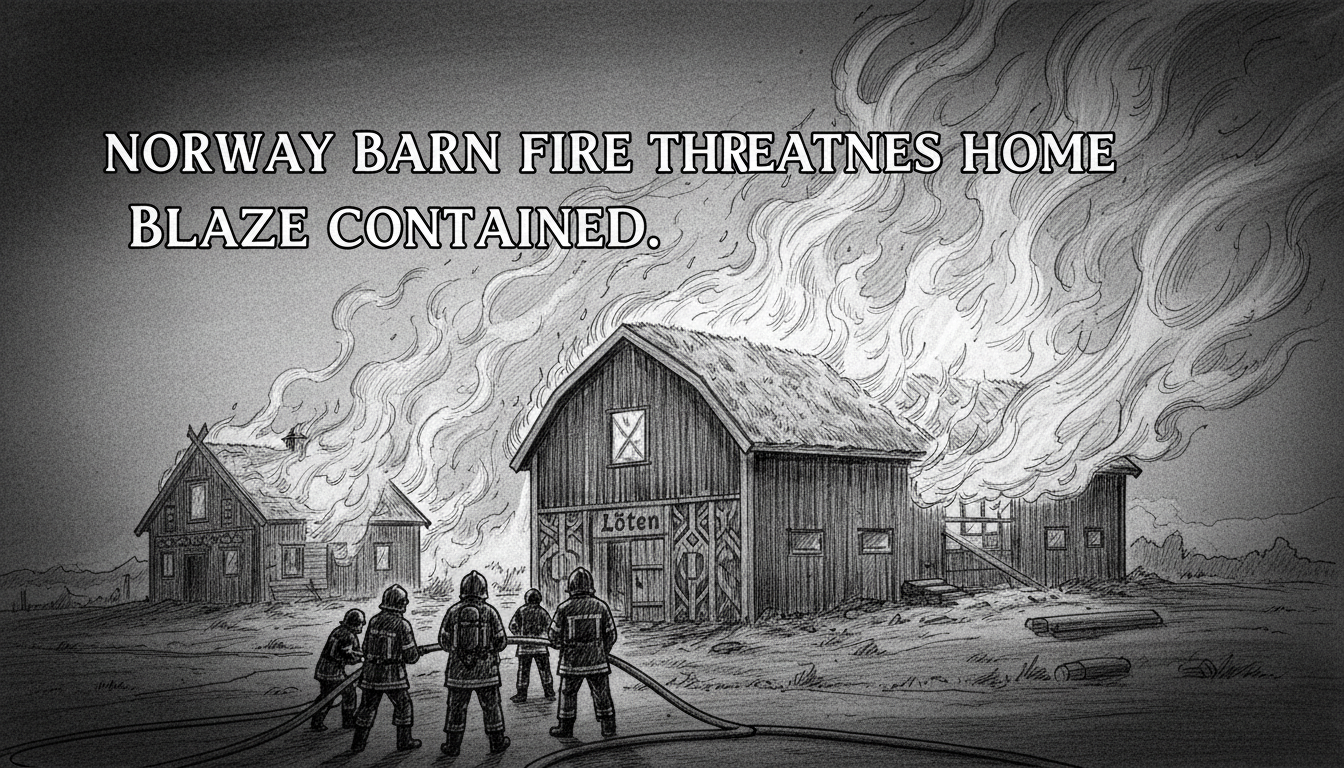
Norway emergency services battled a major barn fire in Løten municipality overnight, working to prevent flames from destroying a nearby family home. The blaze, reported just after 9 PM, completely destroyed the wooden barn and several vehicles stored inside. Police confirmed no injuries but described the barn as a total loss.
Firefighters from multiple stations focused their efforts on creating a defensive perimeter around the adjacent residential house. Strong winds in the rural area northeast of Oslo posed a significant challenge, threatening to carry embers onto the dwelling's roof. The operation continued for several hours before the spread was fully contained.
A Rural Nightmare Scenario
Rural fires in Norway present unique difficulties for emergency responders. The barn, or 'låve', typically contains highly combustible materials like hay, straw, and machinery fuel. These materials create an intense, fast-moving fire that can overwhelm standard suppression efforts. Wooden construction, common in Norwegian farm buildings, adds to the fuel load and collapse risk.
Access to water is often the primary obstacle. Unlike urban centers with pressurized hydrant systems, farms rely on ponds, tanks, or distant lakes. Fire trucks must shuttle water to the scene, a process known as water relay, which drastically slows the attack. In this incident, responders likely drafted water from local sources to maintain a continuous stream on the exposed home.
The Science of Stopping the Spread
Fire experts explain that preventing extension to a nearby structure involves both active and passive tactics. "The priority shifts from saving the burning building to protecting exposures," said a veteran fire safety instructor familiar with Norwegian rural operations. "You cool the adjacent structure with master streams, remove any combustible materials from its immediate vicinity, and wet down the surrounding ground."
This often means sacrificing the original building to concentrate resources. The collapsed barn in Løten indicates the fire's ferocity and the correct tactical decision to abandon interior attacks. Creating a firebreak by removing fuel in the path of the flames is critical. Firefighters would have cleared away garden furniture, firewood piles, or dry vegetation near the house.
Weather conditions dictate strategy. The direction and speed of the wind determine which side of the exposed home faces the greatest radiant heat. Fire crews position apparatus and hose lines accordingly, sometimes soaking the wall and roof directly in the fire's path to prevent ignition.
Agricultural Fire Risks in a Modern Norway
This fire highlights an ongoing tension in Norwegian society: the preservation of traditional wooden agricultural buildings against modern fire safety standards. Many older barns lack sprinkler systems, have outdated electrical wiring, and store materials in ways that violate current codes. Retrofitting these structures is expensive for farmers, creating a persistent risk.
Insurance data shows that farm property fires result in disproportionately high economic losses compared to other blazes. The loss of a barn often means the loss of equipment, stored crops, and sometimes livestock. It can cripple a farm's operations for an entire season or longer. The destruction of several vehicles in the Løten fire represents a significant secondary financial blow.
Local municipalities sometimes offer grants for fire safety upgrades, but awareness and uptake vary. Experts advocate for simple, cost-effective measures: maintaining a cleared space around buildings, ensuring accessible water storage, and installing smoke detectors even in non-residential structures.
Community and Emergency Response Networks
Incidents like this test Norway's decentralized emergency response model. Løten, with a population of around 8,000, relies on a combination of professional and volunteer firefighters. Major fires trigger automatic mutual aid from neighboring districts in Innlandet county. This network ensures enough personnel and apparatus are available for a prolonged operation.
The successful protection of the home in Løten points to effective coordination. Initial crews made a rapid size-up and correctly called for additional resources. Communication between police, who manage scene safety and traffic, and the fire ground commander is essential. In rural areas, police often arrive first to confirm details and secure the area for incoming fire trucks.
Community support also plays a role. Neighbors often assist by directing crews, providing information about water sources, or offering refreshments during long battles. This social cohesion is a hallmark of Norwegian rural life and a tangible asset during crises.
Looking Ahead: Prevention and Preparedness
While the immediate danger in Løten has passed, the incident serves as a warning. Climate change may increase fire risks even in Norway, with drier summers predicted for the inland regions. Vegetation fires have become more common, threatening structures on the urban-wildland interface.
Fire authorities continuously stress prevention. For farmers, this means regular inspection of electrical systems in outbuildings, safe storage of flammable liquids, and careful monitoring of activities like welding. For homeowners near agricultural land, it involves understanding the risk and preparing their own property by using fire-resistant landscaping materials.
The Norwegian Directorate for Civil Protection (DSB) provides guidelines for property owners in risk areas. Their advice is straightforward: remove dead vegetation, choose non-combustible roofing materials, and plan multiple escape routes. Being prepared is not just an official mandate; it is a community responsibility.
As dawn broke over Løten, the scene revealed a blackened foundation where the barn once stood, with the saved house standing intact beside it. It is a stark image of both loss and resilience. The fire is out, but the work of understanding its cause and preventing the next one continues. For rural communities across Innlandet and beyond, the question remains: how do you safeguard a way of life built on wood and tradition against the timeless threat of fire?