
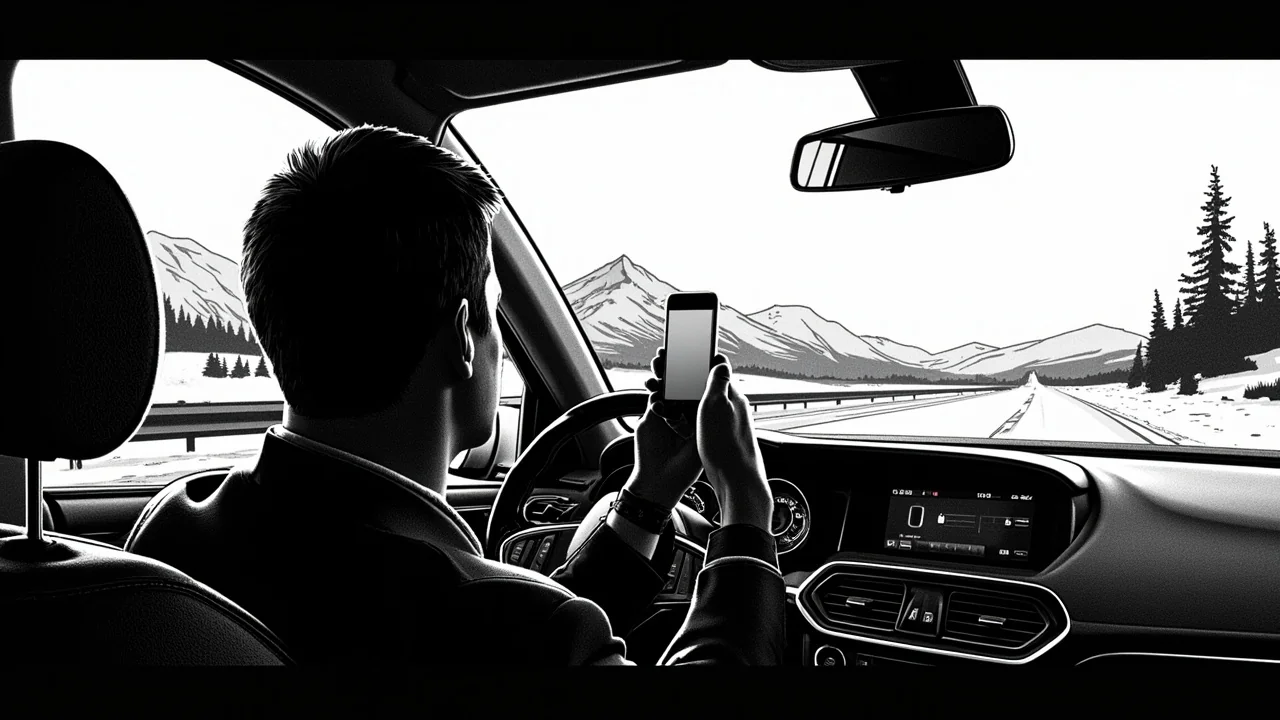
Norway police issued weekend fines of 10,450 kroner to two drivers caught using phones. The Friday afternoon control on Bontelabo in central Bergen resulted in severe penalties. Both drivers also received three penalty points on their licenses. A third driver refused to accept the fine and was reported to the authorities. A fourth motorist was taken to an emergency clinic for a blood test. Police suspect this driver of operating a vehicle under the influence of substances.
A Costly Distraction
Norwegian traffic laws enforce strict penalties for mobile phone use while driving. The 10,450 kroner fine represents one of the highest standard penalties for this offense. Adding three penalty points significantly increases the long-term cost for drivers. If a license accumulates fifteen points within three years, it is revoked. Many drivers underestimate the financial and legal impact of a single distraction. Insurance premiums can also rise sharply following such a conviction.
"People must understand this is not a minor violation," said a police operations manager familiar with the controls. "Using a phone diverts your attention completely from the road. The fine reflects the serious danger it creates." The control was part of a broader traffic safety initiative in Bergen. Police have increased spot checks in urban centers across Norway this year.
Other Weekend Incidents
Separately, police responded to a reported knife incident at Sartor Senter. Two youths allegedly chased and threatened another person. Security guards at the shopping center alerted authorities. Three police patrols were dispatched to search for the two suspects.
"No one appears to have been injured," said Operations Manager Frode Kolltveit in a police log update. "It is unclear if the parties involved knew each other previously." Police are now in contact with the security guards and the alleged victim. The search for the suspects continued through the weekend.
Infrastructure Security Project Advances
In infrastructure news, the Norwegian Public Roads Administration signed a 25-million-kroner contract with Mesta. The project involves securing three railway tunnels for the joint Arna-Stanghelle project. Work includes cleaning, securing with bolts, and applying sprayed concrete in the Fossmark, Hananipa, and Romslo II tunnels.
Work began in January and is scheduled for completion by August. The security work will be conducted during periods when rail traffic is closed.
Project leader Kari Bremnes explained the necessity. "The three railway tunnels we are now securing will eventually lie close to the new tunnels we will build. In some places, there are only a few meters between the tunnels in the mountain. It is necessary to secure the existing tunnels before we begin blasting new ones," Bremnes said.
Emergency Calls and Warnings
The Bergen Fire Department responded to an internal water leak in an apartment complex in Fana on Friday morning. A significant amount of water leaked into the basement of the building.
"We need to get out and shut off the water," said watch manager Stian Kvam at the time. Crews worked to contain the damage and isolate the leak.
Police also issued a seasonal warning about ice safety. Øystein Samsonsen at the Bergen South Police Station said they received multiple reports of people venturing onto frozen lakes.
"We do not have the capacity to respond to all of these reports," Samsonsen stated. "People must ensure the ice is safe." He specifically warned against walking on the ice at Nordåsvatnet, noting its notorious danger due to tides, rivers, and currents that create unstable, thin ice.
Analysis: The Price of Safety
Norway's approach to traffic violations combines high fines with a penalty point system. This dual mechanism aims to deter dangerous behavior effectively. The 10,450 kroner fine for phone use is not arbitrary. It is calculated to have a real economic impact, making drivers think twice. The subsequent insurance increases add another layer of long-term financial deterrent.
Experts point to Norway's consistently low road fatality rates as evidence this strict model works. The country invests heavily in both enforcement and public education campaigns. Weekend controls in city centers like Bergen target times when driver distraction might be higher.
The refusal of one driver to accept the fine highlights a legal process. By refusing, the case moves from an on-the-spot fine to a formal legal charge. This often leads to a court hearing, where the driver can present a defense. However, it also opens the possibility of a higher penalty if convicted.
A Broader Weekend Picture
Taken together, the weekend's events paint a picture of routine public safety operations. Police balances reactive calls, like the knife threat, with proactive prevention, like traffic controls. Infrastructure projects continue year-round, aiming to improve long-term safety for rail passengers.
Emergency services remain on standby for domestic incidents like water leaks. Seasonal warnings about natural dangers, such as thin ice, are a standard part of risk communication in Nordic climates.
The common thread is a systematic approach to risk management. Whether through financial penalties, physical infrastructure work, or public advisories, the goal is to prevent harm before it occurs. The high-profile traffic fines serve as a public reminder of that priority. Will the steep cost make other drivers put their phones away? Authorities are betting that it will.
Public reaction to such fines is often mixed. Some citizens argue the penalties are too severe for a momentary lapse. Others contend that any distraction causing a potential fatal accident justifies the cost. This debate reflects a broader societal discussion about personal responsibility versus state enforcement.
As Norway continues its digital transformation, the challenge of phone use in cars may evolve. New car models integrate larger touchscreens and connected systems. The legal distinction between using a handheld device and operating a built-in system is a ongoing topic for regulators. For now, the message from Bergen is clear. Using your phone while driving carries a definitive and expensive consequence.