
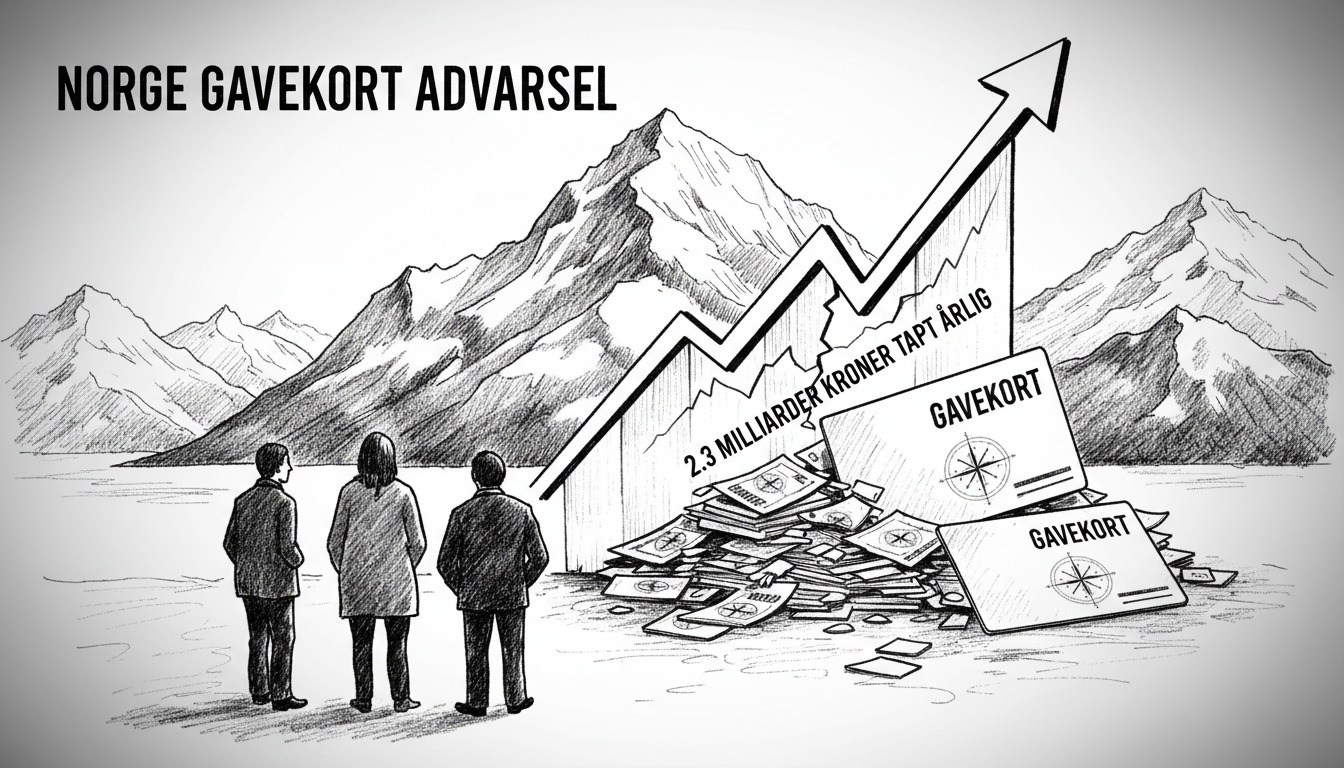
Norway's Consumer Council is issuing a stark warning against gift cards as a Christmas present. The agency advises that billions of kroner are lost each year to forgotten cards, expiration dates, and hidden fees. Instead, they recommend a handwritten card paired with a direct money transfer.
"I want to warn against buying gift cards. But if you are going to do it, then check carefully," advises lawyer Thomas Iversen at Forbrukerrådet. He urges consumers to scrutinize the terms. Key checks include whether the card can be used in many stores, if it has a long validity period, and if there are any fees for use or storage. Some providers still charge a monthly fee, he notes. This means the card's value shrinks each month it sits unused.
Iversen suggests a simpler alternative. "I would advocate for writing a nice Christmas card by hand and transferring money with Vipps or a bank since money, as we know, does not expire." This direct approach ensures the full value of the gift reaches the recipient without risk of depreciation or loss.
The Staggering Scale of Unused Value
New calculations reveal the immense financial waste tied to gift cards in Norway. Endre Jo Reite, director of personal markets at BN Bank, has analyzed the figures. He estimates Norwegian households collectively lose about 2.3 billion kroner each year on gift cards that are never used. Reite arrived at this figure by examining the accounts of some gift card companies, along with market volume and international research.
The organized gift card market—encompassing universal cards, shopping center cards, and digital platforms—is substantial. A report from Research and Markets estimates this segment in Norway is worth 11 to 12 billion kroner annually. When gift cards sold by individual stores are added, Reite estimates the total national gift card volume will reach around 19 billion kroner next year. "It is a bit of guesswork, but it is the best estimate we have based on available data," he stated.
Why Billions End Up in Drawers
The reasons for this massive unused value are both practical and psychological. Reite paints a common scenario. "Many people have half a dinner at Egon or something similar lying in a gift card in a drawer. You know it will cost more if you go to the restaurant and use it up, and maybe you don't have time either. Therefore, the gift card is not fully used." The effort to spend the exact balance, or the inconvenience of visiting a specific store, often leads to procrastination and, ultimately, abandonment.
International data supports this pattern. Reite points to literature showing 10 to 15 percent of single-store gift cards go unredeemed. For multi-store gift cards, the non-usage rate is around five percent. Beyond forgetting, other factors erode value. Expiration dates render cards worthless overnight. Some cards carry administrative fees that chip away at the balance over time. Small remaining balances are often left unspent because they are not enough for a purchase.
A Call for Regulatory Scrutiny
The scale of the loss has sparked discussion about potential regulatory solutions. Reite points to an interesting model from abroad. "In the state of New York, unused funds from gift cards must be transferred to a state public benefit fund. Perhaps that is also a good idea to implement here?" he asks. This policy, often called "escheatment," treats unclaimed gift card value as abandoned property that benefits the public rather than corporate bottom lines.
Consumer advocates in Norway have long pushed for stronger protections. They argue that money placed on a gift card should not simply vanish. The current system allows companies to recognize revenue from the sale of a gift card, and then potentially again from the portion that is never redeemed—a double benefit at the consumer's expense. Stricter rules on expiration dates and fees, or a mandate to transfer unused value after a long period, could better protect consumers.
The Psychology of Gift-Giving
The persistence of gift cards despite their drawbacks speaks to the complex psychology of gift-giving. A cash gift can sometimes feel impersonal or transactional. A gift card to a specific store or restaurant signals thought—an attempt to choose an experience or product the giver believes the recipient will enjoy. It offers more constraint and suggestion than cash, which can feel like the right balance for many.
However, this well-intentioned gesture can backfire. The recipient may not shop at that particular store, or the card might restrict them to a location that is inconvenient. The pressure to use the card "correctly" or for something special can lead to indecision. As a result, the card sits unused, and the gesture's intent is lost. The handwritten card with a money transfer, as suggested by Iversen, attempts to split the difference. It provides the personal, thoughtful touch of a physical card with the flexibility and security of cash.
Expert Advice for Savvy Shoppers
If consumers still choose to buy a gift card, experts offer clear guidance to minimize risk. First, always read the terms and conditions, which are often in small print. Check the expiration date meticulously—look for a date that is several years away, or ideally, no expiration at all. Investigate any fees: are there charges for activation, monthly maintenance, or replacement? These can quickly drain the card's value.
Second, opt for flexibility. A gift card that can be used at a wide network of stores or a shopping center is generally a safer bet than one for a single, niche retailer. Digital gift cards or codes stored in email can be harder to lose than physical plastic cards, but they can also be forgotten in an inbox. Finally, consider giving the receipt or a clear note of the card's details along with the card itself. This makes it easier for the recipient to track the balance and terms.
The Future of Gift Cards in Norway
The debate over gift cards touches on broader themes of consumer rights, corporate responsibility, and modern commerce. As digital payment solutions like Vipps become ubiquitous, the practical need for physical gift cards diminishes. The market may gradually shift toward fully digital, fee-free solutions with longer validity periods due to consumer pressure and potential regulation.
For now, the annual Christmas warning from Forbrukerrådet serves as a crucial reminder. In the rush of holiday shopping, convenience can come with a hidden cost. The 2.3 billion kroner left in drawers and digital accounts represents not just lost money, but lost goodwill and failed intentions. This holiday season, the most valuable gift might be one that never loses its value and always fits perfectly: the gift of choice, delivered with a personal touch. Will this warning finally change Norway's gift-giving habits, or will billions more kroner be destined for the drawer next year?